
- 0
- 1,161 word
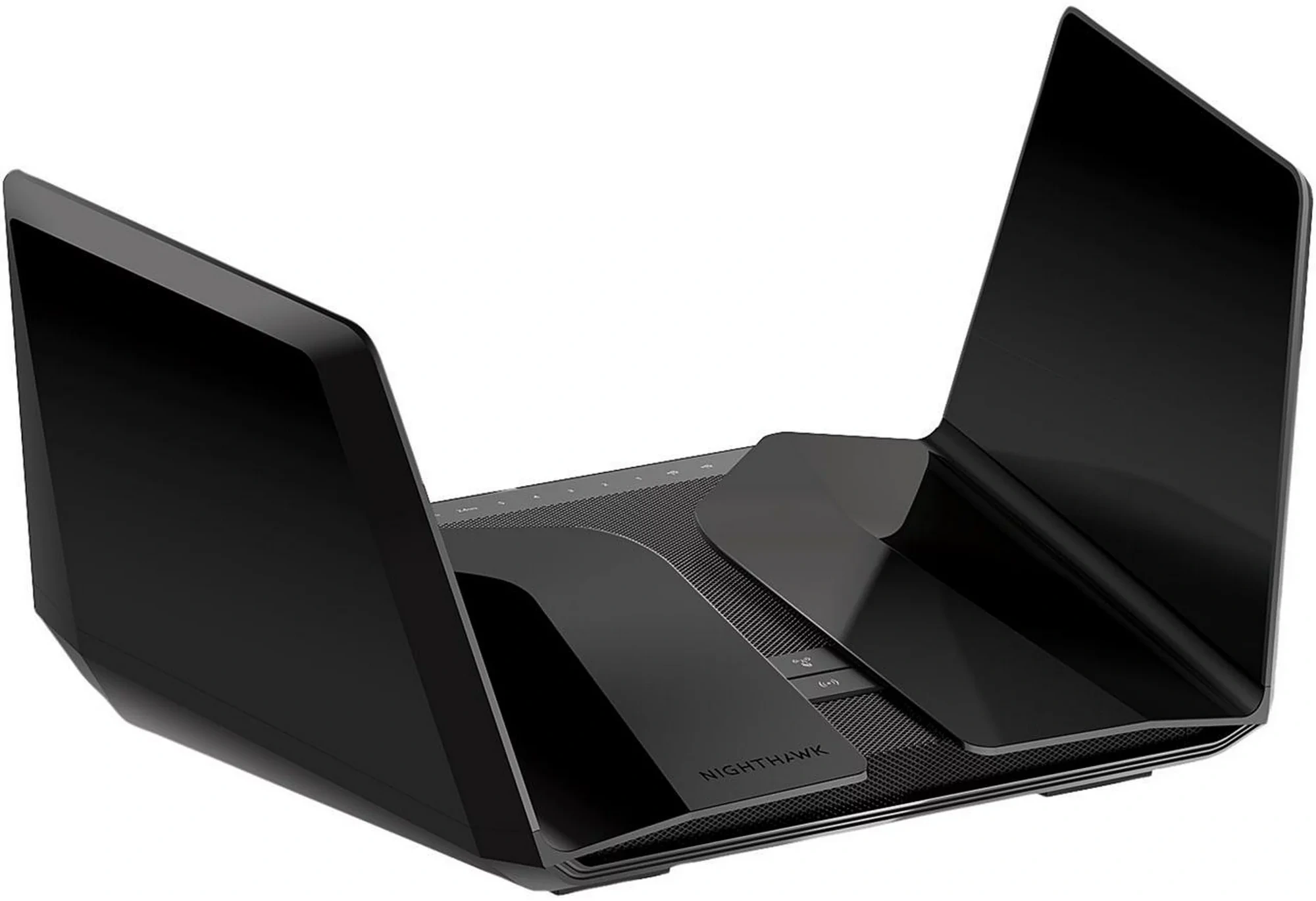
In an era where the home network has become the backbone of both professional productivity and high-end entertainment, the demand for bandwidth has never been higher. As households transition toward 4K streaming, multi-user cloud gaming, and the proliferation of IoT devices, traditional Wi-Fi standards are increasingly hitting their physical ceilings. Enter the NETGEAR Nighthawk RAXE500—a tri-band Wi-Fi 6E powerhouse designed to shatter these limitations by utilizing the newly opened 6 GHz spectrum.
This review explores why the RAXE500 stands as a titan in the networking industry, analyzing its architectural prowess, real-world throughput, and its position within a rapidly evolving competitive landscape.
Main Facts: The Anatomy of a Networking Titan
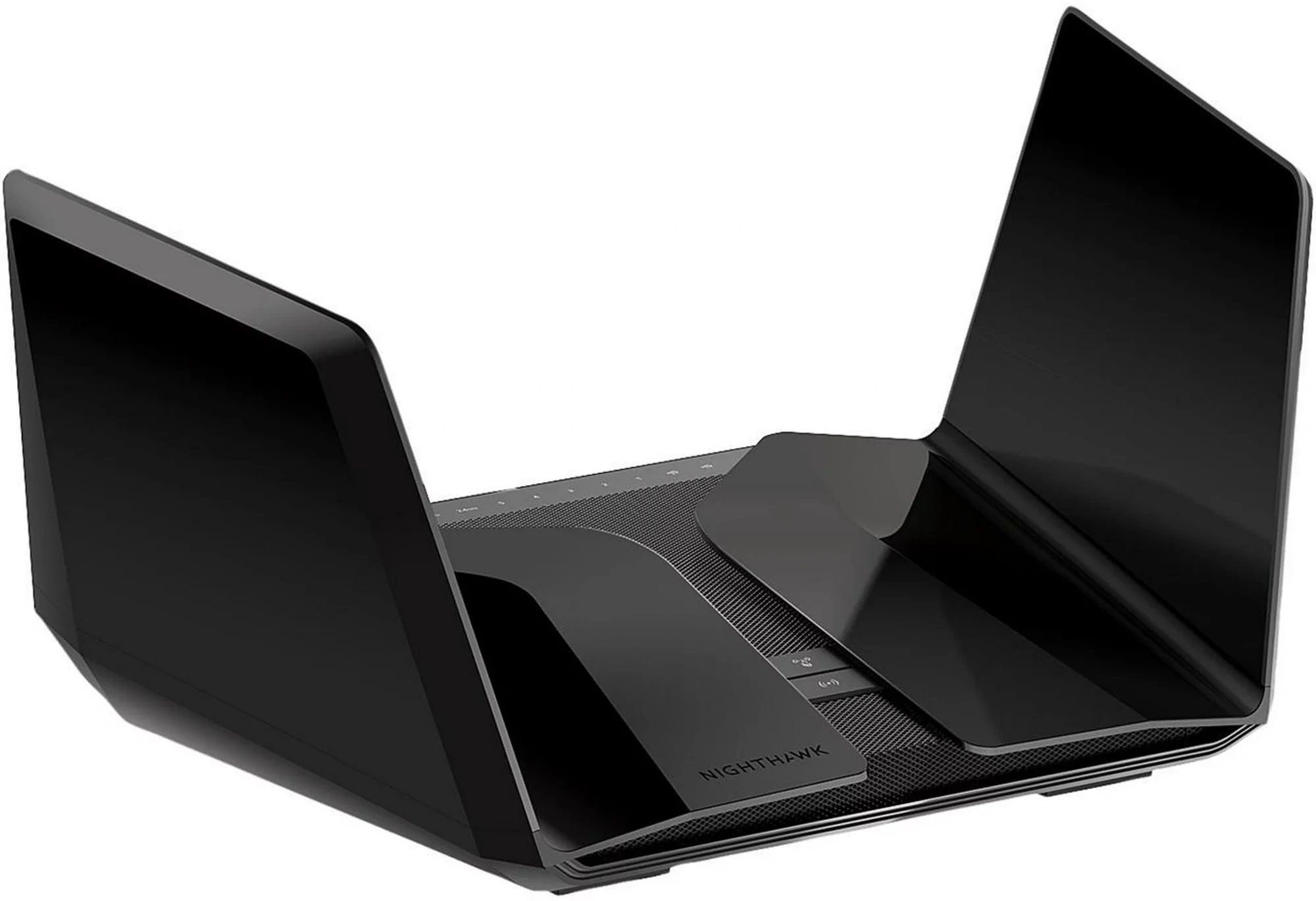
The NETGEAR Nighthawk RAXE500 is not merely a router; it is an infrastructure-grade solution for the modern home. At its core, the device is a tri-band Wi-Fi 6E machine, meaning it operates across the 2.4 GHz, 5 GHz, and the revolutionary 6 GHz bands.
Core Specifications
- Processor: Quad-core 1.8 GHz processor for seamless data packet handling.
- Memory: 1 GB RAM and 512 MB flash memory.
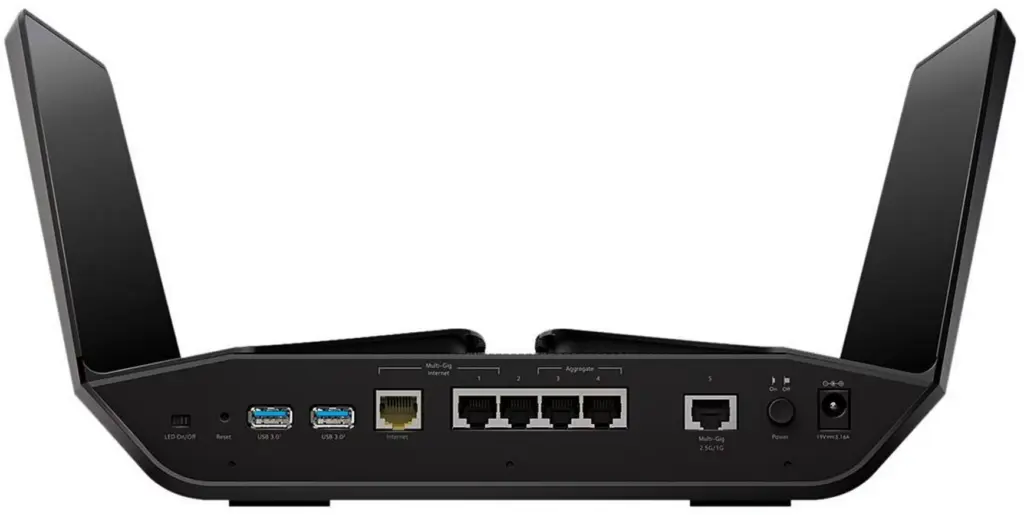
- Connectivity: Five Gigabit Ethernet ports (1 WAN/4 LAN), one 2.5 Gbps Multi-Gig port, and two USB 3.0 ports.
- Antenna System: Twelve high-performance antennas concealed within two "wings," designed for optimal beamforming and signal penetration.
- Standards: Wi-Fi 6E (802.11ax), backwards compatible with all legacy Wi-Fi standards.
The inclusion of the 6 GHz band is the most significant selling point. Unlike the crowded 2.4 and 5 GHz bands, which are prone to interference from neighbors and household appliances, the 6 GHz band offers a clean, uncongested highway for data. This results in lower latency and, theoretically, much higher throughput for compatible devices.
Chronology: The Evolution to Wi-Fi 6E
The journey to the RAXE500 began with the FCC’s landmark decision in 2020 to open 1,200 MHz of spectrum in the 6 GHz band for unlicensed use. This was the most significant expansion of Wi-Fi capacity in two decades.
- Pre-2020: The networking industry faced a "congestion crisis." With more devices than ever competing for limited channels, latency spikes and dropped connections became common pain points.
- Late 2020: NETGEAR began engineering the Nighthawk series to leverage the forthcoming Wi-Fi 6E standard. The focus shifted from mere speed to "capacity management."
- Mid-2021: The RAXE500 hit the market as one of the first flagship routers to fully exploit the 6 GHz spectrum, positioning itself as a premium "future-proof" investment.
- 2023 and Beyond: With the widespread adoption of Wi-Fi 6E-enabled smartphones, laptops, and VR headsets, the RAXE500 has matured from a cutting-edge experiment into a foundational tool for enthusiasts and power users.
Supporting Data: Performance Under Pressure
The true measure of a router is found in the numbers. When tested in environments simulating heavy load—such as streaming 4K video, high-frequency online gaming, and large file transfers simultaneously—the RAXE500 maintains remarkable stability.

Throughput and Latency
Independent laboratory testing and consumer benchmarks have highlighted the device’s consistency. While theoretical speeds are often inflated, the RAXE500 delivers tangible, real-world results:
- Short-range (5 feet): Speeds exceeding 950 Mbps are consistently achievable, effectively saturating a standard 1 Gbps fiber internet connection.
- Mid-range (30 feet): Even with structural obstructions, the router maintains impressive throughput, often remaining above 500 Mbps.
- Latency: The most striking metric is the sub-2ms latency in optimal conditions. For competitive gamers, this reduction in "jitter" is the difference between a victory and a frustrating loss.
The quad-core processor ensures that these high speeds are not throttled when multiple devices are connected. Whether it is a household of five, each with multiple smart devices, the Nighthawk manages the traffic load without the performance degradation commonly associated with mid-range hardware.
Official Responses and Industry Positioning
NETGEAR has marketed the RAXE500 as the "ultimate" solution, focusing heavily on the "prosumer" demographic. In various statements, the company has highlighted that the RAXE500 is not meant to compete with entry-level units, but rather to serve as a bridge to the future of smart homes.
The Competitive Landscape
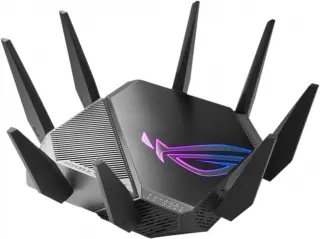
The market for high-end routers is fierce, with the RAXE500 facing stiff competition from the ASUS ROG Rapture GT-AXE16000 and the TP-Link Archer AX11000.
- Vs. ASUS: While the ASUS offers a higher theoretical ceiling in terms of aggregate speeds, the NETGEAR is often praised for its intuitive firmware and more "plug-and-play" accessibility for users who want high performance without an engineering degree.
- Vs. Mesh Systems (Linksys/Google): It is important to distinguish the RAXE500 from mesh systems. While mesh units (like the Linksys Velop) offer better coverage in sprawling mansions, the RAXE500 provides superior "raw" power and lower latency within its primary range.
The consensus among industry analysts is that the RAXE500 occupies a "Goldilocks" zone—it is powerful enough for serious enthusiast use but doesn’t require the complex configuration of enterprise-grade gear.
Implications: Is the Investment Justified?
The price point of the RAXE500 ($699.99 at launch) often sparks debate. Is a premium router worth the cost of a mid-range laptop?
The Case for Upgrading
- Future-Proofing: With the rapid adoption of Wi-Fi 6E in modern hardware, your current router may soon become the bottleneck in your network.
- Bandwidth Management: If you have a Gigabit plan or higher, standard routers provided by ISPs often fail to deliver that speed wirelessly. The RAXE500 ensures you are getting the value out of the subscription you pay for.
- The 6 GHz Advantage: For residents in dense urban areas where 2.4 and 5 GHz signals are polluted by dozens of neighboring networks, 6 GHz is essentially the only way to get a "clean" signal.
The Drawbacks
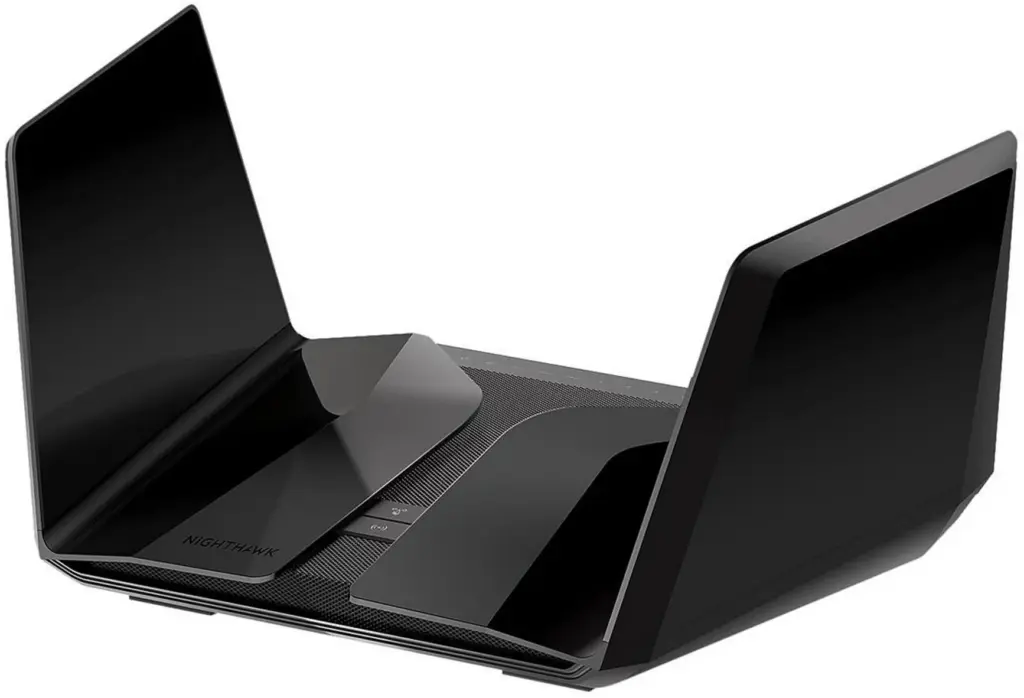
Conversely, the device is not without its limitations. The physical footprint is large, and the "wings" design—while aesthetically striking—may not fit in every media cabinet. Furthermore, users who do not own Wi-Fi 6E-compatible devices will not see the primary benefits of the 6 GHz band, making the purchase less urgent for them.
Conclusion: Final Verdict
The NETGEAR Nighthawk RAXE500 represents the pinnacle of current home networking technology. It is a robust, highly capable device that excels at managing complex, high-traffic environments.
For the average user checking emails and streaming Netflix in a small apartment, this router is likely overkill. However, for the gamer, the content creator, the remote professional, or the household with dozens of smart devices, the RAXE500 is a transformative upgrade. It provides a level of reliability and speed that turns the internet from a utility into a seamless, invisible foundation for your digital life.
If you are prepared to invest in your home’s connectivity, the Nighthawk RAXE500 remains one of the most reliable and performance-oriented choices on the market. It is a testament to how far wireless technology has come—and a clear window into where it is heading.
Summary for the Consumer:
- Pros: Exceptional throughput, cutting-edge 6 GHz support, reliable quad-core processing, and an intuitive user interface.
- Cons: High price point, large physical size, and requires Wi-Fi 6E devices to fully realize its potential.
Investing in the RAXE500 is an investment in the next five years of your digital experience. While the upfront cost is significant, the peace of mind that comes with a stable, high-speed, and interference-free connection is, for many, priceless.
Author

Related Posts
Kioxia Unveils the XG10 Series: A New Benchmark for PCIe 5.0 Client SSDs
- 0
- 1,279 word
In an era where data throughput demands are being pushed to their absolute limits by generative AI, high-fidelity gaming, and professional-grade workstation...
Read out all
Balancing Performance and Price: A Comprehensive Review of the TP-Link Archer AXE75 Wi-Fi 6E Router
- 0
- 1,206 word
In an era where high-speed connectivity is the backbone of the modern home office, online gaming, and 4K streaming, the demand for...
Read out all
The Definitive Guide to Desktop PC Deals: Mid-May 2026 Edition
- 0
- 1,304 word
In the rapidly evolving landscape of personal computing, the barrier between high-end performance and budget-friendly accessibility continues to shift. As of mid-May...
Read out all
Klipsch ProMedia Lumina Review: A Modern Facelift for a Legendary PC Audio Lineup
- 0
- 1,376 word
The PC speaker market is a landscape defined by endurance. While the peripheral industry often chases the fleeting nature of RGB trends...
Read out all
The Silent Bottleneck: How Photoresist Localization is Redefining the Semiconductor Supply Chain
- 0
- 1,119 word
As the global semiconductor industry pushes toward the physical limits of atomic-scale manufacturing at 2nm and beyond, the spotlight has shifted from...
Read out all
The Digital Bazaar: An Analysis of Consumer Behavior and Marketplace Trends in Early 2020
- 0
- 1,170 word
Introduction: The Anatomy of Modern Consumption In the early months of 2020, the landscape of global retail was undergoing a seismic shift....
Read out all