
- 0
- 1,119 word
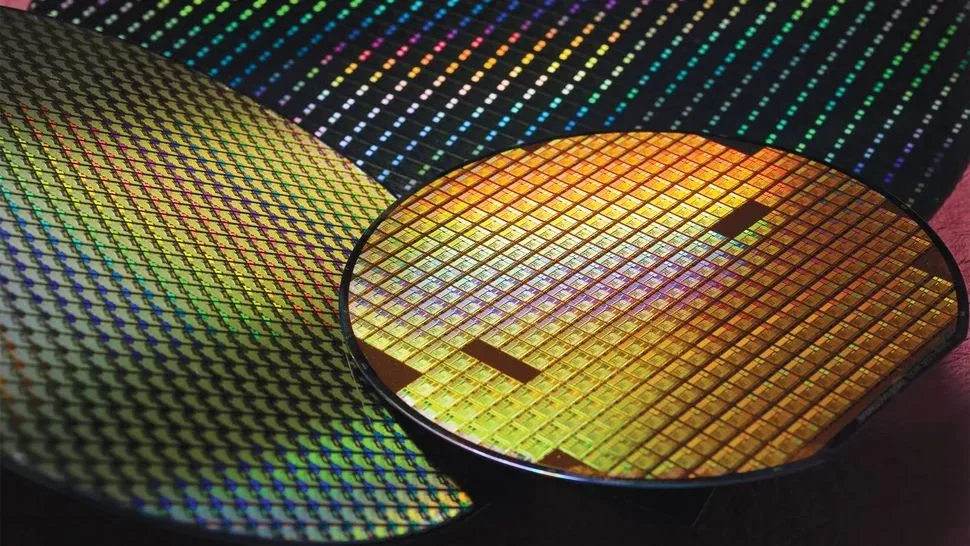
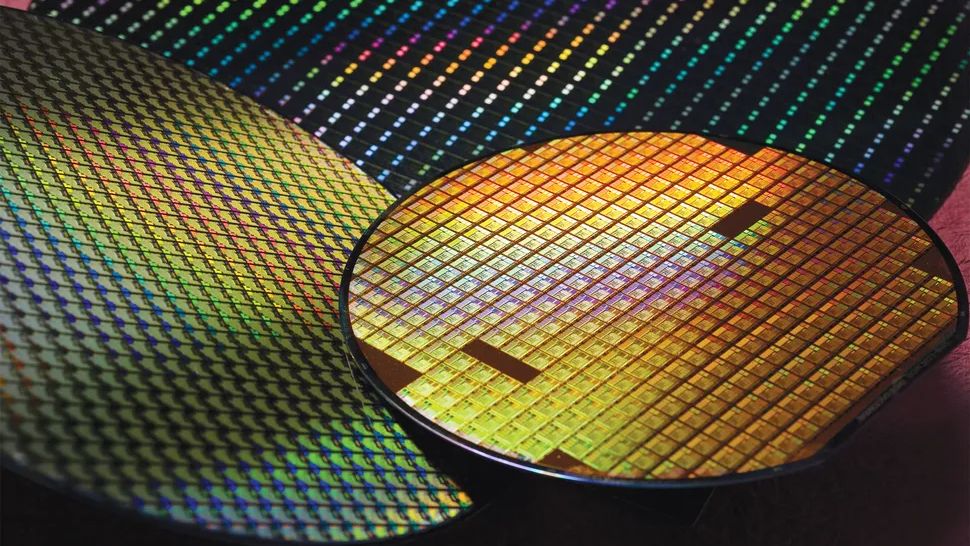
As the global semiconductor industry pushes toward the physical limits of atomic-scale manufacturing at 2nm and beyond, the spotlight has shifted from the massive lithography machines of ASML to a far more subtle, yet equally critical, component: the photoresist. These light-sensitive chemicals, which act as the "stencil" for circuit patterns, have become the most significant bottleneck in the race for computational supremacy. With AI demand driving unprecedented growth in foundry output, the world’s leading suppliers are abandoning their traditional centralized manufacturing models in favor of a new, localized "proximity" strategy.
The Strategic Shift: Why Proximity Matters
For decades, the semiconductor supply chain relied on a hub-and-spoke model. Companies like JSR, Tokyo Ohka Kogyo (TOK), and Shin-Etsu Chemical—the Japanese titans who collectively dominate roughly 85% of the EUV-grade photoresist market—manufactured their highly proprietary chemical blends in Japan before shipping them to foundries worldwide.
However, the precision required for Extreme Ultraviolet (EUV) lithography has rendered this model obsolete. At the 2nm node and below, photoresists must be formulated with a level of specificity that borders on the impossible. They must account for unique exposure wavelengths, dose profiles, etch chemistries, and the idiosyncratic workflows of specific foundries.
"Speed is critical," says Tetsuro Hori, the CEO of JSR who assumed the role in April 2025. In a recent disclosure to CommonWealth Magazine, Hori explained that the traditional logistics of shipping delicate photoresist samples from Japan, the U.S., or Belgium to Taiwan resulted in weeks of downtime for each iteration. By localizing production in Taiwan, JSR aims to eliminate the "round-trip" delay, allowing for real-time collaboration with TSMC’s engineering teams.
A Chronology of Consolidation and Transformation
The recent moves by JSR reflect a broader, tectonic shift in how materials science companies are positioning themselves to serve the "Big Three" of logic and memory: TSMC, Samsung, and SK Hynix.
- April 2024: Japan Investment Corporation (JIC), a state-backed fund, finalizes a tender offer for JSR at ¥4,350 per share, valuing the company at approximately ¥909 billion ($6.4 billion).
- June 2024: JSR is officially delisted from the Tokyo Stock Exchange, marking its transition from a public entity to a state-supported, highly focused semiconductor materials powerhouse.
- December 2024: The JIC merger is finalized, triggering a massive divestment strategy. JSR exits its legacy biotech business and sheds non-core assets to focus exclusively on electronic materials.
- May 2025: JSR acquires Kyoto-based Yamanaka Hutech, significantly bolstering its capabilities in chemical vapor deposition (CVD) and atomic layer deposition (ALD) precursors.
- September 2025: A landmark patent settlement with Lam Research turns long-standing litigation into a strategic cross-licensing agreement, covering the next generation of dry-resist EUV patterning.
- April 2026 (Projected): JSR, in partnership with Wah Lee Industrial and LCY Chemical, breaks ground on its first Taiwanese manufacturing facility in Yunlin County. The plant is expected to go online by 2028.
This timeline underscores a deliberate pivot. By shedding non-essential business units, JSR has transformed from a diversified chemical conglomerate into a high-precision, semiconductor-focused organization capable of moving at the speed required by its foundry partners.
The Technical Imperative: From Organic Polymers to Metal Oxides
The industry is currently standing on the precipice of a material revolution. Conventional EUV lithography relies on Chemically Amplified Resists (CARs), which use organic polymers. While these have served the industry well, they are struggling with the "stochastic effects"—random variations in photon distribution—that cause acid-diffusion blur and line-edge roughness as features shrink.
JSR’s future, and that of the broader industry, lies in Metal Oxide Resists (MOR). Unlike organic polymers, MOR utilizes tin-oxide-based chemistry. The advantages are significant:
- Photon Efficiency: Tin-oxide absorbs EUV photons roughly five times more efficiently than organic CARs.
- Structural Integrity: The molecular building blocks of MOR are approximately five times smaller, allowing for much higher resolution.
- Etch Resistance: MOR provides 10 to 100 times better resistance during the etching process, which is essential for maintaining the fidelity of 1.4nm-class (A14) features.
While TSMC has signaled it will rely on multi-patterning and traditional low-NA EUV for the near future, the transition to MOR is inevitable for the 1.0nm node and beyond. JSR is already ahead of the curve, with its Cheongju, South Korea facility—operated by JSR Micro Korea—gearing up for mass production of MOR for high-end DRAM applications.
Competitive Landscape: The China Factor
While the Japanese "Big Three" maintain a near-monopoly on high-end EUV resists, the geopolitical landscape is driving China to aggressively build its own domestic supply chain.
Chinese firms like Hubei Dinglong, Xuzhou B&C Chemical (backed by Huawei’s investment arm), and Jiangsu Nata Optoelectronic are making strides in KrF and i-line lithography materials. However, their penetration into the ArF and EUV space remains below 5%.
Industry analysts remain skeptical of China’s ability to bridge this gap quickly. The barrier to entry isn’t just chemical synthesis; it is the "qualification cycle." A new photoresist must survive thousands of iterative tests at a foundry to ensure it doesn’t cause defects. Even if a Chinese firm produces a viable material, it could take years of collaboration with a foundry to reach the reliability standards set by JSR or Shin-Etsu.
Toru Kimura, JSR’s senior officer for electronic materials, remains confident: "Chinese players are a threat, but it will still be some time before they can catch up with us and take market share."
Implications for the Future of Silicon
The decision by JSR to establish a plant in Yunlin County, and the corresponding moves by competitors like TOK and Shin-Etsu to expand their regional footprints, signal a fundamental change in the economics of chipmaking.
- Supply Chain Resilience: By placing production facilities directly adjacent to TSMC’s fabs, suppliers are insulating themselves against global logistics disruptions, which became a painful reality during the COVID-19 pandemic.
- Collaborative Innovation: The era of the "catalog product" is over. Photoresists are now co-developed products. A plant in Taiwan is not just a factory; it is an extension of the foundry’s R&D floor.
- Concentration of Talent: The localization strategy ensures that the brightest minds in materials science are working in the same zip codes as the engineers designing the next generation of AI processors.
As the semiconductor industry continues to push the boundaries of physics, the "small" chemistry of photoresists is becoming the "big" story. With billions of dollars in state-backed investment and a shift toward tin-oxide-based materials, the battle for the next decade of computing power will be fought not just in the cleanroom, but in the chemical synthesis vats of Taiwan and South Korea.
The industry is no longer just manufacturing chips; it is manufacturing the very materials that make the impossible possible. For TSMC and its partners, the localization of these critical chemicals is the ultimate insurance policy against a future where the margin for error is measured in atoms.
Author

Related Posts
Kioxia Unveils the XG10 Series: A New Benchmark for PCIe 5.0 Client SSDs
- 0
- 1,279 word
In an era where data throughput demands are being pushed to their absolute limits by generative AI, high-fidelity gaming, and professional-grade workstation...
Read out all
Unleashing the Future of Connectivity: A Comprehensive Deep Dive into the NETGEAR Nighthawk RAXE500
- 0
- 1,161 word
In an era where the home network has become the backbone of both professional productivity and high-end entertainment, the demand for bandwidth...
Read out all
Balancing Performance and Price: A Comprehensive Review of the TP-Link Archer AXE75 Wi-Fi 6E Router
- 0
- 1,206 word
In an era where high-speed connectivity is the backbone of the modern home office, online gaming, and 4K streaming, the demand for...
Read out all
The Definitive Guide to Desktop PC Deals: Mid-May 2026 Edition
- 0
- 1,304 word
In the rapidly evolving landscape of personal computing, the barrier between high-end performance and budget-friendly accessibility continues to shift. As of mid-May...
Read out all
Klipsch ProMedia Lumina Review: A Modern Facelift for a Legendary PC Audio Lineup
- 0
- 1,376 word
The PC speaker market is a landscape defined by endurance. While the peripheral industry often chases the fleeting nature of RGB trends...
Read out all
The Digital Bazaar: An Analysis of Consumer Behavior and Marketplace Trends in Early 2020
- 0
- 1,170 word
Introduction: The Anatomy of Modern Consumption In the early months of 2020, the landscape of global retail was undergoing a seismic shift....
Read out all