
- 0
- 1,279 word
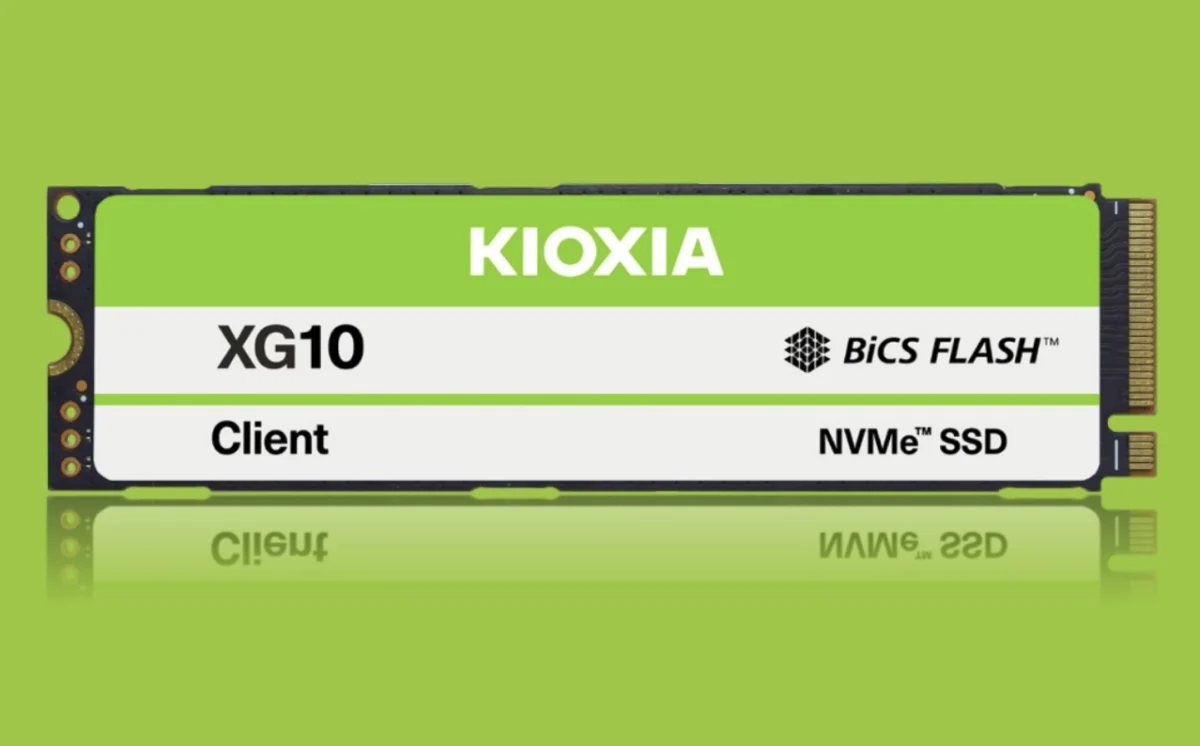
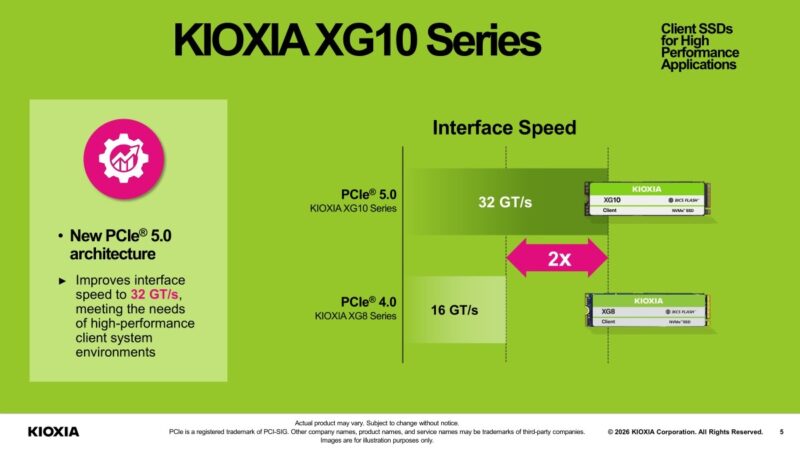
In an era where data throughput demands are being pushed to their absolute limits by generative AI, high-fidelity gaming, and professional-grade workstation workloads, Kioxia has officially signaled the next evolution in its client storage portfolio. The company has unveiled the Kioxia XG10 Series, a flagship line of M.2 NVMe SSDs that marks the formal transition of its high-performance client offering to the PCIe Gen5 interface.
By doubling the theoretical bandwidth compared to its predecessor, the XG8, the XG10 is designed to serve as the backbone for modern "AI PCs," high-end gaming rigs, and enterprise-grade OEM workstations. This launch effectively completes Kioxia’s current client SSD ecosystem, providing a clear, tiered structure that addresses everything from value-driven entry-level systems to performance-obsessed power users.
Main Facts: The Technical Leap to Gen5
The Kioxia XG10 is not merely an incremental update; it represents a fundamental shift in architecture. While the industry has been gradually migrating toward PCIe 5.0, the XG10 brings enterprise-class performance metrics to the client space.
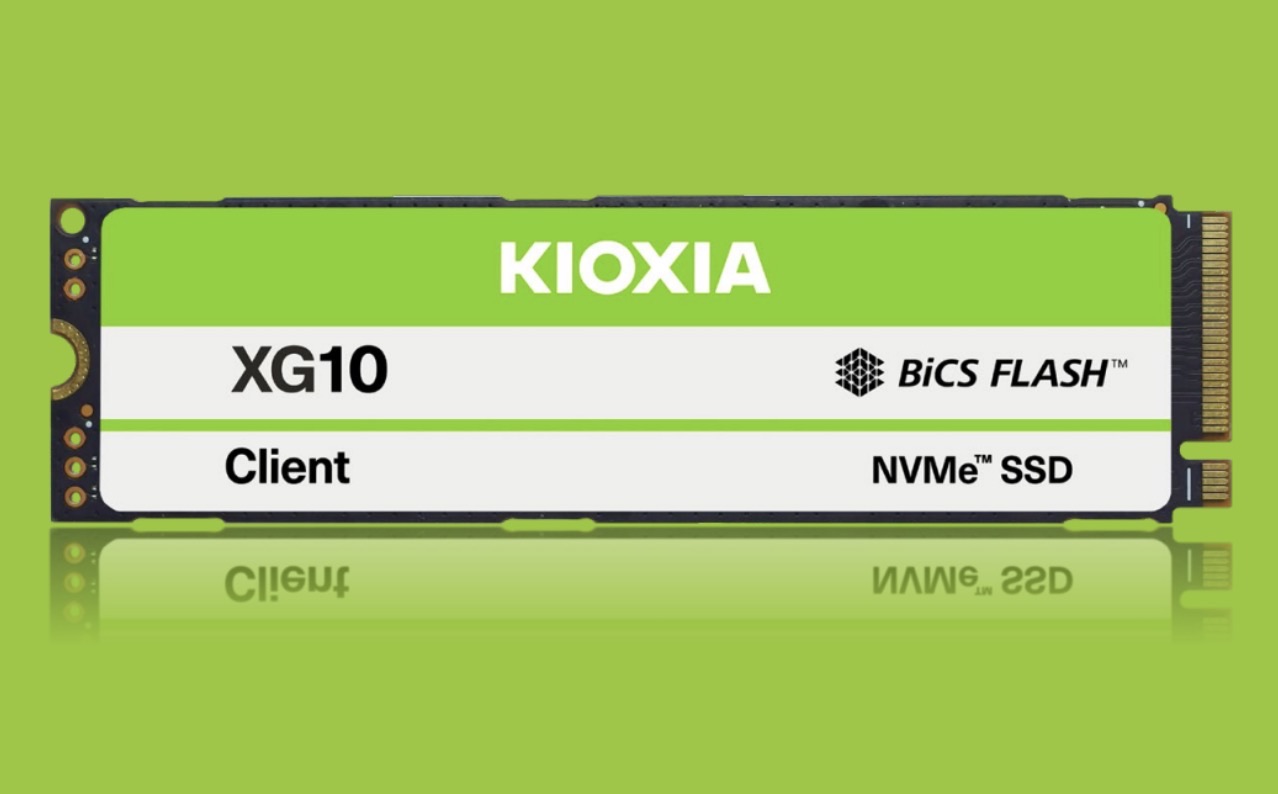
Key Specifications:
- Interface: PCIe Gen5 x4
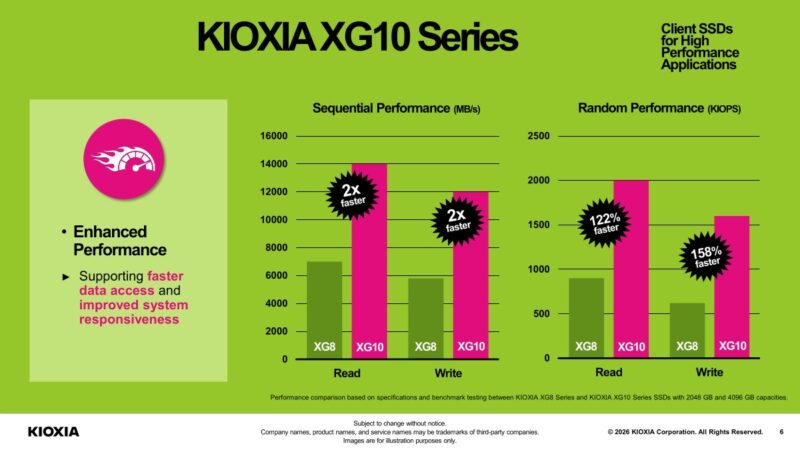
- Sequential Read Performance: Up to 14 GB/s
- Sequential Write Performance: Up to 12 GB/s
- Random Performance: Up to 2 million IOPS (Read) and 1.6 million IOPS (Write)
- Capacity Options: Scaling up to 4TB
- Architecture: 8-channel SoC controller with dedicated DRAM
Perhaps the most significant technical distinction of the XG10 compared to its siblings, the BG8 and EG7, is the inclusion of an 8-channel controller paired with high-speed DRAM. While the BG8 and EG7 utilize 4-channel, DRAM-less architectures—leveraging Host Memory Buffer (HMB) technology to remain cost-effective—the XG10 is built for raw, sustained endurance and speed. This design choice is critical for the intended target market, where users demand consistent performance during heavy IO-intensive tasks, such as rendering 8K video or training local large language models (LLMs).
Chronology: The Evolution of Kioxia’s XG Lineage
The introduction of the XG10 follows a deliberate roadmap of innovation within Kioxia’s storage division. To understand the significance of the XG10, one must look at the progression of the XG series and its position within the broader market.
The PCIe 4.0 Era (The XG8 Foundation)
Kioxia’s XG8 served as the workhorse of the company’s performance-client segment for several years. It set the standard for reliable, high-speed PCIe 4.0 storage. However, as motherboard manufacturers and CPU vendors (Intel and AMD) shifted toward PCIe 5.0 connectivity, the bottleneck shifted from the system bus to the storage device itself.
The Strategic Segmentation (2025–2026)
Over the past eighteen months, Kioxia has systematically overhauled its entire product stack to provide specialized solutions for different market segments:
- The Value Tier (EG7): Designed for cost-sensitive laptops and entry-level systems, focusing on power efficiency and QLC NAND density.
- The Mainstream Tier (BG8): Aimed at the "sweet spot" of the market, introducing PCIe 5.0 to a wider audience through a 4-channel, DRAM-less architecture that balances performance and cost.
- The Performance Tier (XG10): The current apex of the lineup. It represents the culmination of Kioxia’s efforts to bring server-grade performance to the M.2 form factor.
The release of the XG10 closes the loop, ensuring that Kioxia remains competitive against rivals like Samsung and Western Digital, both of whom have been aggressively pushing their own Gen5 client solutions.
Supporting Data: NAND Technology and Efficiency
A nuance often overlooked in SSD marketing is the variability of NAND technology within a single product family. The XG10, however, is a study in precise engineering, utilizing different tiers of BiCS FLASH to optimize performance and capacity.
NAND Heterogeneity
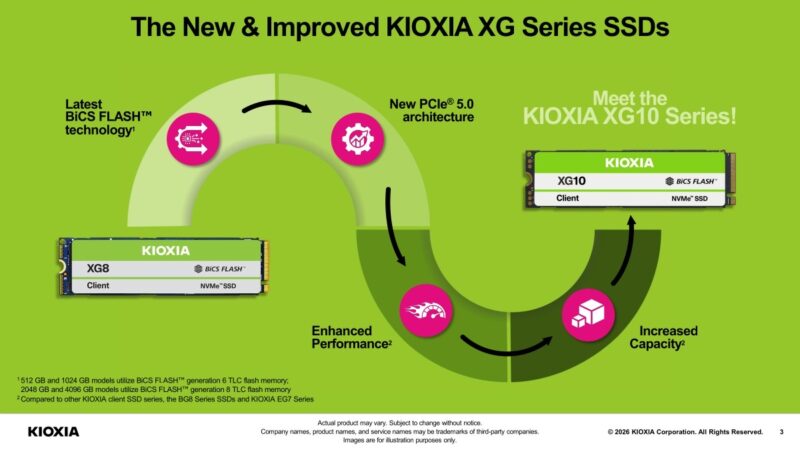
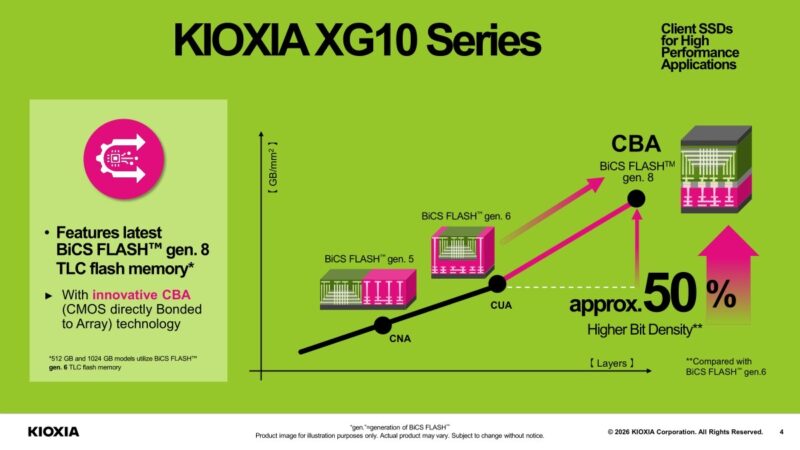
Kioxia has disclosed that the 512GB and 1TB capacities utilize BiCS FLASH Generation 6 TLC NAND. Conversely, the higher-capacity models—2TB and 4TB—leverage the cutting-edge BiCS FLASH Generation 8. This is a strategic move, as the Generation 8 NAND allows for higher density and improved performance, which is vital for the 4TB capacity point.
Furthermore, the 2TB and 4TB models incorporate CBA (CMOS directly Bonded to Array) technology. By bonding the CMOS circuitry directly to the NAND array, Kioxia has achieved superior space efficiency and improved data transfer speeds between the controller and the memory, resulting in the impressive 14 GB/s throughput figures.
Thermal Considerations
With great speed comes great thermal output. The XG10 carries an active power rating of 10W. For context, this is double the power draw of the BG8 (5W) and significantly higher than the EG7 (4.5W). This is a critical data point for OEMs and PC builders. PCIe 5.0 drives are notoriously heat-sensitive; users deploying the XG10 in thin-and-light laptops or compact ITX cases will need to ensure adequate thermal dissipation, such as integrated heatsinks or sophisticated airflow management, to avoid thermal throttling during extended write sessions.
Official Responses and Strategic Positioning
In press documentation provided by Kioxia, the company highlights that the XG10 is specifically engineered for the "AI PC" phenomenon. As local AI processing becomes a standard requirement for productivity, the demand for high-speed local storage that can feed data to neural processing units (NPUs) has never been higher.
"The XG10 provides the bandwidth necessary to ensure that the storage subsystem is never the bottleneck in a modern high-performance system," noted a Kioxia representative in the media kit. By opting for a traditional 8-channel controller, Kioxia is betting that the premium segment of the market still prioritizes the consistent, deterministic performance that only dedicated DRAM-based SSDs can provide, despite the rising popularity of DRAM-less alternatives.
Furthermore, the integration of TCG Opal 2.02 support underscores that the XG10 is not just for gamers; it is a serious candidate for corporate fleets and professional workstations where data security and encryption are non-negotiable requirements.
Implications for the Future of Storage
The arrival of the XG10 has several far-reaching implications for the PC industry:
1. The Death of the Storage Bottleneck
With sequential reads hitting 14 GB/s, we are approaching a point where the storage bus is fast enough to make "load times" effectively disappear. For creative professionals working with uncompressed 8K RAW video files, this level of throughput allows for real-time scrubbing and editing that was previously only possible with expensive, multi-drive RAID arrays.
2. OEM Transition to PCIe 5.0
The existence of a complete stack (EG7, BG8, XG10) allows OEMs to standardize on the Kioxia ecosystem across their entire product line. A laptop manufacturer can now offer a "Value" model with the EG7, a "Mainstream" model with the BG8, and a "Pro" workstation with the XG10, all while staying within the same validation and support framework provided by Kioxia.
3. The Power Efficiency Challenge
The 10W power draw of the XG10 is a stark reminder of the challenges ahead for mobile computing. As performance increases, the thermal envelope of a 2280 M.2 form factor is being pushed to its limit. We expect to see more innovative cooling solutions—including active fans, vapor chambers, and graphene heat spreaders—becoming standard on motherboards and laptops to accommodate drives like the XG10.
4. The Future of NAND Density
The use of CBA technology in the XG10 suggests that Kioxia is confident in its ability to continue scaling NAND density without sacrificing reliability. As we move toward 8TB and eventually 16TB M.2 drives, the manufacturing techniques pioneered in the XG10 will likely become the foundation for future generations of storage.
Conclusion
The Kioxia XG10 is a formidable entry into the PCIe 5.0 market. By choosing to pair the latest interface with a robust 8-channel, DRAM-equipped controller, Kioxia has created a drive that sits firmly at the top of the performance mountain. While its power requirements mandate careful thermal planning, the trade-off in speed and throughput is clear. As we await independent third-party testing to verify these performance claims in real-world scenarios, the XG10 stands as a clear indicator that the next generation of client computing is ready for the bandwidth-heavy demands of the future.
Author

Related Posts
Unleashing the Future of Connectivity: A Comprehensive Deep Dive into the NETGEAR Nighthawk RAXE500
- 0
- 1,161 word
In an era where the home network has become the backbone of both professional productivity and high-end entertainment, the demand for bandwidth...
Read out all
Balancing Performance and Price: A Comprehensive Review of the TP-Link Archer AXE75 Wi-Fi 6E Router
- 0
- 1,206 word
In an era where high-speed connectivity is the backbone of the modern home office, online gaming, and 4K streaming, the demand for...
Read out all
The Definitive Guide to Desktop PC Deals: Mid-May 2026 Edition
- 0
- 1,304 word
In the rapidly evolving landscape of personal computing, the barrier between high-end performance and budget-friendly accessibility continues to shift. As of mid-May...
Read out all
Klipsch ProMedia Lumina Review: A Modern Facelift for a Legendary PC Audio Lineup
- 0
- 1,376 word
The PC speaker market is a landscape defined by endurance. While the peripheral industry often chases the fleeting nature of RGB trends...
Read out all
The Silent Bottleneck: How Photoresist Localization is Redefining the Semiconductor Supply Chain
- 0
- 1,119 word
As the global semiconductor industry pushes toward the physical limits of atomic-scale manufacturing at 2nm and beyond, the spotlight has shifted from...
Read out all
The Digital Bazaar: An Analysis of Consumer Behavior and Marketplace Trends in Early 2020
- 0
- 1,170 word
Introduction: The Anatomy of Modern Consumption In the early months of 2020, the landscape of global retail was undergoing a seismic shift....
Read out all