
- 0
- 1,171 word
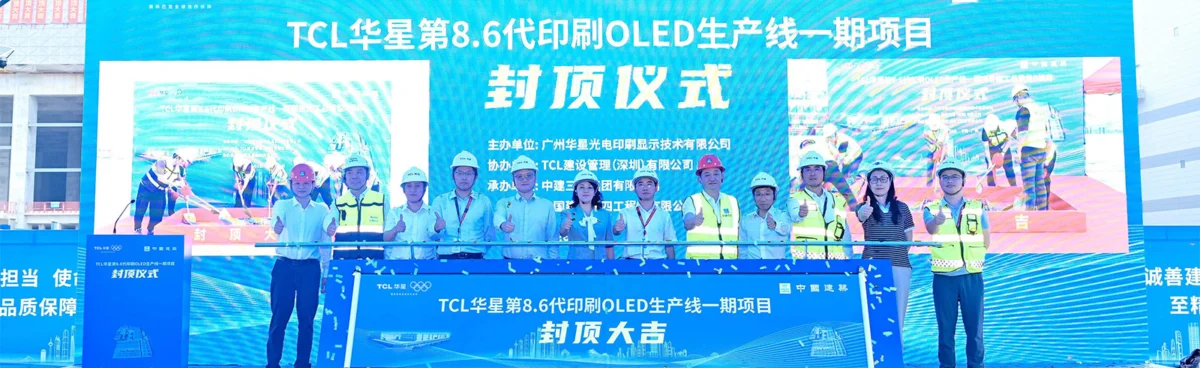
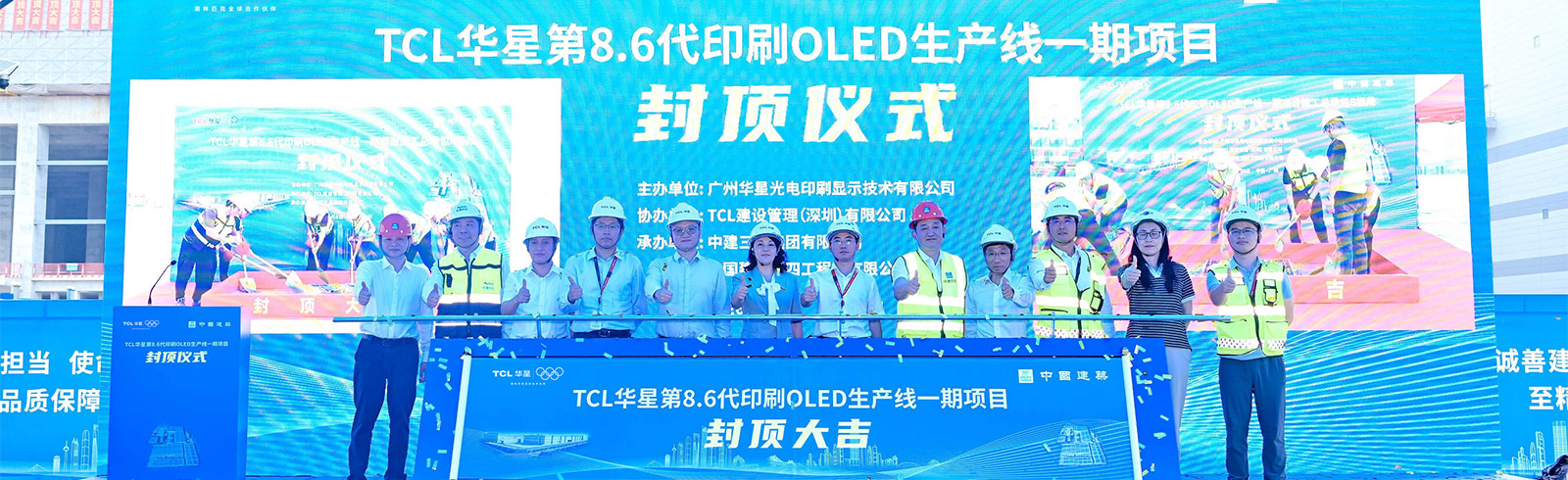
In a move that promises to redefine the landscape of global display manufacturing, TCL CSOT has officially announced the topping-out of its groundbreaking Gen 8.6 inkjet-printed OLED (IJP OLED) production facility in Guangzhou. Known internally as the "t8 project," this facility represents more than just a construction milestone; it signifies the transition of inkjet-printed OLED technology from a long-term research ambition to a viable, large-scale commercial reality.
By successfully completing the main factory structure and cleaning phase in record time, TCL CSOT has signaled to the industry that the era of cost-effective, high-performance OLED panels is rapidly approaching.
The Core Facts: A New Benchmark for Display Manufacturing
The t8 project is the world’s first Gen 8.6 IJP OLED mass-production line. This facility is designed to address the persistent challenges associated with traditional OLED production—specifically the high costs and material waste inherent in vacuum-evaporation methods.
With a total investment of approximately US$4.34 billion (RMB 29.5 billion), the facility is engineered for an impressive monthly capacity of 22,500 glass substrates. Each substrate measures a massive 2290 x 2620 mm, allowing for the efficient cutting of various display sizes, from high-end mobile devices and desktop monitors to massive, cinema-grade televisions and sophisticated automotive display panels.
The topping-out ceremony serves as a pivotal bridge between civil construction and high-tech installation. The facility is now transitioning into the installation phase, which involves integrating power systems and the complex, sensitive machinery required for precision inkjet printing.
Chronology of the t8 Project: Velocity and Precision
The speed at which the t8 project has progressed is being cited as an industry benchmark, reflecting a level of operational discipline rarely seen in heavy manufacturing.
- Foundation and Groundbreaking: The project officially broke ground on November 30, 2025.
- Structural Completion: In an engineering feat that underscores TCL CSOT’s internal efficiency, the main structure of the facility was completed in just 151 days.
- The Milestone: As of the latest update in 2026, the topping-out has been achieved, marking the end of the initial construction phase.
- Next Phase (Q3 2026 and beyond): The project is now moving into the "finish work" stage, which includes the installation of cleanroom environments and the logistical challenge of relocating core production equipment into the facility.
This rapid pace is indicative of TCL CSOT’s commitment to capturing the early-adopter market for mid-to-large-sized OLEDs, ensuring they remain ahead of the curve as display technology pivots toward more sustainable and cost-efficient production methods.
Supporting Data: Why Inkjet Printing Changes Everything
To understand the magnitude of the t8 project, one must contrast it with the status quo. For years, the OLED industry has relied on "vacuum thermal evaporation" (VTE). While effective, VTE is a resource-heavy, expensive, and wasteful process. It involves evaporating organic materials in a vacuum chamber, where much of the material is lost during the coating process.
The Advantages of the IJP Approach
TCL CSOT’s inkjet-printed OLED technology utilizes a precise, on-demand deposition process. Imagine a high-end office printer, but calibrated to a molecular level of precision, depositing organic compounds onto a glass canvas.
- Material Utilization: IJP significantly reduces material waste by applying OLED compounds only where they are needed. This efficiency drastically lowers the "bill of materials" (BOM) cost for manufacturers.
- Scalability: The Gen 8.6 substrate size is ideal for the mid-size market. As the industry moves toward larger monitors and smaller, more accessible OLED TVs, the ability to cut these panels from large substrates without excessive waste is a key competitive advantage.
- Environmental Impact: Lower material usage and more efficient manufacturing processes contribute to a smaller carbon footprint, aligning with global trends toward greener industrial production.
The Foundation of Experience
The t8 project is not an isolated experiment. It is the natural successor to TCL CSOT’s earlier Wuhan G5.5 IJP OLED line, known as the "t12" project. The t12 line achieved mass production in late 2024, acting as a crucial proving ground. The yield-optimization experience gained in Wuhan has been instrumental in allowing the company to scale up to the Gen 8.6 dimensions with confidence.
Official Responses and Strategic Vision
Dr. Weiran Cao, Chief of the IJP OLED Center at TCL CSOT, has been vocal about the strategic importance of this facility. "The early completion of the t8 facility reinforces our leadership in next-generation display technologies," Dr. Cao stated during the topping-out event.
He emphasized that the project is a "strategic pillar" in the company’s long-term display roadmap. The executive leadership at TCL CSOT views the t8 project not merely as a factory, but as an engine for "industrialization." By moving from the pilot-scale innovation seen in the t12 project to full-scale mass production in the t8, TCL CSOT is effectively creating a new ecosystem for high-end displays.
This vision is further supported by the company’s broader "APEX" framework, a technological philosophy unveiled at SID Display Week 2026. Through APEX, TCL aims to integrate pixel-level innovation across all its display technologies, including FMM OLED, LCD, and the newly industrialized IJP OLED.
Implications: A New Era for the Global Display Market
The successful launch of the t8 line will have profound implications for consumers, competitors, and the display industry at large.
1. Market Accessibility
Currently, large-size OLEDs remain a premium, often prohibitively expensive luxury. By optimizing the production process through inkjet printing, TCL CSOT is poised to lower the barrier to entry. We can expect to see a surge in high-performance OLED monitors and TVs at price points that were previously impossible to achieve with traditional OLED manufacturing.
2. Competitive Pressure
Competitors who rely heavily on legacy VTE processes may face mounting pressure to pivot toward inkjet or alternative advanced printing technologies. TCL’s ability to mass-produce at the Gen 8.6 scale essentially sets a new "floor" for manufacturing expectations.
3. Vertical Integration and Product Diversification
The versatility of the t8 line allows TCL CSOT to address several market segments simultaneously:
- Mobile Devices: High-refresh-rate, energy-efficient panels.
- Desktop Monitors: Professional-grade displays that benefit from the precision of IJP technology.
- Automotive: The automotive industry is rapidly adopting OLEDs for digital dashboards and infotainment systems. The durability and cost-efficiency offered by IJP-made panels make them an ideal candidate for the automotive supply chain.
Conclusion: The Path Forward
The topping-out of the t8 Gen 8.6 IJP OLED line is a landmark event in the timeline of display technology. By combining aggressive investment, rapid engineering execution, and a decade of specialized R&D, TCL CSOT has positioned itself at the forefront of a technological revolution.
As the facility moves toward full operational status, the eyes of the global tech industry will remain fixed on Guangzhou. If the t8 project delivers on its promise of high-yield, high-efficiency production, it will not only secure TCL CSOT’s dominance in the display sector but will also usher in a new age of high-fidelity, affordable OLED technology for consumers worldwide.
With the technical foundation established, the next eighteen months will be critical. As the core equipment is installed and the first test substrates roll off the line, the transition from "construction milestone" to "market-changing innovation" will be complete, permanently altering how we view the screens that define our daily lives.
Author

Related Posts

OneOdio Raises the Bar: The Studio Max 2 Headphones Aim to Redefine Professional Audio Monitoring
- 0
- 1,196 word
By TWICE Staff | May 13, 2026 In the rapidly evolving landscape of professional audio, the intersection of wireless convenience and studio-grade...
Read out all
Elevating the Outdoor Experience: Coastal Source Unveils ‘Design Studio’ to Revolutionize Integration Workflow
- 0
- 1,188 word
As the lines between indoor luxury and outdoor living continue to blur, the demand for sophisticated, fully integrated landscape lighting and audio...

The Sound of the Court: Devialet and Roland-Garros Unveil a Masterpiece of Acoustic Engineering
- 0
- 1,334 word
In a marriage of high-performance sport and high-fidelity sound, French acoustic engineering pioneer Devialet has officially unveiled its latest masterpiece: the Phantom...
Read out all
A Transition of Power: Kevin Warsh Takes the Helm at a Fractured Federal Reserve
- 0
- 1,257 word
As of May 15, 2026, the era of Jerome Powell at the Federal Reserve has officially entered a new, unprecedented chapter. Following...
Read out all
REL Acoustics Redefines Low-Frequency Integration with New “Planar” Subwoofer Series
- 0
- 1,185 word
May 13, 2026 — In a move that signals a paradigm shift for high-end home audio, REL Acoustics has officially unveiled its...
Read out all
The OLED Dilemma: Why the LG G6 Has Stalled the Flagship Evolution
- 0
- 1,236 word
In the world of premium home cinema, LG’s OLED panels have long been considered the gold standard. For nearly a decade, the...
Read out all