
- 0
- 1,384 word
In the rapidly evolving landscape of modern combat, the proliferation of drones and precision-guided munitions has forced militaries worldwide to rethink air defense. While global powers like the United Kingdom and the United States pour hundreds of millions of dollars into high-energy laser weapon systems (HELWS) like the British DragonFire, a small Ukrainian startup named Celebra Tech is challenging the status quo.
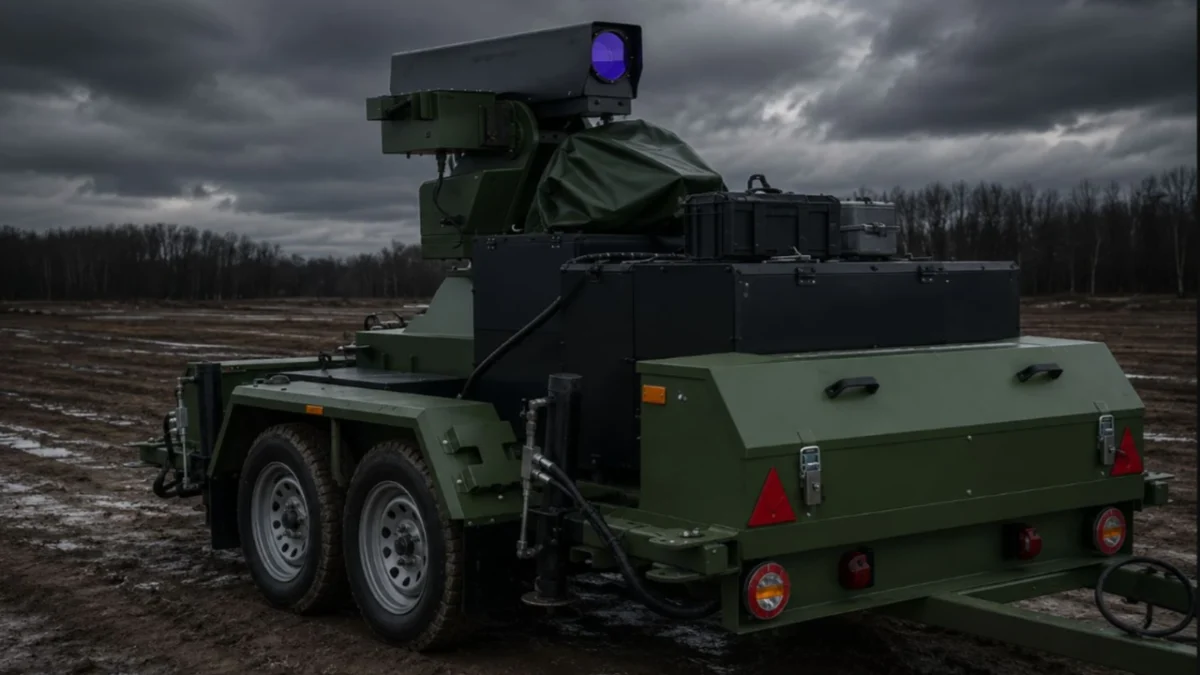
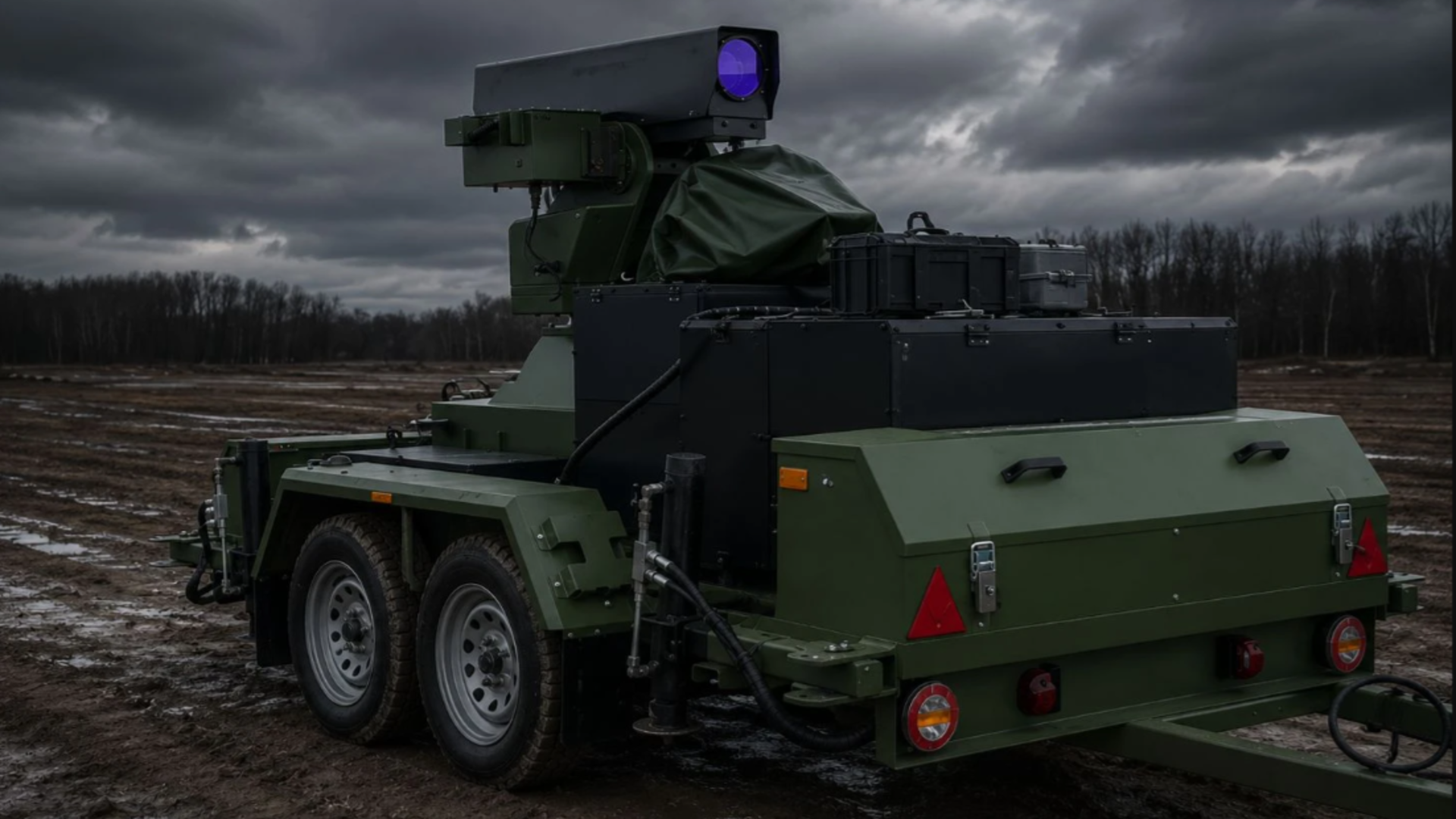
The company is currently finalizing the "Trident," a compact, high-precision laser weapon system designed to neutralize a wide array of aerial threats—from cheap, ubiquitous FPV drones to sophisticated attack helicopters and incoming missiles. By promising a capability that rivals billion-dollar defense programs at a fraction of the cost, Celebra Tech has positioned itself at the center of a debate regarding the future of asymmetric warfare. However, as the project moves toward potential deployment, experts remain divided on whether this lean, 15-person team can deliver on its ambitious claims.
Main Facts: The Trident System at a Glance
The Trident system is, at its core, a directed-energy weapon designed for tactical engagement. Unlike traditional anti-aircraft systems that rely on expensive kinetic interceptors—missiles that can cost millions of dollars per unit—the Trident utilizes a focused beam of light to "burn" through the sensitive optoelectronics, structural airframes, and guidance systems of enemy assets.
Key specifications and operational capabilities highlighted by Celebra Tech include:
- Engagement Versatility: The system is reported to be effective against reconnaissance drones, FPV (First-Person View) drones, attack helicopters, and fixed-wing aircraft.
- Operational Range: The manufacturer claims an effective destruction range of 1.5 kilometers for drones, extending up to 5 kilometers for larger aerial targets like helicopters. At distances up to 10 kilometers, the system is said to retain enough potency to "blind" enemy surveillance cameras and sensor arrays.
- Precision and Control: Recent upgrades to the platform include integrated radar, automatic target tracking, and a real-time re-guidance mechanism that allows the operator to adjust the beam during active engagement, compensating for target movement.
- Cost Efficiency: While the UK’s DragonFire system is estimated to cost £120 million in development, Celebra Tech claims its system can be produced and deployed for a fraction of that expenditure, aiming to make laser defense accessible for broader battlefield distribution.
A Chronology of Development: From Prototype to Battlefield
The journey of the Trident system is deeply rooted in the high-stakes environment of the ongoing conflict in Ukraine.
2021–2022: The Prototype Era
The Trident’s lineage traces back to the "Trident-120" prototype. During this period, the system was physically configured to resemble a large-caliber rifle, emphasizing portability and rapid deployment. It was during these early field tests that the system first demonstrated its potential. Developers report that the Trident-120 successfully engaged and damaged the sophisticated optoelectronic suites of Russian Ka-52 "Alligator" attack helicopters, as well as Orlan-10 reconnaissance drones and stationary Murom ground-based observation stations.
2023–2024: Iterative Refinement
Following the promising results of the early prototypes, the team at Celebra Tech shifted focus toward scaling the technology. This period saw the integration of more sophisticated software, specifically targeting the accuracy issues that often plague directed-energy weapons in field conditions. The introduction of automated tracking and radar-slaved aiming represented a significant leap from the manual-aiming approach of the Trident-120.
2025–Present: The Push for Operational Readiness
As of the current year, Celebra Tech is moving toward finalizing the system for more widespread testing. Vadym Sukharevskiy, the former commander of the Unmanned Systems Forces, has publicly championed the system’s potential, noting that the current iteration is capable of striking aerial targets at altitudes exceeding 2 kilometers.
Supporting Data: Examining the Physics of the Claim
The efficacy of a laser weapon depends on several physical factors: power density, beam quality, and atmospheric attenuation.
The Challenge of Atmosphere
The developers claim that the Trident can damage electronics and optics at 10 kilometers. In physics terms, this is highly dependent on environmental conditions. Humidity, dust, smoke, and precipitation can scatter laser energy, reducing the power density at the target. While a system can "blind" a sensor at 10 kilometers—where only a few milliwatts of energy are required to saturate a CMOS sensor—destroying a hardened airframe at 5 kilometers requires significantly higher power output and sustained dwell time on a specific point.
The "Cost-per-Kill" Advantage
The primary argument for the Trident is the economic one. The "cost-per-kill" for a traditional surface-to-air missile (SAM) is prohibitive when faced with "swarms" of low-cost drones. If the Trident can effectively disable an FPV drone, the cost is essentially the price of the electricity used to fire the laser, plus the maintenance of the generator. This makes it an ideal candidate for "asymmetric defense," where a lower-tech, lower-cost system neutralizes an expensive enemy asset.
Official Responses and Independent Verification
The military-industrial sector has maintained a cautious distance from the Trident project. While the claims made by Celebra Tech are bold, there is a distinct lack of peer-reviewed data or independent, third-party verification.
Major defense contractors and military research organizations typically subject their laser programs to years of rigorous testing in controlled environments—such as White Sands Missile Range in the US or various UK test ranges—before declaring them "combat ready." Celebra Tech, operating with a small team of fifteen, has largely bypassed this traditional path, moving directly from internal field tests to claims of combat capability.
"A low-cost laser that solves every aerial threat remains an incredibly appealing idea," says a defense analyst familiar with directed-energy programs. "However, the leap from ‘blinding a drone camera’ to ‘shooting down a high-speed aircraft’ is vast. Without verifiable data on beam stability, dwell times, and the ability to maintain a lock on moving targets under combat stress, we must treat these claims as theoretical rather than established operational capability."
Furthermore, the company’s assertion that the Trident can be used for demining operations—using a laser to trigger explosive ordnance from a distance—is viewed with skepticism by EOD (Explosive Ordnance Disposal) experts, who note that many modern mines are buried or hidden under debris, rendering line-of-sight laser engagement impossible.
Implications: The Future of Battlefield Defense
If the Trident system performs even partially as well as its developers claim, it could trigger a paradigm shift in how frontline units defend themselves.
Decentralizing Air Defense
Traditionally, air defense has been a "top-down" asset, controlled by high-level command and requiring large, expensive radar vehicles. A portable, effective laser system would allow infantry platoons to carry their own "air-defense umbrella," creating a decentralized network that is much harder for an enemy to suppress.
The Rise of the "Lean" Defense Startup
The success or failure of the Trident will also serve as a case study for the "lean defense" model. In an era where defense budgets are often bloated by bureaucracy and long lead times, the idea that a fifteen-person team can innovate at the speed of software development is enticing. If successful, it could pave the way for a new generation of agile, private-sector defense companies that focus on rapid, iterative development rather than the multi-decade procurement cycles of traditional giants.
Ethical and Strategic Considerations
The move toward automated, laser-based target tracking raises significant questions regarding the rules of engagement. As these systems become more autonomous, the risk of collateral damage or accidental engagement of friendly aircraft increases. Moreover, the ease of use could lead to an "arms race" of counter-measures, where adversaries shift toward hardening drone optics or utilizing stealth coatings to reflect laser energy.
Conclusion
The Trident laser system by Celebra Tech represents the ambition and ingenuity born of necessity. It is a bold attempt to solve one of the most pressing problems of modern warfare: the threat of the low-cost drone. Whether the system will prove to be a revolutionary breakthrough or a case of "too good to be true" remains to be seen.
As the war in Ukraine continues to serve as a brutal, high-stakes laboratory for emerging technologies, the Trident will likely face its ultimate test on the front lines. For now, the global defense community is watching closely, waiting to see if this small team of developers can turn their vision of a laser-defended battlefield into a tangible reality. The gap between a functional prototype and a reliable, combat-proven weapon is often measured in years and millions of dollars; Celebra Tech is attempting to bridge that gap with, quite literally, the speed of light.
Author

Related Posts

The Titan of the Living Room: LG Redefines Home Cinema with the 115-Inch 2026 QNED evo Mini LED Flagship
- 0
- 1,163 word
In a bold move that cements its commitment to the "ultra-large" television market, LG Electronics has officially launched its 2026 QNED evo...
Read out all
Graber Unveils Spring 2026 Collection: A Paradigm Shift in Smart Home Integration and Biophilic Design
- 0
- 1,144 word
As the smart home market matures, the demand for window treatments that are as technologically sophisticated as they are aesthetically nuanced has...
Read out all
Loewe Technology Solidifies North American Foothold Through Strategic Partnership with Mid-Atlantic AV Powerhouses
- 0
- 1,352 word
In a move signaling a major shift in the luxury home entertainment landscape, German engineering icon Loewe Technology has officially entered an...

A New Chapter: TechHive Merges Into PCWorld to Expand Smart Home Coverage
- 0
- 1,193 word
By Editorial Staff In a major strategic realignment of its digital media portfolio, Foundry—the parent company behind several of the internet’s most...
Read out all
The Death of Perfection: Instagram Instants and the Return to Raw Photography
- 0
- 1,226 word
In an era defined by hyper-curated feeds, professional-grade lighting, and an endless array of AI-assisted editing tools, the concept of a "casual...
Read out all
The Kindle Colorsoft Revolution: Is Now the Time to Make the Switch?
- 0
- 1,388 word
For years, the e-reader market has been defined by a monochromatic standard. While tablet displays evolved into vibrant, high-definition marvels, the dedicated...
Read out all