

- 0
- 1,245 word
In the tranquil, pixelated world of Pelican Town, the most stressful events usually involve a missed crop harvest or a particularly difficult fishing minigame. However, a whirlwind of misinformation recently swept through the Stardew Valley community, causing a temporary panic among fans who feared that developer Eric “ConcernedApe” Barone was planning to introduce divorce, infidelity, and complex relationship drama to the beloved farming simulator.
What began as a contemplative, wide-ranging interview regarding game design philosophy quickly devolved into a heated digital debate. After reports surfaced claiming that Stardew Valley would soon allow players to cheat on or divorce their in-game spouses, Barone was forced to launch a rapid, multi-platform social media defense to clarify his stance. For a game long cherished for its wholesome, escapist qualities, the mere suggestion of introducing "real-world" marital strife was enough to rattle its dedicated player base.
The Genesis of the Rumor: A Linguistic Misunderstanding
The controversy traces its origins to an interview published in Game Informer, where Barone discussed the nature of creativity, the limitations of sandbox design, and the ethical implications of player agency. During the discussion, the topic of "un-marryable" NPCs—such as Caroline, Robin, and Demetrius—arose. Barone acknowledged that some players have expressed a desire to pursue these characters, though he noted that doing so would necessitate breaking up existing families in the town.
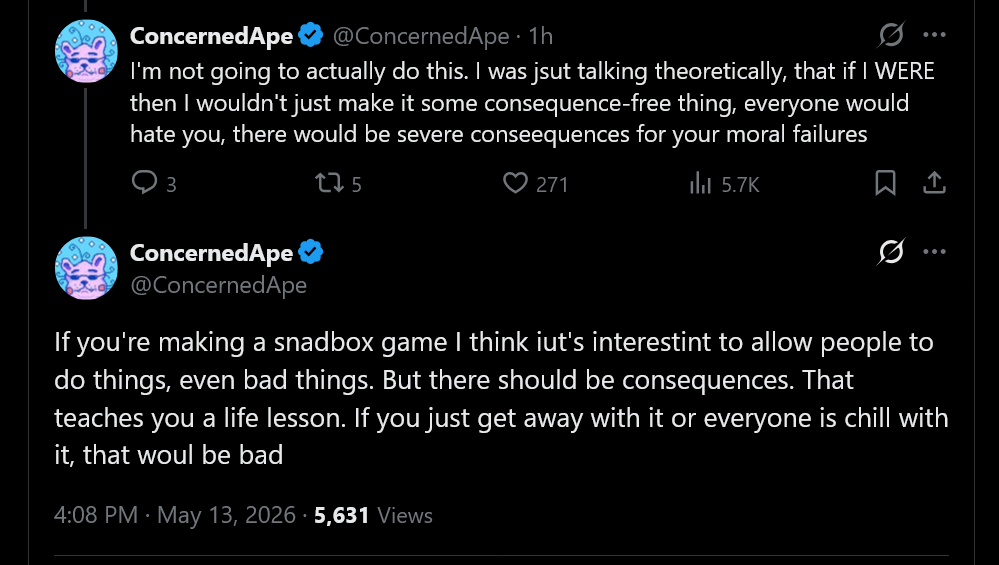
While Barone mused that a sandbox game theoretically allows for "bad" behavior, he emphasized the necessity of severe in-game consequences to maintain moral weight.
The chaos erupted when the Japanese gaming outlet Automaton covered the interview. Through a series of algorithmic translation errors, the nuance of Barone’s theoretical design discussion was lost. When the Japanese article was machine-translated back into English, it quoted Barone as stating, "We are considering the introduction of infidelity and divorce."
The quote, which was entirely misrepresentative of the original conversation, spread across social media like wildfire. Fans, fearing the destruction of the game’s cozy reputation, flocked to Twitter (now X) and Reddit to express their confusion and concern.
Chronology of the "Infidelity" Outbreak
The timeline of the confusion highlights the speed at which misinformation can travel in modern gaming journalism:
- May 12, 2026: Game Informer publishes its feature interview with Eric Barone, exploring the supernatural and creative aspects of his work.
- May 13, 2026: The Japanese publication Automaton releases a summary of the interview. The article incorrectly frames a theoretical musing as a confirmed development plan.
- May 14, 2026: The machine-translated version of the Automaton article hits Western news aggregators. The phrase "We are considering the introduction of infidelity and divorce" becomes the focal point of the narrative.
- May 14, 2026 (Afternoon): ConcernedApe notices the influx of concerned messages. He begins an immediate, systematic debunking of the reports, labeling them as "fake news" and "clickbait."
- May 15, 2026: Barone provides further context to the community, explaining his actual thoughts on player agency versus the "cozy" nature of the game.
The Developer’s Stance: Theoretical Design vs. Reality
Eric Barone has always been a developer known for his transparency and his deep connection with his community. When the rumors gained momentum, he didn’t wait for a PR team to issue a sterile statement. He went straight to the source, correcting the record with his characteristic dry wit.
In his response to Automaton, Barone clarified: "The only thing I had ever ‘considered’ was allowing players to break up Pierre/Caroline or Robin/Demetrius, but even that is probably too heavy and serious, and would be a ton of work to adjust all dialogue and tone of everyone in town in consequence, and Grandpa ashamed of you."
Barone’s comments reveal a sophisticated approach to game design. He argues that if a game were to allow morally questionable actions, it cannot be a consequence-free experience. "If you’re making a sandbox game, I think it’s interesting to allow people to do things, even bad things. But there should be consequences. That teaches you a life lesson. If you just get away with it or everyone is chill with it, that would be bad."
He drew a direct comparison to existing Stardew Valley mechanics, such as the "Dark Shrine of Selfishness," where players can turn their children into doves. It is a dark, haunting mechanic that has permanent, narrative-driven repercussions. Barone’s point was that he is not opposed to moral complexity, but he is fundamentally opposed to "babying" players—if he were to include such systems, they would be severe, impactful, and perhaps even alienating to the player.
Implications for the "Cozy Game" Genre
The swift backlash to the rumor of infidelity reveals something profound about the Stardew Valley audience. Many players view the game as a sanctuary from the complexities of the real world. In an era where many AAA titles lean into gritty realism, betrayal, and high-stakes conflict, Stardew Valley provides a rare space where relationships are built on gifting, kindness, and communal support.
The "infidelity" panic serves as a case study in audience expectations. Players do not just want a game that functions; they want a game that maintains a specific emotional frequency. When that frequency is threatened by the prospect of "real-world" stressors, the community’s protective instinct kicks in.
Furthermore, the incident highlights the ongoing challenges of cross-cultural gaming journalism. As gaming becomes an increasingly global industry, the reliance on automated translation for news aggregation creates significant risks. When nuances in intent are stripped away by software, developers are forced to spend their time managing public relations crises rather than focusing on development.
A Wider View: Creativity and the Developer-Player Dynamic
Amidst the chaos, Barone maintained his trademark accessibility. Between addressing the infidelity rumors, he took time to engage with fans on lighter topics. He responded to a fan disappointed by their "fairy godmother" (a random in-game attribute), jokingly reminding them that "I don’t make the rules," and offered congratulations to a student who received an A+ on a presentation about the art of Stardew Valley.
These interactions underscore why the community is so protective of the game. Barone is seen not as a faceless corporation, but as an individual creator who shares the game’s evolution with his players. When a rumor threatens the "sanctity" of that world, the community doesn’t just treat it as a design update—they treat it as a personal affront to the experience they’ve built over years of gameplay.
Conclusion: Lessons Learned
Ultimately, the "infidelity" controversy was a tempest in a teapot, fueled by technological translation failures and the high stakes of modern digital discourse. Eric Barone has been clear: he has no plans to turn Pelican Town into a soap opera.
The incident serves as a reminder to the gaming public to approach "leaks" and "reports" with a healthy degree of skepticism, particularly when they originate from translated sources. For Barone, it was a momentary diversion from his work—a chance to clarify his design philosophy and reassure the fans that, for now, the most scandalous thing you have to worry about in Stardew Valley is forgetting to water your ancient fruit or accidentally turning your kids into birds at the Dark Shrine.
As the dust settles, the residents of Pelican Town remain as they were: busy, somewhat quirky, and blissfully free of the infidelity dramas that plague the real world. And perhaps, that is exactly how it should stay. As Barone implied, some things are better left to the "real world," while the farm remains a place to escape.
Author

Related Posts

The New Era of Xbox: Asha Sharma’s Strategic Pivot and the Future of Game Pass
- 0
- 1,236 word
Since stepping into the role of CEO of Xbox Gaming, Asha Sharma has become the face of a radical transformation within the...
Read out all
MercurySteam Initiates Workforce Reductions: A Sobering Moment for the Spanish Games Industry
- 0
- 1,154 word
The global video game industry continues to grapple with a period of intense volatility and structural realignment. This week, the veteran Spanish...
Read out all
Capcom’s Strategic Blueprint: Sustaining Growth Through Legacy and Innovation
- 0
- 1,256 word
In the high-stakes landscape of the modern video game industry, few publishers have managed to maintain a trajectory as consistently impressive as...
Read out all
The Architect of Immersive Worlds: Why Ken Levine’s ‘Judas’ is Rewriting the Rules of Narrative Design
- 0
- 1,305 word
The gaming industry is often defined by cycles of technological leaps—ray tracing, 8K resolutions, and photorealistic asset streaming. However, for Ken Levine,...
Read out all
The GTA 6 Pre-Order Frenzy: Why Retail Data Has Fans Holding Their Breath
- 0
- 1,302 word
It has been less than 48 hours since the feverish Grand Theft Auto community collectively convinced itself that Rockstar Games was on...
Read out all
The "Rat" Meta: How Arc Raiders’ Free Loadout System Challenges the Core of Extraction Shooters
- 0
- 1,161 word
In the high-stakes world of extraction shooters, the tension is supposed to be the point. You load into a map with your...
Read out all