

- 0
- 1,275 word
In the high-velocity world of open-source development, the friction between upstream innovation and downstream distribution stability is often measured in build failures. For maintainers working within the Fedora ecosystem, debugging a failed Koji build can be a daunting, time-consuming task. Today, that process is becoming significantly more intelligent. The Packit project has officially announced the integration of Log Detective, an AI-driven diagnostic tool designed to parse, analyze, and explain why package builds fail.
This integration marks a milestone in the effort to automate the "drudgery" of package maintenance, turning opaque error logs into actionable insights. By leveraging the latest in agentic AI frameworks, Packit is moving toward a self-healing development cycle that lowers the barrier to entry for new contributors and accelerates the workflow for seasoned maintainers.
Main Facts: Automating the Diagnostic Workflow
The integration of Log Detective into the Packit ecosystem is a strategic move to address the "black box" nature of build logs. Historically, when a Koji build failed during a pull request (PR) process, developers were forced to manually sift through thousands of lines of log files—often involving complex build artifacts—to pinpoint the root cause of the error.
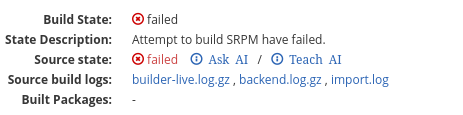
Starting this month, this manual labor is being offloaded to an automated pipeline. When a Packit-triggered scratch Koji build fails, the service now automatically initiates an analysis request. This process requires zero configuration from the user. There is no need to define log paths, tune parameters, or select specific AI prompts. The system handles the entire lifecycle: from the moment a failure is detected to the final presentation of a human-readable diagnosis on the Packit dashboard.
The core value proposition is simple: faster feedback loops. By providing an immediate, AI-generated summary of "what went wrong" and, where possible, a suggested fix, the service allows developers to pivot from troubleshooting to patching in seconds rather than hours.
Chronology: The Evolution of Log Detective
The journey toward this integration began with the initial development of Log Detective within the Fedora Copr environment. Users of Copr, the personal repository service for Fedora, were the first to experience the "Ask AI" feature. By clicking a button, they could request an immediate analysis of build errors, a feature that quickly proved its utility in identifying common failure patterns such as missing build dependencies, syntax errors, or compiler misconfigurations.
From Copr to Packit
The success of the Copr implementation paved the way for a broader deployment. The development team recognized that if the tool could assist in the experimental Copr environment, it could provide even greater value to the more formal Packit-driven workflows.

- Version 4.0 Milestone: The release of Log Detective v4.0 represented a architectural shift, moving to an agent-based model powered by the BeeAI Framework. This transition was critical in allowing the tool to handle more complex, multi-stage build logs effectively.
- The Interface Server: To bridge the gap between the standalone Log Detective service and the existing Packit infrastructure, a new, lightweight containerized interface server was developed. This server acts as the "middleman," orchestrating communication and ensuring that requests from Packit are processed and delivered back via the Fedora Messaging bus.
Supporting Data: The Architecture of Intelligence
The efficiency of the Log Detective system is not merely the result of a large language model (LLM); it is built on a sophisticated data-pruning strategy.
The Drain Algorithm and Snippet Extraction
Sending an entire multi-megabyte log file to an LLM is inefficient, costly, and often degrades performance due to "context noise." To circumvent this, Log Detective employs the Drain template mining algorithm.
The system processes raw logs and extracts only the most salient "snippets"—the error messages, stack traces, and configuration warnings that matter most. By isolating these snippets:
- Token Economy: The service consumes significantly fewer tokens, allowing for faster response times and reduced compute costs.
- Context Optimization: By removing boilerplate log text, the model can focus its "attention" on the specific failure indicators, resulting in higher-accuracy diagnoses.
- Model Versatility: This lean data approach allows the team to utilize smaller, more specialized models that are faster to run while still delivering professional-grade insights.
Communication Architecture
The backend communication flow is a model of asynchronous efficiency. When a build fails, Packit dispatches a signal to the Log Detective interface server. Once the analysis is complete, the results are published to the Fedora Messaging bus. Packit then consumes these messages and renders the findings directly within the relevant PR view in the Packit dashboard. This decoupled design ensures that the build process remains robust and that failures in the analysis service do not cascade into the core build infrastructure.
Official Responses: Managing Expectations
While the technology is impressive, the project maintainers are careful to define the scope and limitations of the tool. In an official statement accompanying the rollout, the team emphasized that Log Detective is not a panacea for package maintenance.
"Log Detective uses a general-purpose model and lacks access to external, domain-specific information beyond the build logs," the team noted. "It is not, and cannot be, a substitute for years of experience in package maintenance within the Fedora ecosystem."
The tool is positioned specifically as an "assistant" rather than an "authority." For veteran packagers, the AI’s output may seem elementary. However, for those new to the Fedora ecosystem—or those working on unfamiliar sub-projects—it serves as a powerful accelerator. By identifying the obvious errors, it allows human experts to focus their energy on the complex, nuanced bugs that truly require deep experience to solve.
Implications: The Future of Fedora Maintenance
The integration of Log Detective into Packit represents a broader trend in software engineering: the "AI-ification" of DevOps. By codifying institutional knowledge—the kind of knowledge that tells a developer that "error X" usually means "missing dependency Y"—the Fedora project is creating a more inclusive environment.
Enhancing the Developer Experience
The immediate implication for contributors is a reduction in the "wait-and-retry" cycle. When a PR fails, the developer is no longer greeted by a wall of red text. Instead, they receive a synthesized explanation that acts as a starting point for the investigation. This improves the developer experience (DX), making the process of contributing to Fedora more approachable and less intimidating.
Continuous Improvement and Future Roadmap
The development team has mapped out a clear roadmap for the future of the tool:
- Expanding the Dataset: The team is actively collecting annotated build logs on the official Log Detective website. This dataset will eventually serve as an additional information source to fine-tune the model, moving beyond general-purpose logic to domain-specific expertise.
- Dashboard Enhancements: Future iterations of the Packit dashboard are expected to show more than just the final analysis; the team plans to display the specific log snippets used to derive the conclusion, allowing users to verify the AI’s logic.
- Broader Support: While currently focused on Koji builds, there are active discussions about extending this analytical capability to Copr builds handled by Packit, effectively closing the loop across the entire Fedora development stack.
A Cultural Shift
Ultimately, the success of this integration may change the culture of package maintenance. If a machine can successfully handle 70% of common build errors, the human effort saved can be redirected toward code quality, security audits, and feature development. It transforms the role of the maintainer from a "log-reader" to an "architect of quality."
As Log Detective continues to learn from the community’s build history, it will likely become an indispensable fixture of the Fedora development lifecycle. For now, the integration serves as a powerful reminder that the best AI tools are not those that attempt to replace humans, but those that empower them to work faster, smarter, and with greater confidence.
Author

Related Posts

The Road to "Stonking Stingray": Canonical Unveils Early Roadmap for Ubuntu 26.10
- 0
- 1,313 word
Canonical has officially set the wheels in motion for the development of Ubuntu 26.10, the next iteration in its storied line of...
Read out all
Luberri 24.2.0: Bridging the Digital Divide with a Specialized Linux Distribution
- 0
- 1,140 word
Introduction: A New Standard for Educational Computing In the ever-evolving landscape of open-source software, few projects demonstrate the transformative power of Linux...
Read out all
Red Hat Redefines OS Security: An In-Depth Look at the Fedora Hummingbird Initiative
- 0
- 1,215 word
In an era where the frequency of high-profile Linux vulnerabilities seems to accelerate, the open-source community is being forced to pivot from...
Read out all
AWS Overhauls Data Analytics: New Graviton-Powered RG Instances Bridge the Gap Between Warehousing and Lakes
- 0
- 1,228 word
In a significant move to simplify the increasingly complex landscape of modern data architecture, Amazon Web Services (AWS) has officially launched its...
Read out all
The Digital Graveyard: Why Apple’s 32-Bit Purge Erased a Generation of Gaming History
- 0
- 1,200 word
In the rapidly accelerating lifecycle of consumer electronics, devices often transition from cutting-edge productivity tools to glorified paperweights with alarming speed. For...
Read out all
A New Chapter: Opensource.com Prepares for a Structural Evolution
- 0
- 1,243 word
The silence that has recently descended upon the digital corridors of Opensource.com is not a sign of stagnation, but rather the quiet...
Read out all