
- 0
- 1,200 word
In the rapidly accelerating lifecycle of consumer electronics, devices often transition from cutting-edge productivity tools to glorified paperweights with alarming speed. For the owner of a 2014-era iPad Mini 2, this trajectory was all too familiar. Once a sleek gateway to the burgeoning world of mobile gaming and media consumption, the device eventually buckled under the weight of modern operating system updates, rendering it sluggish, unsupported, and obsolete.
However, the death of this hardware was not merely a case of aging components; it was a symptom of a broader, systemic shift in the mobile ecosystem. When Apple forced the transition from 32-bit to 64-bit architecture, it inadvertently triggered a "digital extinction event," wiping away thousands of independent games and experimental applications that now exist only in the memories of early adopters.
The Chronology of Obsolescence: From Innovation to Inaction
The lifecycle of the iPad Mini 2 serves as a case study for planned—or perhaps inevitable—obsolescence. Purchased in 2014, the device initially flourished under the then-current iterations of iOS. As Apple pushed for more powerful hardware, the software followed suit, eventually leaving the A7 chip within the Mini 2 struggling to keep pace with the bloat of modern operating systems.
A Timeline of Decline:
- 2014–2016: The "Golden Age." The device functions as a primary portal for high-quality mobile gaming and media consumption.
- 2017: Apple introduces iOS 11, which formally drops support for 32-bit applications. Developers are pressured to update or perish.
- 2020 (July): The release of iOS 12.4.8 marks the final official security and feature update for the iPad Mini 2.
- 2020 (November): Streaming services, including BBC iPlayer and Netflix, officially cease support for the legacy versions of their apps compatible with iOS 12, effectively ending the device’s utility as a media player.
The transition from a useful tool to an electronic artifact was not a sudden mechanical failure, but a strategic decision by software providers to prioritize modern, secure, and performant infrastructure over legacy compatibility.
The 32-Bit Cottage Industry: A Lost Era of Development
Before the 64-bit mandate, the App Store was a Wild West of creativity. A vibrant cottage industry of independent developers thrived, bolstered by third-party discovery platforms like App Shopper and Pocket Gamer. These curators were essential; because the App Store’s internal discovery algorithms were—and remain—notoriously difficult to navigate, these websites acted as a filter, highlighting unique, experimental, and high-quality titles.
The Cost of Innovation
When Apple mandated the shift to 64-bit architecture, it imposed a "hidden tax" on developers. To remain in the store, developers had to rewrite their codebases. For large studios, this was a routine update. For the independent developers who had built the foundation of early mobile gaming, it was an insurmountable barrier. Many had moved on to other projects, lacked the funding to overhaul old code, or simply felt that the return on investment for a legacy app was not worth the labor. Consequently, thousands of titles simply vanished.
Case Study: The Disappearance of iD Software’s Experimental Titles
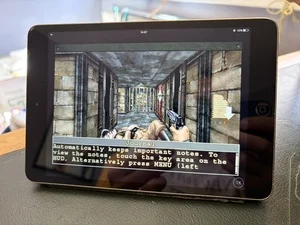
Perhaps the most poignant example of this digital erasure can be found in the works of John Carmack. During his tenure at iD Software, Carmack oversaw a series of experimental mobile projects that pushed the boundaries of what a handheld device could handle.
The list of "lost" titles includes mobile ports of Wolfenstein 3D and Doom, alongside niche experimental titles like RAGE: Mutant Bash TV. Most significantly, the App Store lost Doom 2 RPG and Wolfenstein RPG. These were not mere ports; they were bespoke experiences designed specifically for the mobile form factor, blending the frantic action of their source material with turn-based mechanics. When the 64-bit guillotine fell, these titles—along with high-profile casualties like the original Civilization Revolution—were pulled from distribution.

The case of Civilization Revolution is particularly egregious. Rather than updating the original, the publisher opted to pull the title entirely and release a sequel. For many players, the sequel lacked the charm and polish of the original, serving as a reminder that in the digital age, the consumer rarely owns their software; they merely lease it until the publisher decides it is time to move on.
Supporting Data: The Persistence of Legacy Hardware
For the determined, there is a way to look backward. By downgrading the iPad Mini 2 to iOS 10.3.3—the last version to offer full 32-bit support—it is possible to restore access to these forgotten libraries. While the process is technically demanding and often undocumented, the result is a functional, albeit frozen, window into 2012-era gaming.
Security Implications
It is critical to note that running an unpatched, decade-old version of iOS is a significant security risk. These devices lack the modern cryptographic protocols necessary to communicate safely with current web servers. They are vulnerable to virtually every exploit discovered in the last ten years. As such, these "museum pieces" should never be used to store sensitive information, process payments, or even browse the modern, JavaScript-heavy web. They are, at best, offline gaming consoles or, as some users have found, specialized e-readers for static document formats.
Official Responses and Industry Stance
Apple has consistently maintained that its transition to 64-bit was a necessary step for system performance and security. By standardizing the architecture, Apple argued that they could provide a more fluid user experience and better memory management. In their view, the "App Store cleanup" was a way to ensure that users were not downloading broken, abandoned, or insecure software.
However, critics argue that this approach ignores the cultural value of software preservation. Unlike physical media, which can be maintained by collectors and libraries, digital apps are tethered to the server-side infrastructure of the platform owner. When Apple turns off the keys to the kingdom, the "digital library" is burned down, and there is no public recourse to save the contents.
Implications: The Future of Digital Heritage
The plight of the iPad Mini 2 and its lost library raises existential questions about the future of digital culture. We are currently living in an era where history is being deleted in real-time. If the software that defined a generation is locked behind proprietary walls that prioritize constant updates over longevity, what will remain for future historians?
- The Death of Ownership: The transition from physical cartridges/discs to digital storefronts has shifted the power dynamic entirely toward the platform owner.
- The "Tax" of Maintenance: The requirement for developers to constantly update code just to keep an app functional—even if the app is finished and perfect—creates a culture where only massive, profitable games can survive.
- The Need for Emulation: As official support vanishes, the burden of preservation falls onto the emulation community. However, mobile hardware is notoriously difficult to emulate compared to classic consoles like the NES or SNES.
In conclusion, while the iPad Mini 2 may be a relic, it serves as a stark warning. The convenience of the digital ecosystem comes at the price of permanence. Unless platforms implement better ways to archive and run legacy software, the history of mobile gaming will remain a temporary phenomenon, destined to be erased every time a new processor architecture is introduced. For now, the old iPad sits on a shelf—a silent, flickering monument to a digital past that the future has decided it no longer needs.
Author

Related Posts

The Road to "Stonking Stingray": Canonical Unveils Early Roadmap for Ubuntu 26.10
- 0
- 1,313 word
Canonical has officially set the wheels in motion for the development of Ubuntu 26.10, the next iteration in its storied line of...
Read out all
Luberri 24.2.0: Bridging the Digital Divide with a Specialized Linux Distribution
- 0
- 1,140 word
Introduction: A New Standard for Educational Computing In the ever-evolving landscape of open-source software, few projects demonstrate the transformative power of Linux...
Read out all
Red Hat Redefines OS Security: An In-Depth Look at the Fedora Hummingbird Initiative
- 0
- 1,215 word
In an era where the frequency of high-profile Linux vulnerabilities seems to accelerate, the open-source community is being forced to pivot from...
Read out all
AWS Overhauls Data Analytics: New Graviton-Powered RG Instances Bridge the Gap Between Warehousing and Lakes
- 0
- 1,228 word
In a significant move to simplify the increasingly complex landscape of modern data architecture, Amazon Web Services (AWS) has officially launched its...
Read out all
AI-Powered Troubleshooting: Log Detective Integration Elevates Packit Build Analysis
- 0
- 1,275 word
In the high-velocity world of open-source development, the friction between upstream innovation and downstream distribution stability is often measured in build failures....
Read out all
A New Chapter: Opensource.com Prepares for a Structural Evolution
- 0
- 1,243 word
The silence that has recently descended upon the digital corridors of Opensource.com is not a sign of stagnation, but rather the quiet...
Read out all