

- 0
- 1,210 word
As the landscape of PC building shifts with the arrival of Intel’s latest Core Ultra processor lineup, the motherboard market is undergoing a significant transition. Stepping into the spotlight is the Asus Prime Z890-P Wi-Fi, a motherboard positioned as an accessible entry point into the Z890 ecosystem. Priced at $229.99, it promises the essential features required to harness Intel’s new LGA 1851 architecture without the premium tax associated with flagship "enthusiast-only" boards.
However, in a market saturated with refreshed and new-generation silicon, does this budget-conscious offering provide enough value to justify the investment? Our comprehensive testing at the Tom’s Hardware lab reveals a board that excels in practicality but faces stiff competition.
The Core Proposition: What is the Z890-P?
The "Prime" moniker in Asus’s hierarchy has long been synonymous with stability and value. The Z890-P is designed for users who want to leverage the latest performance gains from Intel Core Ultra 7 270K Plus and Core Ultra 5 250K Plus processors, as well as the flagship Core Ultra 9 285K.
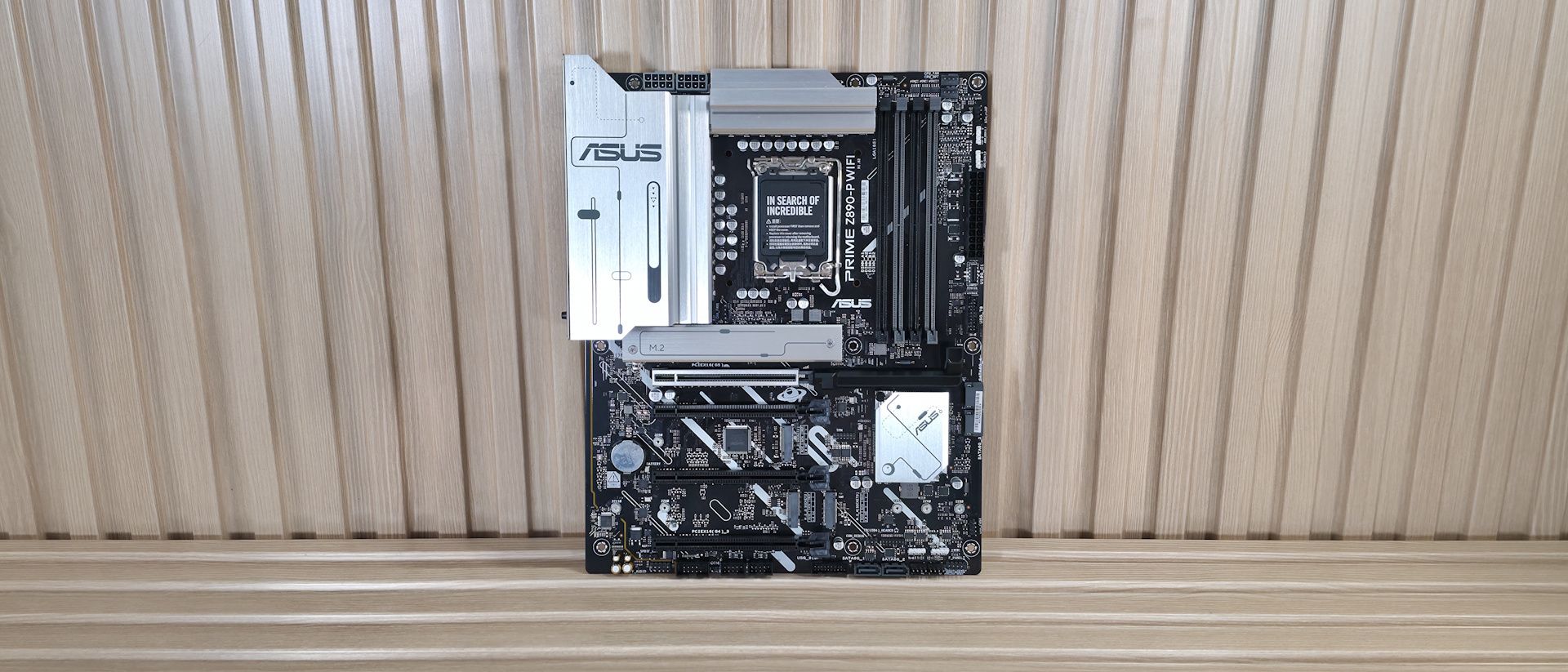
According to Asus, the board is "expertly engineered to unleash the full potential of the latest Intel Core processors." While this is standard marketing parlance, our bench testing suggests it holds water. The board provides a robust power delivery system and cooling infrastructure designed to keep thermals in check during sustained workloads, whether that’s high-end gaming or intensive content creation.
Chronology of Our Testing and Methodology
To determine the viability of the Prime Z890-P, our team subjected the board to a rigorous gauntlet of real-world and synthetic benchmarks. We tested the board’s power delivery, memory compatibility, and thermal performance across a variety of scenarios.
1. Initial Setup and Compatibility
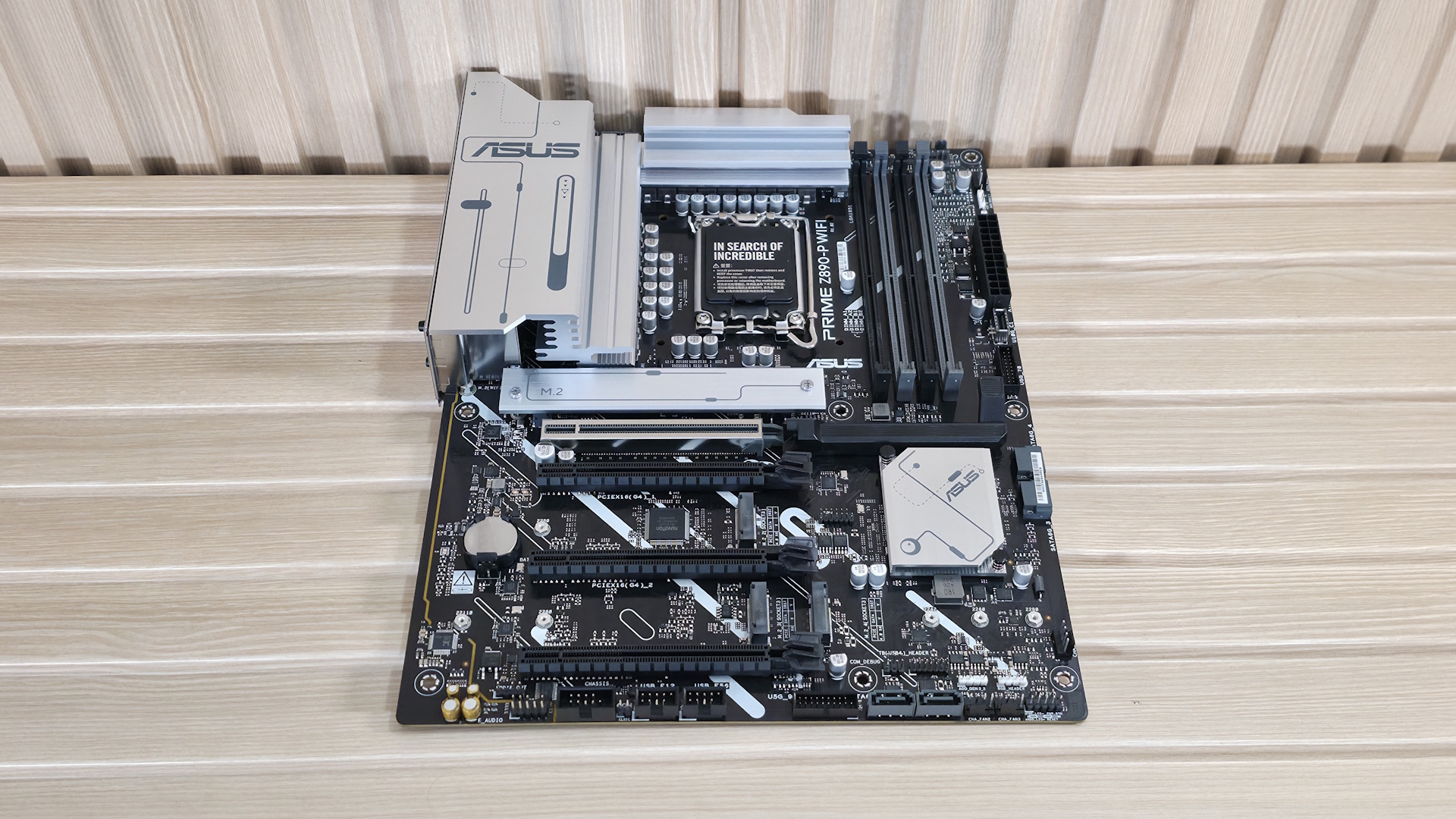
Our testing commenced with a focus on memory stability. The Z890-P officially supports DDR5-8666 MT/s (OC). Interestingly, our standard test bench DDR5-7600 kit struggled to maintain stability, suggesting that the QVL (Qualified Vendor List) is a mandatory reference for prospective buyers. However, our higher-spec 8200 MT/s kit performed flawlessly, highlighting that while the board is capable of high frequencies, it requires a "picky" approach to RAM selection.
2. Performance Benchmarking
We compared the Z890-P against the Z890 Aorus Elite Duo X. In default settings, the performance delta was negligible. Whether encoding video, rendering 3D assets, or running heavy office multitasking loads, the Prime Z890-P kept pace with more expensive boards, proving that its underlying circuitry is more than adequate for the Z890 platform’s core tasks.
3. Thermal Analysis
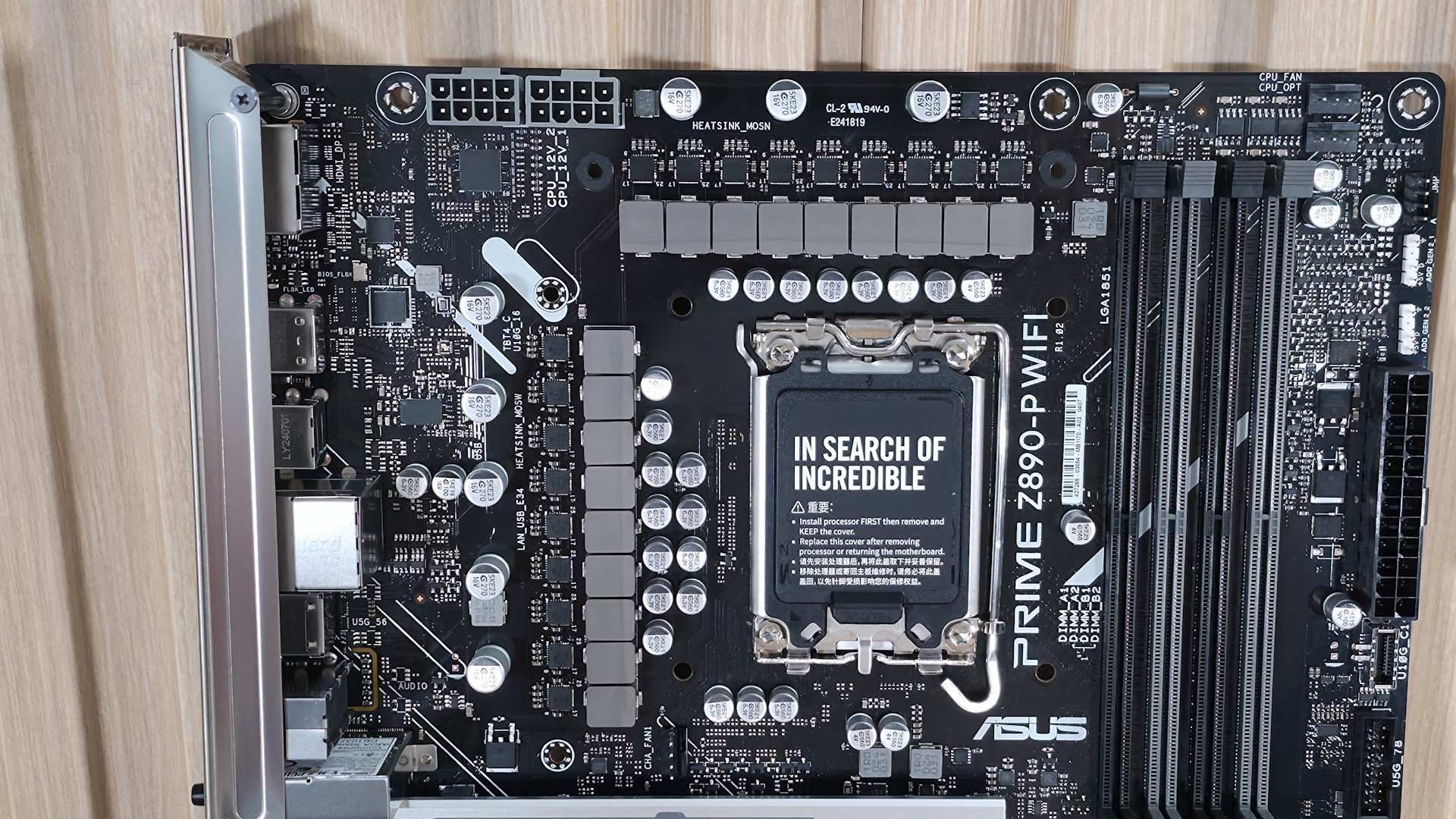
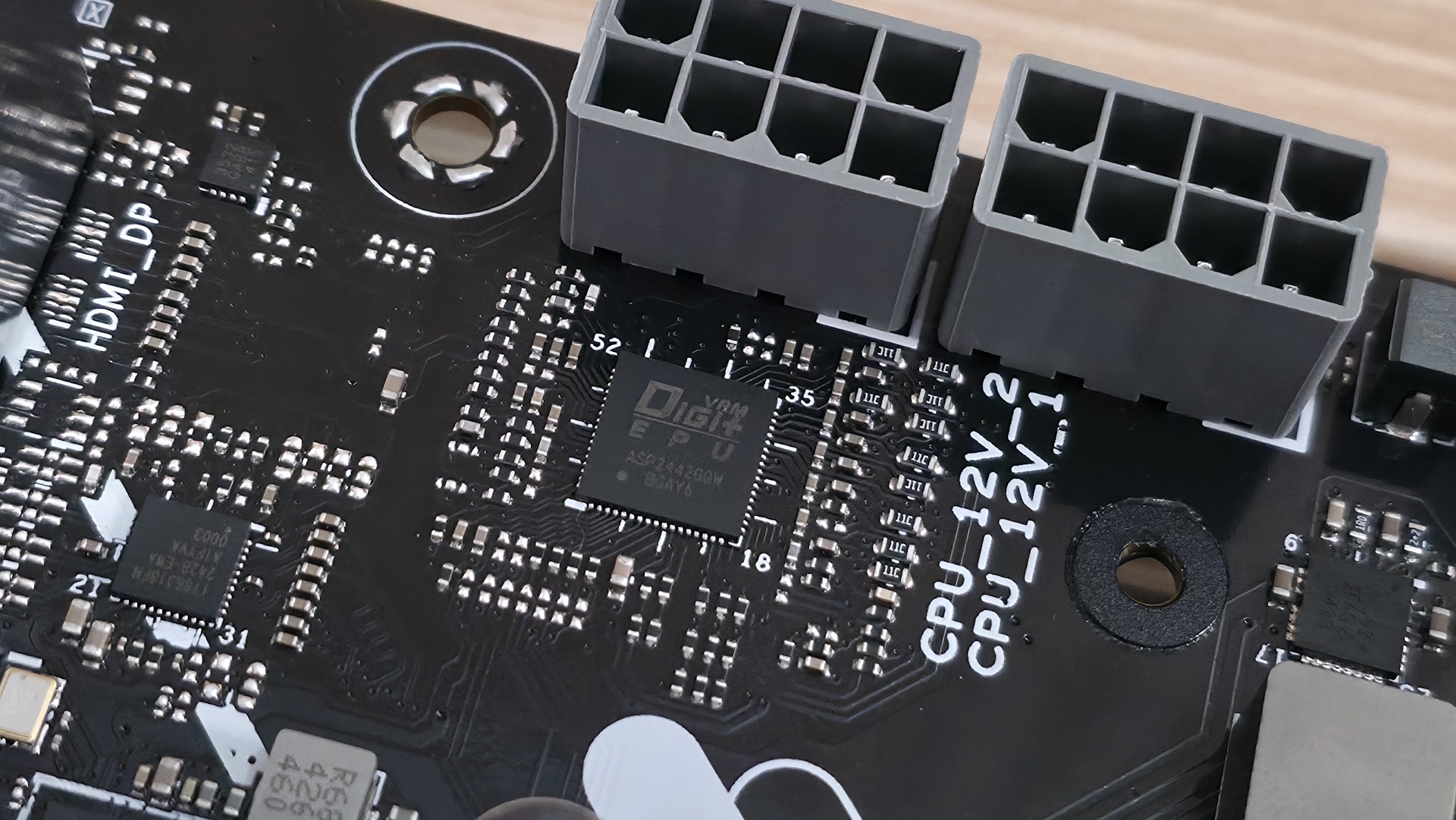
The VRM configuration—consisting of 18 phases (14 for Vcore) using 80A MOSFETs—was tested under full load. Despite the lack of an active cooling heatpipe, the passive brushed aluminum heatsinks effectively managed the thermal load. Temperatures remained well within safe operating limits, confirming that the board can handle the power demands of even the Core Ultra 9 285K without throttling.
Supporting Data and Technical Specifications
A motherboard’s value is often found in its I/O and expansion capabilities. The Prime Z890-P provides a balanced, if conservative, set of features:
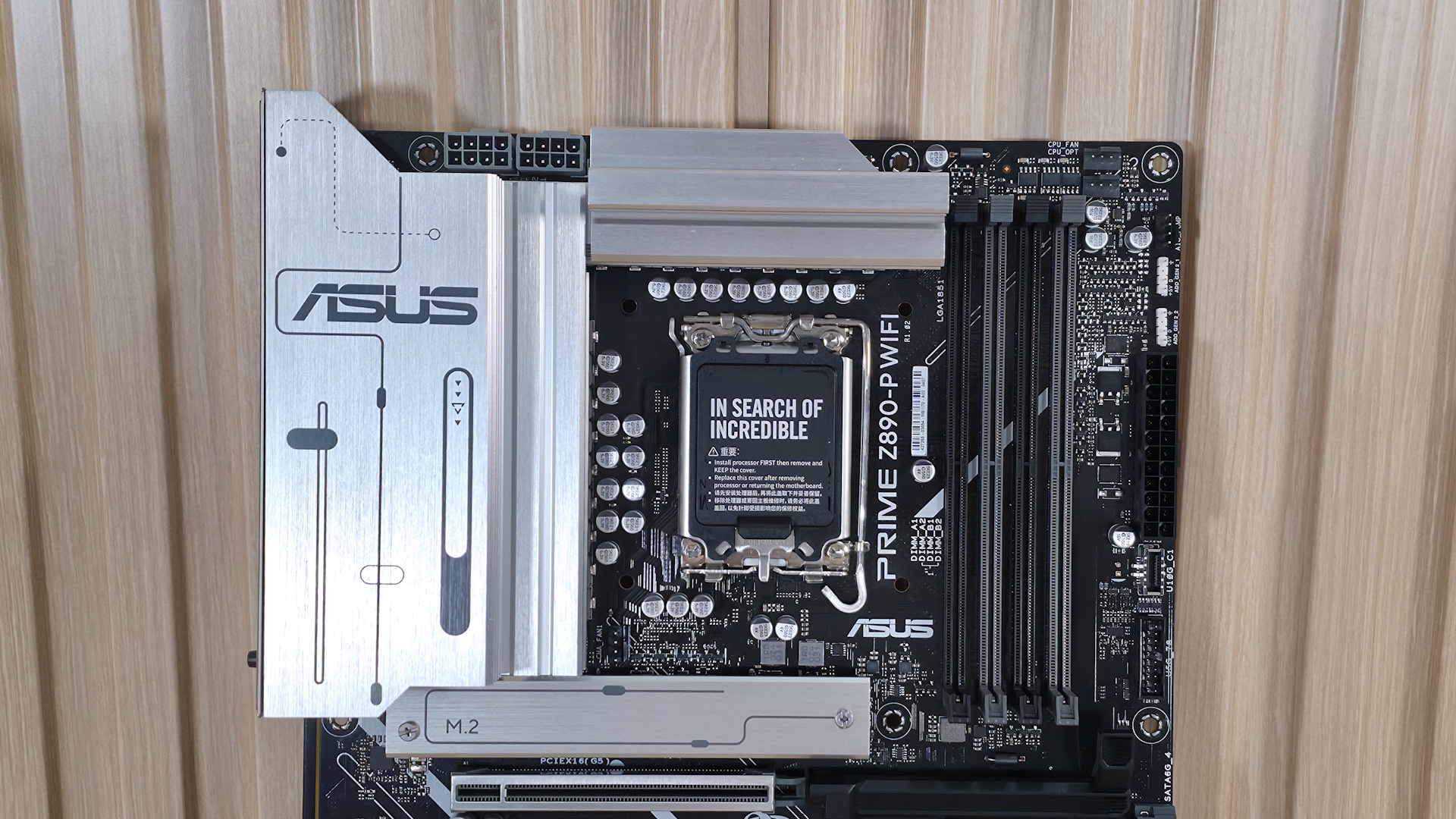
- Processor Socket: LGA 1851 (Intel Z890 Chipset).
- Memory: 4x DIMM slots, max capacity 256GB, speeds up to DDR5-8666+.
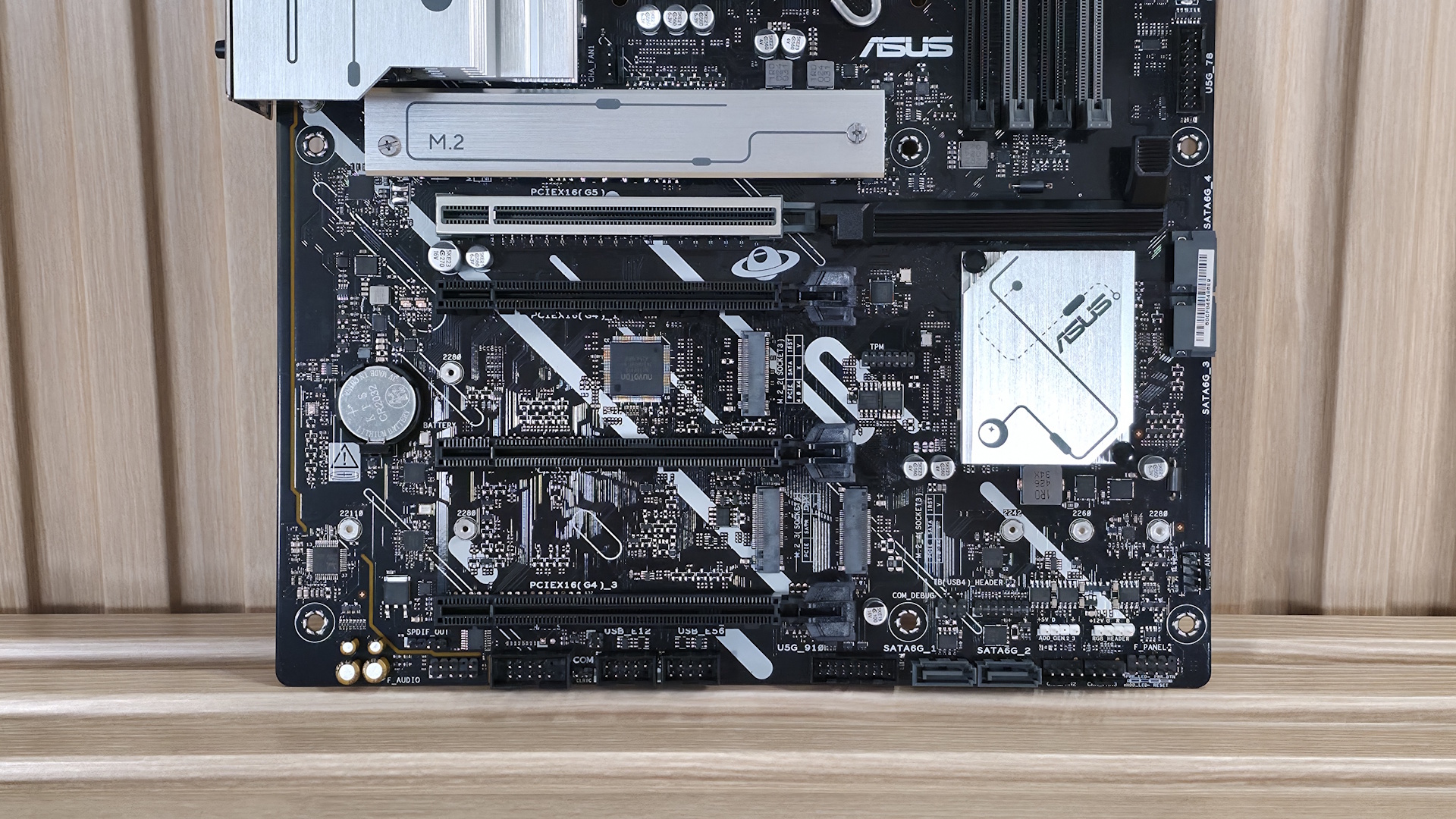
- Storage: 1x PCIe 5.0 x4 M.2 socket; 3x PCIe 4.0 x4 M.2 sockets; 4x SATA 6 Gbps ports.
- Connectivity: 1x Thunderbolt 4 (40 Gbps) Type-C; 1x USB 3.2 Gen 2 (10 Gbps); 2x USB 3.2 Gen 1 (5 Gbps); 4x USB 2.0 ports.
- Network: Realtek RTL8125 2.5 GbE; Intel Wi-Fi 7 (BE200NGW).
The inclusion of a PCIe 5.0 M.2 slot is a crucial "future-proofing" feature, ensuring that as faster Gen 5 SSDs become the standard, the Prime Z890-P won’t be a bottleneck. However, the reliance on a basic Realtek ALC897 audio codec confirms its position in the budget-to-mid-range segment, lacking the high-fidelity DAC/AMP setups found on premium "Creator" boards.
Design and Build Aesthetics
The aesthetic of the Prime Z890-P is utilitarian. It features a six-layer black PCB accented by subtle white diagonal lines. It is not an "RGB-heavy" board; in fact, it lacks any integrated onboard lighting. For some users, this is a negative, but for those building a stealthy, dark-themed rig, it is a clean, professional aesthetic.
The board does, however, provide three 3-pin ARGB headers and one 4-pin RGB header, allowing users to sync their own lighting components through Asus’s Armory Crate and Aura Sync software. The layout is clean, with two 8-pin EPS connectors and seven 4-pin fan headers (including an AIO_PUMP header), providing sufficient control for a mid-to-high-tier air or liquid cooling setup.
Official Stance and AI Tuning Features
Asus has heavily leaned into "EZ DIY" and AI-driven features with the Z890 series. The Prime Z890-P benefits from these via:
- AEMP III (Asus Enhanced Memory Profile): This optimizes clock drivers and memory frequencies, allowing users to extract maximum performance from their RAM kits with minimal manual intervention.
- DIMM Fit Pro: A utility that offers deep-dive timing control for advanced users, while remaining intuitive enough for those who simply want to set-and-forget.
- AI Overclocking: The board uses intelligent algorithms to monitor CPU load and thermals, suggesting stable overclocking profiles. While we recommend manual fine-tuning for extreme results, the AI features serve as an excellent starting point for the average user.
Implications for the Modern PC Builder
The Asus Prime Z890-P Wi-Fi exists in a delicate spot. On one hand, it delivers exactly what it promises: a stable, high-performance base for the LGA 1851 platform. It handles the latest processors, supports the fastest memory speeds, and includes the critical Wi-Fi 7 and Thunderbolt 4 connectivity that modern users demand.
On the other hand, the "budget" Z890 space is becoming crowded. When you factor in the cost, the user must weigh the pros and cons:
Pros:
- Solid Power Delivery: Capable of running high-TDP processors like the Core Ultra 9 285K.
- Future-Proofing: Includes a PCIe 5.0 x4 M.2 socket for next-gen storage.
- Advanced Memory Support: AEMP III and high-speed RAM support (up to 8666 MT/s).
- Comprehensive BIOS: The classic, reliable Asus interface with advanced tuning features.
Cons:
- USB Limitations: The rear I/O is somewhat limited for power users with a high peripheral count.
- Audio Codec: The ALC897 is standard, but lacks the refinement of higher-end boards.
- Memory Compatibility: As noted, this board can be picky; checking the QVL is essential.
- Aesthetics: The "no-RGB" design may not appeal to those looking for a flashier build.
Final Verdict
The Asus Prime Z890-P Wi-Fi is a competent, well-engineered motherboard that effectively serves as a foundation for a modern Intel build. It is not designed to win overclocking world records or to be the centerpiece of a vanity show-build. Instead, it is built for the user who prioritizes core performance, platform stability, and essential connectivity.
If you are looking to build a system around the Intel Core Ultra 7 or Ultra 5 and want to save budget for a better GPU or more storage, the Prime Z890-P is a logical choice. It provides the necessary tools for your system to reach its full potential, provided you take care with your memory selection. While other, potentially cheaper or more feature-rich options may exist, the Prime Z890-P’s combination of brand reliability and consistent performance makes it a solid contender for your hard-earned money.
Ultimately, it earns its place in our recommended build lists as a reliable, no-nonsense board for the Z890 generation.
Author

Related Posts

The New Era of Xbox: Asha Sharma’s Strategic Pivot and the Future of Game Pass
- 0
- 1,236 word
Since stepping into the role of CEO of Xbox Gaming, Asha Sharma has become the face of a radical transformation within the...
Read out all
MercurySteam Initiates Workforce Reductions: A Sobering Moment for the Spanish Games Industry
- 0
- 1,154 word
The global video game industry continues to grapple with a period of intense volatility and structural realignment. This week, the veteran Spanish...
Read out all
Capcom’s Strategic Blueprint: Sustaining Growth Through Legacy and Innovation
- 0
- 1,256 word
In the high-stakes landscape of the modern video game industry, few publishers have managed to maintain a trajectory as consistently impressive as...
Read out all
The Architect of Immersive Worlds: Why Ken Levine’s ‘Judas’ is Rewriting the Rules of Narrative Design
- 0
- 1,305 word
The gaming industry is often defined by cycles of technological leaps—ray tracing, 8K resolutions, and photorealistic asset streaming. However, for Ken Levine,...
Read out all
The GTA 6 Pre-Order Frenzy: Why Retail Data Has Fans Holding Their Breath
- 0
- 1,302 word
It has been less than 48 hours since the feverish Grand Theft Auto community collectively convinced itself that Rockstar Games was on...
Read out all
The "Rat" Meta: How Arc Raiders’ Free Loadout System Challenges the Core of Extraction Shooters
- 0
- 1,161 word
In the high-stakes world of extraction shooters, the tension is supposed to be the point. You load into a map with your...
Read out all