
- 0
- 1,285 word
By Investigative Staff
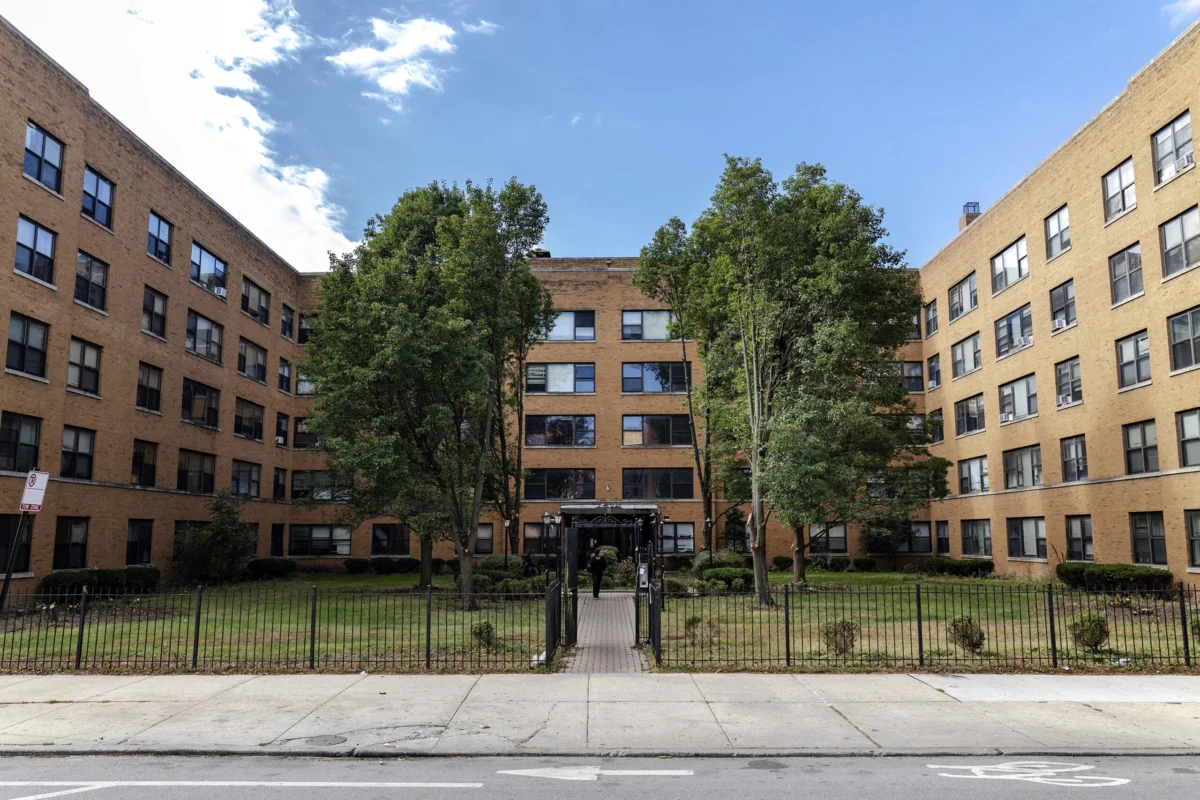
On the night of September 30, the relative quiet of a South Shore apartment complex in Chicago was shattered by the thunderous arrival of roughly 300 heavily armed federal agents. What began as a midnight operation—some agents reportedly descending from a Black Hawk helicopter—has now evolved into a landmark legal battle. Seventeen residents, including immigrants and U.S. citizens, have filed administrative claims against the Department of Homeland Security (DHS) and multiple federal agencies, alleging that the raid was marked by unconstitutional force, physical brutality, and systemic theft.
The claims, which seek approximately $5 million per person, represent a significant effort to establish legal accountability for what survivors describe as a campaign of terror. The legal action, spearheaded by a coalition including the Mexican American Legal Defense and Educational Fund (MALDEF) and the National Immigrant Justice Center, alleges that agents conducted the operation without warrants, turning a residential building into a scene of chaotic violence.
A Night of Violations: Personal Accounts of the Raid
For Tolulope Akinsulie, a Nigerian immigrant residing in Unit 215, the raid began not with a knock, but with a concussive boom. As he sat up in bed, dazed and disoriented, the room was suddenly flooded with armed personnel. Before he could process the intrusion, a service dog was unleashed upon him.
"I didn’t hear any warnings. I was in a deep sleep," Akinsulie recalled in an interview. The attack was swift and brutal; the dog’s jaws clamped onto his right ankle, dragging him to the floor. As he screamed, the animal tore flesh from his hip, thighs, and wrist. Today, Akinsulie’s body remains a roadmap of that night, marked by dark, jagged scars—permanent reminders of a raid the government maintains was "in full compliance with the law."
The violence was not isolated to Akinsulie’s unit. Down the hallway, a Venezuelan mother and her 16-year-old son were rousted from their home at gunpoint. They were marched to another unit where, according to their claim, they witnessed agents pistol-whipping a man with the butt of a rifle and kicking another who was already pinned to the floor. The sight was so traumatic that the teenager began to hyperventilate.
Perhaps most egregious was the treatment of José Miguel Jiménez López, a Mexican national living in Unit 502. After agents zip-tied his hands behind his back, they reportedly mocked his presence in the United States, seizing his city-issued Chicago identification card and tearing it to pieces before his eyes. Jiménez, who worked as a welder and held no criminal record, was ultimately deported after months of being shuffled through a network of detention facilities.

The Chronology of an Operation Gone Wrong
The raid was ostensibly part of an aggressive crackdown by the Trump administration, predicated on intelligence reports that the Venezuelan gang Tren de Aragua had infiltrated the building, bringing with them a cache of weapons, drugs, and explosives. However, a ProPublica investigation into the event found that the government’s claims were largely unsubstantiated.
The Timeline of the Assault
- The Raid (Sept 30): Approximately 300 federal agents storm the South Shore complex. Residents report flash grenades, broken doors, and the use of zip-ties on both immigrants and U.S. citizens.
- The Aftermath (October–February): Detainees are transferred to facilities in Indiana, Kentucky, and Louisiana. Many report deplorable conditions, including freezing temperatures, lack of medical care, and insufficient food.
- The Legal Filing (Current): Seventeen residents file formal administrative tort claims against DHS, U.S. Customs and Border Protection, the FBI, and the ATF. An 18th claim is filed by a tenant detained the week prior.
- The Judicial Reality: To date, federal prosecutors have failed to file criminal charges against any of the individuals arrested that night.
Supporting Data: The Scope of the Allegations
The administrative claims submitted this week paint a harrowing picture of human rights abuses. The allegations include:
- Physical and Emotional Trauma: Victims report injuries ranging from dog bites to concussions. Many children, including a 1-year-old U.S. citizen, were reportedly held at gunpoint.
- Theft and Property Loss: Tenants have provided lists of missing belongings, including smartphones, gaming consoles, jewelry, and even a backpack containing $1,300 in cash.
- Systemic Negligence: The claims highlight the "brutal detention" conditions, where detainees were subjected to extreme temperatures and a lack of access to basic hygiene.
- Violation of Due Process: Attorneys assert that the raid was conducted without the necessary judicial warrants, effectively nullifying the legality of the entire operation.
The legal team representing the tenants—which also includes the Immigrants’ Rights Clinic at the University of Chicago and the MacArthur Justice Center—argues that the $5 million per-person figure is consistent with comparable federal court judgments in Chicago. "There is no amount of damages that will compensate our clients for the trauma they experienced that night," said Susana Sandoval Vargas, Midwest regional counsel for MALDEF.
Official Responses and the Defense of the Raid
In response to the allegations, a spokesperson for the Department of Homeland Security remained steadfast, asserting that the "operation was performed in full compliance of the law." The agency maintains that it is taking "appropriate and constitutional measures to uphold the rule of law and protect our officers and the public from dangerous criminal illegal aliens."
When asked specifically about the injuries sustained by Akinsulie, the agency declined to comment. However, internal documents from an unrelated lawsuit suggest that agents claim they issued verbal warnings upon entry and believed the tenants were attempting to evade arrest. Akinsulie, who has lived in Chicago since 2007, flatly denies hearing any such warnings, noting he was asleep.
Regarding the claims of children being zip-tied, the DHS dismissed these reports as an "abject lie," insisting that no minors were restrained. This stands in direct contradiction to the eyewitness account of the 16-year-old who described his own restraint during the raid.
The Broader Implications: A Pattern of Overreach
The Chicago raid is not an isolated incident. Across the country, similar claims are mounting against federal immigration enforcement. From a pregnant woman in California who went into premature labor after being shackled to a Marine Corps veteran tackled while protesting in Oregon, the common thread is an increasingly militarized approach to immigration enforcement.

For the residents of the South Shore complex, the raid was the catalyst for the destruction of their lives. Many were forced to relocate after the building was shuttered due to code violations discovered in the wake of the operation. For those deported, the experience of detention remains a source of lingering nightmares and psychological distress.
"Everybody can get a check and balance," Akinsulie said, reflecting on the necessity of his claim. "People have to learn how to act right."
As the case moves forward, the Federal Tort Claims Act provides the primary mechanism for these residents to seek justice. If the federal agencies deny these claims or fail to settle within six months, the door will be open for a full-scale federal lawsuit. Legal experts view this as a potential watershed moment in the oversight of federal immigration agents.
"Hopefully, this case and others will be a check against the most aggressive and reckless forms of enforcement," said Mark Fleming of the National Immigrant Justice Center.
For now, the scars on Akinsulie’s leg serve as a physical testament to a night of chaos. He remains in Chicago, working odd jobs, unable to play the soccer he once loved, and struggling with the financial burden of seeking medical care for his injuries. He, along with his fellow claimants, is waiting to see if the American legal system will offer the accountability they are demanding—or if the silence of the federal government will continue to shield those who shattered their lives.
Author

Related Posts
The Battle for the Ballot: Navigating the High-Stakes World of Redistricting
- 0
- 1,364 word
In the American democratic experiment, the principle of "one person, one vote" is the bedrock of legitimacy. Yet, the mechanism that determines...
Read out all