
- 0
- 1,364 word
In the American democratic experiment, the principle of "one person, one vote" is the bedrock of legitimacy. Yet, the mechanism that determines how that vote translates into political power—the drawing of district lines—has become a theater of intense legal and political warfare. Following the Supreme Court’s landmark 2026 ruling in Louisiana v. Callais, the landscape of American voting rights has shifted dramatically, leaving civil rights advocates and voters alike to grapple with a new, more precarious reality.
The Core of the Conflict: What is Redistricting?
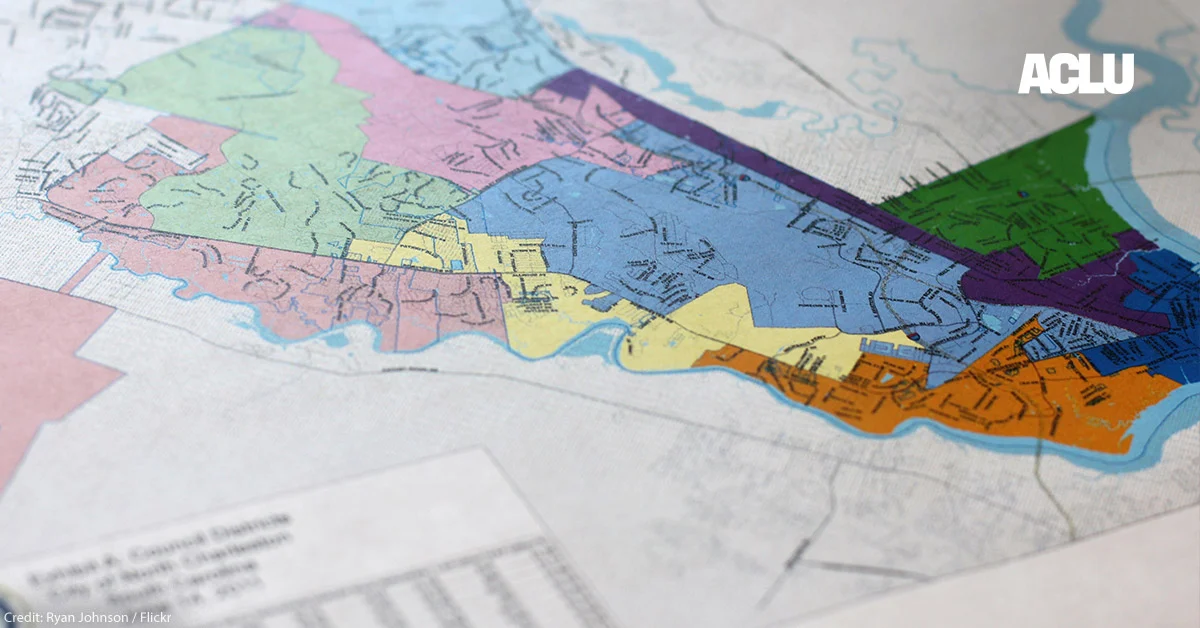
Redistricting is the essential administrative process of redrawing the boundaries of legislative districts from which public officials are elected. In an ideal framework, this process is an exercise in equitable representation. Following the decennial Census, states must adjust their district maps to account for population shifts, ensuring that each district contains roughly the same number of people. When executed fairly, it reflects the evolving demographics of our communities and guarantees that every citizen’s voice is weighted equally.
However, when this process is weaponized to manipulate election outcomes, it is known as gerrymandering. In this scenario, politicians—rather than voters—effectively choose their constituents. By concentrating opposition voters into a few "packed" districts or diluting their influence by "cracking" them across many, those in power can insulate themselves from electoral accountability. As the ACLU’s Voting Rights Project often emphasizes, "Voters should be picking their politicians. Not the other way around."
Chronology of a Legal Seismic Shift
The legal environment surrounding redistricting changed drastically in April 2026. To understand the current climate, one must look at the progression of judicial oversight in American elections.
- 1960s (The Foundation): The Supreme Court established the "one person, one vote" doctrine, ruling that the Fourteenth Amendment requires equality of voting power. This ended a long era where many states ignored population growth, effectively disenfranchising urban and shifting populations.
- 1965 (The Safeguard): The Voting Rights Act (VRA) was signed into law, providing federal oversight to prevent discriminatory election practices, including map-drawing that disenfranchised voters of color.
- The Decennial Cycle: For decades, the standard practice was to redraw maps once every ten years following the census. This provided a predictable, albeit often contentious, rhythm to American politics.
- April 2026 (Louisiana v. Callais): The Supreme Court issued a ruling that struck down Louisiana’s congressional map. Crucially, the Court dismantled the established standard for challenging discriminatory maps under the Voting Rights Act. By effectively requiring challengers to prove explicit "intentional discrimination"—a nearly impossible evidentiary burden in most cases—the Court gutted the VRA’s ability to prevent the dilution of minority voting power.
Supporting Data: Representation vs. Demographics
The tension in redistricting often stems from a disconnect between stagnant political maps and a rapidly changing national population. According to 2020 Census data, the vast majority of population growth in the United States over the last decade was driven by communities of color.
When states refuse to update their maps to reflect this growth, or when they draw lines that fracture these growing communities, they engage in "vote dilution." This practice minimizes the political strength of specific groups, ensuring that even as their numbers grow, their influence in legislative halls remains diminished.

Furthermore, the distinction between reapportionment and redistricting is vital to understanding the stakes. Reapportionment is the constitutional act of allocating the 435 House seats among the 50 states. For example, following the 2020 Census, Texas gained seats due to population influx, while states like New York lost them. Redistricting, by contrast, is the internal state-level task of deciding where the lines of those seats fall. When the reapportionment process creates a "zero-sum" game, the incentive for gerrymandering intensifies, as parties scramble to capture every available seat.
The Implications of Callais
The Callais decision has profound, immediate implications for the American electoral system. By stripping away the "results-based" test—which allowed for legal challenges if a map simply produced discriminatory outcomes—the Court has moved to an "intent-based" standard.
1. The Erasure of Guardrails
For decades, Section 2 of the Voting Rights Act served as the primary check against maps that diluted the power of Black and Latino voters. With that guardrail significantly weakened, states are now empowered to enact maps that fracture communities of color with relative impunity. The legal pathway to overturn these maps has become a labyrinthine process that few organizations have the resources or time to navigate successfully before an election cycle begins.
2. The Rise of Mid-Decade Redistricting
While the decennial census is the traditional trigger for redistricting, Callais has signaled a potential increase in "mid-decade" redistricting. This occurs when a state legislature decides to redraw maps in the middle of the ten-year cycle, untethered to any population change. This is often done purely to gain a partisan advantage, creating a volatile electoral environment where district lines are as fluid as the political whims of the majority party.
3. The National Impact
The elimination of fair-representation districts is not limited to the federal level. From school boards and city councils to state legislatures, the impact of these maps ripples downward. When communities of color are denied the ability to elect candidates of their choice at the local level, the path toward broader political representation is obstructed at the source.
Official Responses and Advocacy Perspectives
The reaction from the legal and civil rights community has been one of alarm. Sophia Lin Lakin, Director of the ACLU’s Voting Rights Project, has been vocal about the urgent need for public engagement.
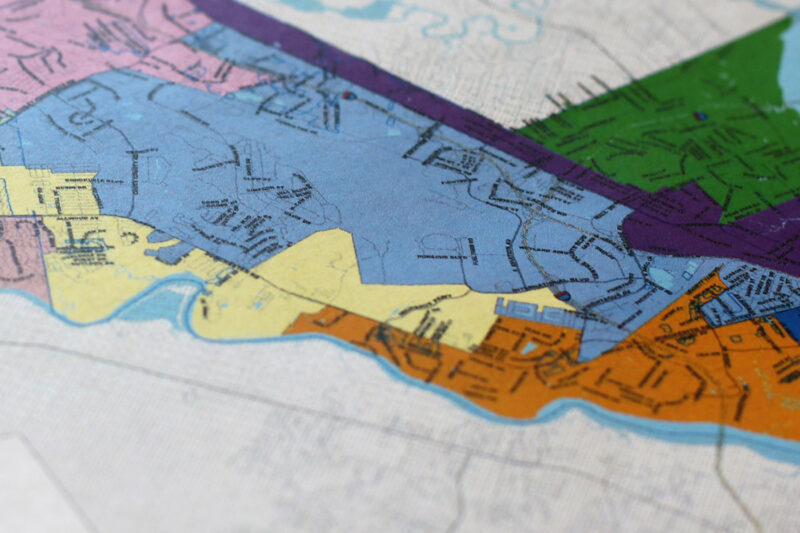
"The Supreme Court’s decision in Callais sharply limits federal voting rights protections," Lakin noted. "However, the fight is far from over." Legal experts argue that while the federal floor for protection has been lowered, the ceiling for local and state-level advocacy has been raised.
Official responses from state legislatures vary wildly. In states with divided government, the legal battles are moving to state supreme courts, which are increasingly seen as the final arbiters of voting rights. In states where one party holds a supermajority, the focus of the opposition has shifted to public awareness and grassroots organizing.
A Path Forward: Ensuring Fairness in a Changing Landscape
If the federal judiciary is no longer the primary protector of fair maps, where does that leave the voter? Advocacy groups are pushing for a multi-pronged approach to reclaim the democratic process:
- Increased Civic Participation: The redistricting process is often obscured by bureaucratic jargon. Experts urge citizens to attend municipal meetings, demand transparency in the software used to draw lines, and participate in public comment periods.
- State-Level Legislation: Because the federal standard has been weakened, the focus is shifting to state-level Voting Rights Acts. Several states have already begun drafting legislation to codify protections that mirror the strength of the old federal VRA.
- Independent Commissions: Across the country, there is a growing movement to strip the power to draw lines away from self-interested politicians and place it in the hands of independent, non-partisan commissions. These bodies are designed to prioritize community integrity over partisan gain.
- Legal Innovation: Advocates are exploring new legal theories based on state constitutions, which often contain broader protections for voting rights than the U.S. Constitution.
Conclusion: The Democracy We Choose
The landscape of American redistricting is currently at its most precarious point in decades. The Callais ruling has fundamentally altered the power dynamics of our electoral system, handing more leverage to those who seek to manipulate the maps.
However, the history of voting rights in America is a history of struggle against restriction. From the expansion of the franchise to the protections of the VRA, every gain has been the result of sustained pressure from the public. As we look toward the future of our representative government, the question is no longer just what the Supreme Court allows, but what the American people will demand.
Redistricting is not just a technical task for cartographers and lawyers; it is the fundamental process by which we define who has a voice in our democracy. By staying informed, challenging discriminatory maps, and demanding transparent, equitable processes, voters can ensure that the map of our nation reflects the true diversity and will of the people, rather than the strategic desires of a political few. The future of fair representation depends on it.
Author

Related Posts
Terror in the Night: Chicago Tenants File Multi-Million Dollar Claims Against Federal Agencies Over Violent Raid
- 0
- 1,285 word
By Investigative Staff On the night of September 30, the relative quiet of a South Shore apartment complex in Chicago was shattered...
