
- 0
- 1,290 word
The arrival of the spring travel season has historically triggered a surge in the consumer electronics market, specifically within the mobile accessory sector. As travelers prepare for weekend excursions, international flights, and outdoor festivals, the demand for reliable off-grid power reaches its annual zenith. However, the market landscape in 2024 and 2025 reveals a significant pivot in consumer expectations. The "bulky brick" era of power banks is effectively over, replaced by a new generation of ultra-compact, high-wattage devices that prioritize "Everyday Carry" (EDC) integration over raw, heavy capacity.
This shift is not merely a matter of aesthetic preference but a response to the evolving technical requirements of modern hardware. With smartphones, tablets, and even handheld gaming consoles like the Steam Deck requiring higher power delivery (PD) profiles, the industry has responded with innovative thermal management and high-density battery cells.
Main Facts: The Transition to High-Performance Portability
The primary narrative of this year’s spring tech deals is the democratization of high-speed charging. Previously, 45W or 100W charging was reserved for massive, expensive workstations. Today, these speeds are found in pocket-sized units.
The core facts driving the current market include:

- The Portability-to-Power Ratio: Consumers are no longer willing to sacrifice bag space for battery life. The "sweet spot" has shifted to 10,000mAh units that can provide 30W–45W of output while weighing less than 200 grams.
- The USB-C Standard Dominance: With the universal adoption of USB-C across Apple and Android ecosystems, the demand for multi-protocol chargers (supporting PPS, PD 3.0, and QC 4.0) has streamlined manufacturing and lowered costs for the end-user.
- Safety Engineering: Brands are now highlighting proprietary safety suites—such as INIU’s Temp-Guard or Anker’s ActiveShield—as primary selling points, addressing long-standing consumer fears regarding lithium-ion battery stability during fast-charging cycles.
Chronology: From Emergency Reserves to Essential Infrastructure
To understand why this spring’s offerings are significant, one must look at the timeline of portable power development:
- The Early Era (2010–2016): Power banks were largely "dumb" batteries. They offered slow 5W or 10W charging via USB-A ports. They were seen as emergency reserves rather than primary charging solutions.
- The PD Revolution (2017–2021): The introduction of Power Delivery (PD) allowed for faster charging, but the hardware remained bulky. High-capacity 20,000mAh banks became the standard for travelers, though they often weighed over a pound.
- The GaN and High-Density Era (2022–Present): The integration of Gallium Nitride (GaN) technology and higher-density battery cells allowed engineers to shrink the internal components. This led to the "Pocket Rocket" phenomenon, where a device the size of a candy bar could suddenly charge a laptop.
This spring represents the peak of this third era, where price points have finally dropped to a level that makes these advanced technologies accessible to the general public.
Supporting Data: An Analysis of Leading Spring Contenders
The current market is defined by several key players who have optimized their hardware for the specific rigors of spring travel.
1. The Power-to-Size Leader: INIU Pocket Rocket P50
The INIU Pocket Rocket P50 represents the current "state-of-the-art" in the 10,000mAh category.

- Performance Metrics: Unlike standard 10k units that cap at 20W, the P50 delivers 45W. This is a critical threshold, as it allows the device to support Samsung’s Super Fast Charging 2.0 and even provide a "trickle charge" to a MacBook Air or similar ultrabook.
- Engineering: Weighing approximately 160g, it utilizes NVIDIA-grade inductors and an E-Marker chip to ensure that the high wattage does not degrade the device’s internal battery or the connected smartphone.
- Market Positioning: At a deal price of approximately $32.99, it undercuts many premium competitors while offering higher output, signaling a move toward aggressive price-to-performance ratios.
2. The Integrated Solution: Anker Nano 30W
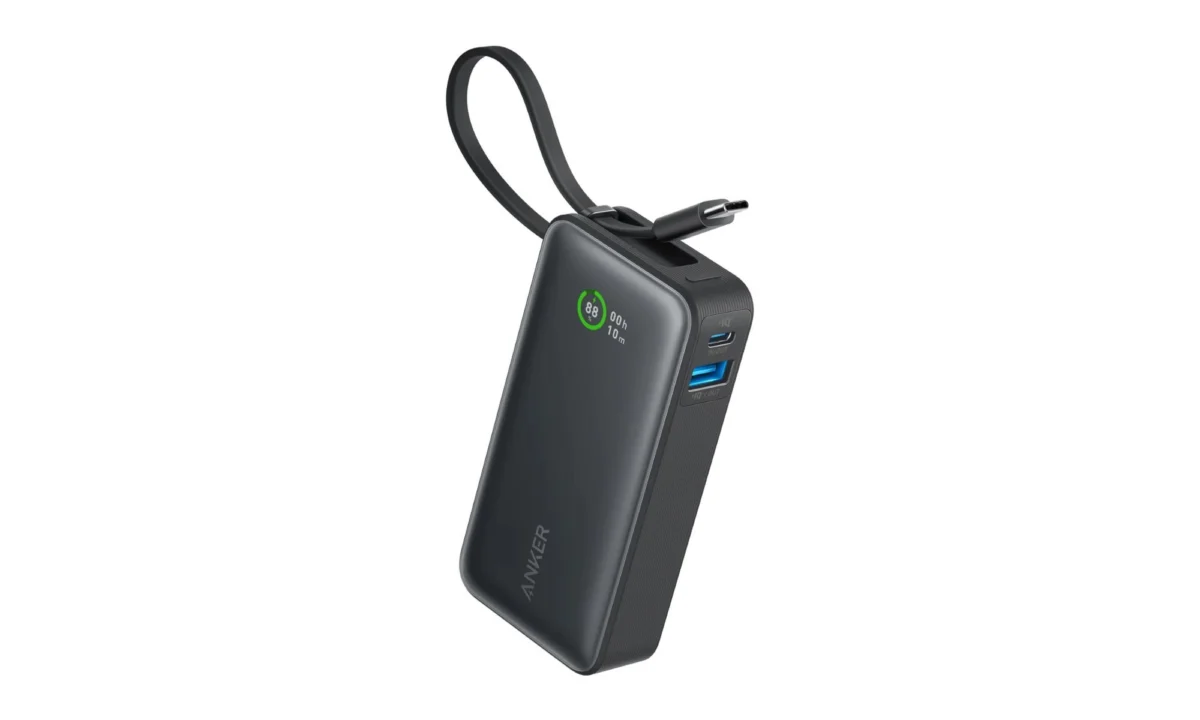
Anker’s strategy focuses on the "frictionless" user experience. The Nano 10,000mAh unit features a built-in USB-C cable that doubles as a carrying strap.
- The "Clutter" Factor: Data suggests that the primary pain point for travelers is not the battery itself, but the tangled mess of cables. By integrating the cable, Anker addresses the "forgotten cord" syndrome.
- Bi-directional Logic: The built-in cable supports both output (charging a phone) and input (recharging the bank), simplifying the travel kit significantly.
3. The Professional Flat-Pack: Baseus Blade 100W
For the "digital nomad" demographic, the Baseus Blade remains a standout.
- Form Factor Innovation: Rather than a cylinder or a brick, the Blade is a flat slate. This design is mathematically optimized for laptop sleeves.
- High-Output Data: With a 100W output and 20,000mAh capacity, it can charge a 14-inch MacBook Pro to 50% in under 30 minutes. The inclusion of a digital status screen provides real-time telemetry on voltage and amperage—data points previously only available to hardware enthusiasts.
4. The High-Capacity Workhorse: UGREEN Nexode 130W
As handheld gaming (Steam Deck, ASUS ROG Ally) becomes a staple of travel, the need for high-capacity, high-wattage banks like the UGREEN Nexode has grown.
- Specs: 20,000mAh and a staggering 130W total output.
- Thermal Efficiency: Large-capacity charging generates significant heat. UGREEN’s Nexode series utilizes advanced heat dissipation materials to ensure that the device remains within safe operating temperatures during a 100W sustained discharge.
Official Responses and Industry Standards
Major manufacturers have shifted their public-facing communication from "total capacity" to "safety and longevity." In recent press releases and product documentations, brands like Belkin and Mophie have emphasized compliance with international aviation standards.

Regulatory Compliance:
All devices featured in this season’s top deals are rated under 100Wh (Watt-hours), the legal limit set by the FAA and TSA for carry-on luggage. Industry spokespeople note that as battery density increases, the focus has moved toward ensuring these high-energy-density packs are "airline-safe."
Sustainability Initiatives:
There is also a growing official response to the environmental impact of portable power. Belkin, for instance, has moved toward using Post-Consumer Recycled (PCR) plastics in its BoostCharge line. This reflects a broader industry trend where "green" credentials are becoming as important to consumers as charging speeds.
Implications: What This Means for the Future of Mobile Tech
The trends observed in this spring’s portable charger market have several long-term implications for the consumer electronics industry:
The Obsolescence of the Wall Plug
As portable chargers become more efficient and faster, we are approaching a "de-tethered" reality. If a user can top up their phone in 20 minutes using a device in their pocket, the psychological need to be near a wall outlet during the day diminishes. This changes how public spaces—airports, cafes, and libraries—will be designed in the future, potentially reducing the need for ubiquitous power sockets.

The Rise of Lifestyle Tech
The aesthetic refinement of devices like the Mophie Powerstation or the INIU P50 suggests that power banks are moving from "utilitarian tools" to "lifestyle accessories." The use of soft-touch fabrics, minimalist LED displays, and custom engraving options indicates that these devices are now part of a user’s personal style, similar to a watch or a smartphone case.
Impact on Device Battery Design
If high-speed portable power becomes a universal commodity, smartphone manufacturers may feel less pressure to include massive internal batteries that make phones heavy and thick. Instead, they can focus on efficiency, knowing that the "Pocket Rocket" in the user’s bag can provide a seamless bridge of power.
Conclusion
The 2024-2025 spring travel season marks a definitive turning point in portable energy. The data clearly shows a preference for intelligence over size. Whether it is the ultra-compact efficiency of the INIU Pocket Rocket P50, the cable-free convenience of the Anker Nano, or the raw laptop-grade power of the Baseus Blade, the "ideal" power bank is no longer a heavy burden to carry. It is a slim, fast, and safe companion that ensures the digital traveler remains connected, regardless of their destination. As prices continue to stabilize during these seasonal promotions, the barrier to entry for high-tier charging technology has never been lower.
Author

Related Posts

Beyond the Burpee: The High-Efficiency Kettlebell Ladder Workout for Total-Body Power
- 0
- 1,219 word
We often associate a "beastly" kettlebell workout with a specific set of high-intensity movements: the rhythmic snap of the swing, the technical...
Read out all
JBL Redefines Portable Power: An In-Depth Analysis of the Xtreme 5 Bluetooth Speaker
- 0
- 1,295 word
The landscape of portable audio has shifted dramatically over the last decade, moving from tinny, fragile boxes to sophisticated acoustic powerhouses capable...
Read out all
Apple Bolsters Safari Security: Comprehensive Patch for Safari 26.5 Addresses Critical WebKit and WebRTC Vulnerabilities
- 0
- 1,347 word
In an era where the web browser serves as the primary gateway to both personal and professional digital lives, the security of...
Samsung One UI 9 to Introduce Network-Level Focus Mode: A Deep Dive into ‘Network Management for Concentration’
- 0
- 1,249 word
In an era where the "attention economy" dominates the mobile landscape, smartphone manufacturers are increasingly tasked with providing tools that help users...
Read out all
The Hidden Architecture of Minimalism: Unlocking the Secret Potential of the Amazon Fire TV Remote
- 0
- 1,391 word
In the contemporary landscape of consumer electronics, a paradoxical design philosophy has taken hold: as devices become more capable, their physical interfaces...
Read out all
Unveiling Prime Deals: A Comprehensive Look at Amazon’s Latest Savings and Limited-Time Offers
- 0
- 2,573 words
Amazon, the e-commerce titan, continues to roll out compelling deals across a wide spectrum of products, offering consumers significant savings on everything...
Read out all