
- 0
- 1,339 word
New York City serves as the epicenter of the media world this evening as the industry gathers for the 33rd annual Broadcasting+Cable (B+C) Hall of Fame. This prestigious gala, a cornerstone event in the television and telecommunications calendar, serves not merely as a celebration of individual success, but as a formal recognition of the visionaries who have fundamentally reshaped the way global audiences consume, interact with, and value content.
As the industry faces a period of rapid technological evolution and structural transformation, the 2025 class of inductees stands as a testament to the resilience and creative ingenuity required to thrive in the modern landscape.
A Legacy of Excellence: The B+C Hall of Fame Tradition
The history of the B+C Hall of Fame is inextricably linked to the history of television itself. Established in 1991 by Broadcasting magazine, the initiative was designed to capture the spirit of an industry that was undergoing its own version of a gold rush. The inaugural class set a high bar, honoring 60 luminaries who built the infrastructure of the electronic age.
Names like William S. Paley, the architect of CBS, and Bob Hope, the quintessential broadcast entertainer, were among the first to be enshrined. They were joined by the cable pioneers who dared to challenge the broadcast hegemony—figures like Bill Daniels, often referred to as the "father of cable television," Dr. John Malone, whose strategic acquisitions built the Liberty Media empire, and Brian Lamb, the visionary founder of C-SPAN who redefined the relationship between the government and the governed through the lens of a camera.
Over the past three decades, the criteria for induction have evolved. While initial recognition was heavily weighted toward structural founders and technological innovators, the Hall of Fame now recognizes the broader ecosystem of media. It acknowledges the symbiotic relationship between content creators, corporate strategists, and the humanitarian advocates who use the medium to drive social change. This year’s class reflects this multidimensional approach, blending executive prowess with cultural influence.
The 2025 Honorees: A Diverse Slate of Industry Leaders
The 2025 gala highlights a group of individuals whose influence spans the entire value chain of the media business—from production studios and executive boardrooms to the cutting edge of digital distribution.
The Spotlight on Stars and Storytellers
Leading the charge this year is Drew Barrymore, an icon of both film and television. As the host and executive producer of The Drew Barrymore Show and the co-founder of Flower Films, Barrymore has successfully transitioned from a storied acting career to becoming a daytime television powerhouse, bringing a unique, empathetic voice to the talk show format.
Equally prominent is Sheryl Lee Ralph, who will be honored with the Humanitarian Award. Beyond her celebrated Emmy-winning performance in Abbott Elementary, Ralph is being recognized for her decades of tireless advocacy through the DIVA Foundation, which she founded to raise awareness and support for those affected by HIV/AIDS. Her career serves as a blueprint for how talent can leverage the platform of television to effect tangible social change.
The Institutional Icons
In a year of significant milestones, the Hall of Fame is also recognizing the longevity of one of television’s most enduring institutions. "Days of our Lives," the legendary daytime drama, will receive the Iconic Show Award as it celebrates its 60th anniversary. Now streaming exclusively on Peacock, the show’s journey from traditional broadcast to a digital-first model serves as a case study in the successful evolution of scripted content.
Strategic and Executive Leadership
The executive wing of this year’s class features individuals responsible for navigating the turbulent waters of modern media consolidation:
- Jimmy Pitaro, Chairman, ESPN: Receiving the Chairman’s Award, Pitaro has been instrumental in steering the world’s most powerful sports brand through the shift toward direct-to-consumer streaming and digital engagement.
- George Cheeks, Chair, Television Media at Paramount (a Skydance Co.): His leadership in navigating the complex restructuring of one of the world’s most storied media houses has been pivotal.
- Kristin Dolan, CEO, AMC Networks: Dolan brings a wealth of experience in cable and content strategy, vital for an era where niche, high-quality programming must compete with massive platform libraries.
- Mark Marshall, Chairman, Global Advertising and Partnerships, NBCUniversal: A key architect of the modern advertising model, Marshall is at the forefront of the shift toward data-driven, cross-platform ad sales.
Technological Pioneers and Industry Builders
For the first time, the Hall of Fame is introducing a specific Technology Leadership Award, which will be presented to Melani Griffith, Chief Growth Officer at GFiber. This addition underscores the reality that, in 2025, the delivery of content is just as important as the content itself. Griffith’s work in expanding fiber connectivity is a nod to the infrastructure requirements that make high-definition, low-latency streaming possible for millions.
The class is further rounded out by:
- Richard A. “Dick” Foreman (RAFAMEDIA): A veteran consultant whose fingerprints are on decades of broadcast deals.
- Michael Gelman (Executive Producer, Live With Kelly and Mark): The engine behind one of the most successful and consistent franchises in the history of morning television.
- David Kline (President, Spectrum Reach): Representing the critical intersection of local advertising and telecommunications.
- Arthur Smith (Chairman and CEO, A. Smith & Co. Productions): A titan in the unscripted and reality television space.
- Jon Steinlauf (Former Chief U.S. Advertising Sales Officer, WBD): Recognized for his massive influence on the ad sales landscape at one of the world’s largest media conglomerates.
- Sandra Stern (Vice Chairman, Lionsgate Television Group): A powerhouse in the production and distribution of premium television.
- Rob Weisbord (COO and President of Local Media, Sinclair Inc.): A leader in the essential sector of local broadcast stations.
The Impact: Supporting the Future of Media
The B+C Hall of Fame is more than an awards ceremony; it is a vehicle for philanthropy. As in years past, the proceeds from this year’s gala will support the Broadcasters Foundation of America and the Paley Center for Media.
The Broadcasters Foundation of America provides a crucial safety net for professionals in the radio and television industry who find themselves in acute financial distress due to illness, accident, or natural disaster. By supporting this organization, the Hall of Fame ensures that the industry cares for its own. Meanwhile, the partnership with the Paley Center for Media underscores the importance of preserving television’s history and fostering an ongoing dialogue about the medium’s role in society.
Implications: A Crossroads for the Industry
The selection of the 2025 class suggests a shift in how the media industry defines "greatness." While previous decades focused on the raw power of scale, the current era values the ability to adapt. The honorees are not just those who built empires, but those who are currently re-engineering them.
The presence of executives from the local broadcast, streaming, sports, and production sectors indicates that the industry is leaning into a hybrid model. No longer is there a clear divide between "television" and "streaming." Instead, leaders like Jimmy Pitaro and George Cheeks are operating in a world where the two are increasingly synonymous.
Furthermore, the emphasis on humanitarian contributions and longevity—as seen with Sheryl Lee Ralph and Days of our Lives—demonstrates that audiences are seeking deeper connections with the brands and personalities they watch. In an era of fragmented attention, content that provides community, continuity, and social relevance is proving to be the most valuable currency in the marketplace.
As the industry looks forward, the 33rd B+C Hall of Fame serves as a bridge between the foundational giants of the 20th century and the agile innovators of the 21st. The challenge for these leaders, and for the industry at large, remains the same as it was in 1991: to capture the imagination of the audience, provide reliable and impactful information, and ensure that the medium remains a vital part of the human experience.
Tonight, in New York, the industry doesn’t just look back at what has been accomplished; it acknowledges the architects who are currently building the next chapter of the media story.
Author

Related Posts
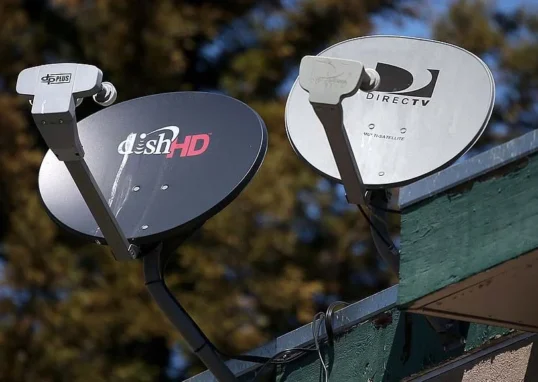
A New Satellite Titan: DirecTV to Acquire Dish Network in Landmark $1 Consolidation Deal
- 0
- 1,232 word
In a move that marks the most significant consolidation in the history of the American pay-TV industry, DirecTV has announced a definitive...
Read out all
Streamlining Connectivity: Fidium Integrates Fiber Solutions into Sandler Partners’ SCOUT Platform
- 0
- 1,307 word
THE WOODLANDS, Texas — May 13, 2026 — In a strategic move designed to accelerate the digital transformation of businesses across the...

Fiber in the Fast Lane: The Invisible Infrastructure Powering the Autonomous Revolution
- 0
- 1,276 word
For years, the public narrative surrounding autonomous vehicles (AVs) has been dominated by the imagery of the vehicle itself: the sleek, steering-wheel-less...
Read out all
The Streaming Shake-Up: Ofcom Moves to Align Major Platforms with UK Broadcasting Standards
- 0
- 1,316 word
In a landmark shift for the British media landscape, the UK’s communications regulator, Ofcom, has unveiled a comprehensive draft Code of Practice...
Read out all
Accelerating Connectivity: Quickline Hits Major Milestone in South Yorkshire’s Gigabit Transformation
- 0
- 1,317 word
In an era where high-speed internet is no longer a luxury but a fundamental utility, rural broadband provider Quickline has marked a...

EchoStar Spectrum Sell-Off: FCC Greenlights Landmark Deals with AT&T and Starlink
- 0
- 1,234 word
Date: May 12, 2026 Subject: Major Telecommunications Realignment In a move that promises to fundamentally reshape the American telecommunications landscape, the Federal...
Read out all