
- 0
- 1,276 word
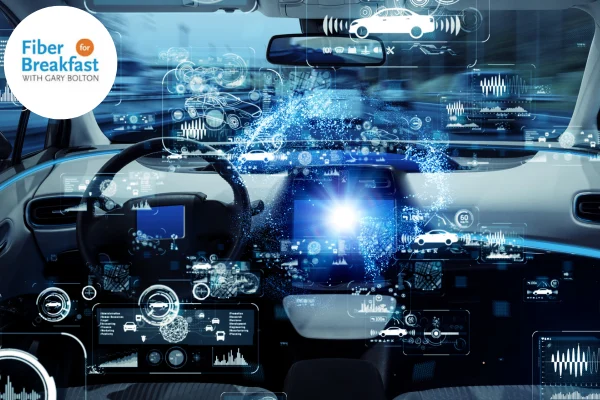
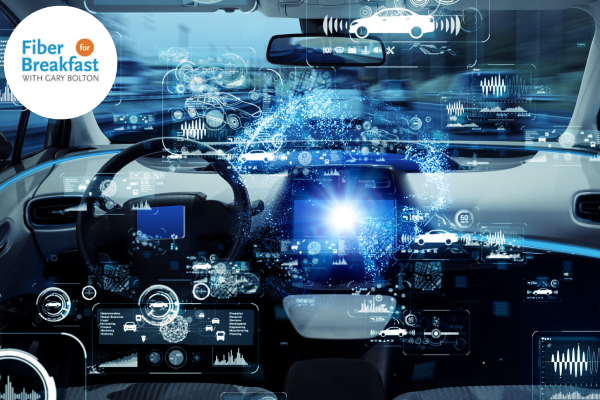
For years, the public narrative surrounding autonomous vehicles (AVs) has been dominated by the imagery of the vehicle itself: the sleek, steering-wheel-less pods, the sophisticated LiDAR sensors, and the promise of artificial intelligence navigating complex urban environments. However, a recent installment of the Fiber for Breakfast series, featuring Clayton Tino, President and COO of Beep, has reframed the debate. The true story of the autonomous future is not unfolding on the dashboard, but rather beneath the pavement and through the high-capacity conduits of the modern fiber-optic network.
The Myth of the Autonomous Vehicle in Isolation
The common misconception is that an autonomous vehicle is a self-contained entity, a "robot" capable of making real-time, life-or-death decisions solely through onboard computing power. During his discussion with host Gary, Tino dismantled this notion, emphasizing that an AV is only as intelligent as the system that sustains it.
"An AV, in and of itself, doesn’t really know what to do," Tino explained. "It can drive, but there has to be a system supporting it."
This "system" is an intricate web of command centers, roadside sensors, cloud platforms, and real-time monitoring tools. In the vision presented by Beep, the vehicle is merely the endpoint of a massive data-gathering and processing loop. Without a robust, ultra-high-speed fiber backbone, the vehicle is effectively blind and disconnected, unable to benefit from the collective intelligence of the transit network.
Chronology of an Autonomous Shift
The transition toward autonomous public transit has not happened overnight. It is the result of years of iterative development, shifting from private testing grounds to complex, integrated municipal environments.
- Phase 1: The Pilot Era: Initial AV deployments focused on isolated, geofenced areas. These systems relied on limited connectivity and were largely experimental, focusing on proving that the vehicles could safely move from Point A to Point B.
- Phase 2: The Integration Phase: As seen in projects like those in Jacksonville, Florida, the focus shifted from "can it drive?" to "can it be part of the city?" This involved integrating vehicles with existing traffic management systems.
- Phase 3: The Ecosystem Era (Current): We are now entering the phase where the vehicle is seen as a node in a broader, intelligent city architecture. This requires the heavy lifting of fiber infrastructure to facilitate "Vehicle-to-Everything" (V2X) communication.
Supporting Data: The Terabyte Challenge
The sheer volume of data generated by modern autonomous platforms is staggering. According to Tino, a single AV can generate more than a terabyte of data during a standard operational shift. This data isn’t just "noise"—it is the lifeblood of the service.
The Breakdown of Data Requirements
- LiDAR and Imaging: High-definition mapping and object detection require constant, high-bandwidth streams to ensure the vehicle is aware of its immediate surroundings.
- Operational Telemetry: Monitoring the health of the vehicle’s powertrain and software status requires low-latency, persistent connections to the command center.
- Passenger Experience: Modern public transit demands Wi-Fi, infotainment, and secure, real-time video surveillance (CCTV) for safety.
- V2X Communication: Vehicles must "talk" to traffic lights, intersections, and other road users. This requires a network latency measured in milliseconds to ensure that a command to stop at a red light or react to a pedestrian is executed instantly.
As these data streams become more complex, the role of the traditional "depot" is being redefined. These facilities are no longer simple parking lots or maintenance sheds; they are evolving into mini data centers, requiring significant fiber-optic uplink capacity to offload vehicle data, perform software updates, and sync operational logs at the end of every shift.
Official Perspectives: Redefining Public Transportation
Beep’s approach to this technology is distinct from the consumer-focused, robotaxi-centric models often championed by Silicon Valley firms. By focusing on public transit agencies, municipalities, and urban developers, Beep is positioning AVs as a solution to the "first mile/last mile" problem.
Tino noted that the goal is not to replace human operators with a cold, robotic substitute, but to redesign how cities move people. By integrating fixed-route autonomous shuttles into existing public transit networks, cities can create a more fluid, demand-responsive mobility ecosystem.
"The result is less a standalone autonomous vehicle and more an orchestrated transportation ecosystem," Tino remarked. This shift requires municipal leaders to view their city’s broadband strategy as a foundational element of their transportation strategy. If a city wants to adopt autonomous shuttles, they must first invest in the fiber infrastructure that will carry the data required to manage that fleet safely.
Jacksonville: A Case Study in Connected Infrastructure
The city of Jacksonville, Florida, serves as a real-world validation of these concepts. In this deployment, the AVs are not navigating alone. They are part of a deeply integrated environment that includes:
- Roadside Fiber: Dedicated, high-speed lines running along transit routes to ensure consistent connectivity.
- Private 5G Networks: Used for low-latency communication between the vehicles and the local control infrastructure.
- Smart Kiosks: Connected passenger interfaces that provide real-time updates and transit information.
- CCTV Integration: Constant, high-definition monitoring of the routes to ensure passenger safety and provide remote assistance if the vehicle encounters an edge-case scenario.
This environment proves that autonomy is a collaborative effort between the machine and the city. Without the fiber-optic "nervous system" woven into the city’s streets, these autonomous platforms would lack the high-capacity, low-latency access required to function in a public transit capacity.
Implications: The Future of Broadband
The implications of this shift are profound for the telecommunications industry. We are witnessing a transition where broadband is no longer viewed solely as a "utility" for households or business productivity. Instead, fiber is becoming the essential "industrial infrastructure" for the future of transportation.
1. The Low-Latency Imperative
For AI-driven systems, latency is the primary enemy. As autonomous systems become more prevalent, the demand for edge computing—where data is processed closer to the source—will skyrocket. Fiber is the only medium capable of providing the reliable, low-latency backhaul required for these edge-computing nodes to function.
2. Resilient Network Architecture
Public safety hinges on the reliability of these networks. If an autonomous shuttle loses its connection, it must have a fail-safe. Building this level of resiliency into the infrastructure requires a shift toward more robust, redundant fiber architectures, ensuring that a single fiber cut does not compromise a city’s entire transit grid.
3. Economic Readiness
The deployment of AVs is no longer just a technical hurdle; it is an economic one. Cities that invest in robust, dense fiber networks today are effectively "future-proofing" their transit systems. They are building the foundation upon which the next decade of urban mobility will be constructed.
Conclusion: The Fiber Beneath the AI
As the conversation concluded, a clear theme emerged: while the public looks at the autonomous vehicle and sees a marvel of artificial intelligence, those in the industry know the truth. The vehicle is the front end, but the fiber is the engine.
The autonomous future will not be driven by software alone. It will be driven by the invisible, high-capacity, ultra-fast networks that we are laying today. As Clayton Tino noted, the autonomous future may appear to be powered by AI, but underneath that AI, it runs on fiber.
For those interested in exploring the technical and strategic nuances of this transition, the full Fiber for Breakfast interview with Clayton Tino is available via the Fiber Broadband Association website. The slides from the presentation provide a deeper look at the infrastructure requirements of modern, connected, autonomous transit systems.
As we look toward the future, the integration of public policy, urban planning, and telecommunications will be the true catalyst for the autonomous revolution. The road ahead is long, but with the right fiber foundation, it is becoming clearer every day.
Author

Related Posts
A New Satellite Titan: DirecTV to Acquire Dish Network in Landmark $1 Consolidation Deal
- 0
- 1,232 word
In a move that marks the most significant consolidation in the history of the American pay-TV industry, DirecTV has announced a definitive...
Read out all
The 33rd Broadcasting+Cable Hall of Fame: Honoring the Architects of Modern Media
- 0
- 1,339 word
New York City serves as the epicenter of the media world this evening as the industry gathers for the 33rd annual Broadcasting+Cable...
Read out all
Streamlining Connectivity: Fidium Integrates Fiber Solutions into Sandler Partners’ SCOUT Platform
- 0
- 1,307 word
THE WOODLANDS, Texas — May 13, 2026 — In a strategic move designed to accelerate the digital transformation of businesses across the...

The Streaming Shake-Up: Ofcom Moves to Align Major Platforms with UK Broadcasting Standards
- 0
- 1,316 word
In a landmark shift for the British media landscape, the UK’s communications regulator, Ofcom, has unveiled a comprehensive draft Code of Practice...
Read out all
Accelerating Connectivity: Quickline Hits Major Milestone in South Yorkshire’s Gigabit Transformation
- 0
- 1,317 word
In an era where high-speed internet is no longer a luxury but a fundamental utility, rural broadband provider Quickline has marked a...

EchoStar Spectrum Sell-Off: FCC Greenlights Landmark Deals with AT&T and Starlink
- 0
- 1,234 word
Date: May 12, 2026 Subject: Major Telecommunications Realignment In a move that promises to fundamentally reshape the American telecommunications landscape, the Federal...
Read out all