

- 0
- 1,243 word
The silence that has recently descended upon the digital corridors of Opensource.com is not a sign of stagnation, but rather the quiet hum of a project in transition. After 12 years of being stewarded by a singular commercial entity, the community behind the platform is preparing for a significant shift in its organizational architecture. While specific details remain under wraps, the mission remains clear: the platform is realigning itself to better reflect the human-centric, collaborative nature of the open source movement it represents.
Main Facts: The Impending Shift
The core announcement is that Opensource.com is undergoing a structural transition. For over a decade, the site has served as a lighthouse for developers, sysadmins, and open source enthusiasts. Its primary objective has been to document the adoption, creation, and distribution of open source solutions.
However, the leadership and community contributors are now signaling a pivot. This transition is framed not as a conclusion, but as an evolution of the platform’s identity. The central theme of this upcoming change revolves around the nature of "networks"—specifically, transitioning from a platform supported by a single corporate sponsor toward a model that more accurately mirrors the decentralized, community-driven spirit of open source software itself.
Chronology: A Legacy of Connection
To understand the gravity of this change, one must look at the timeline of the platform’s evolution.
- 2010–2012: The Inception: Opensource.com was launched with the goal of demystifying open source for a broader audience, moving beyond code repositories into the realm of community advocacy and enterprise application.
- 2012–2020: Scaling the Narrative: Over these eight years, the site became the premier destination for articles on Linux, open hardware, and collaborative methodologies. During this time, it built a vast network of contributors, ranging from individual hobbyists to industry veterans.
- 2021–2023: The Maturation: As the open source ecosystem matured, so did the challenges of maintaining a centralized hub. The community began to grapple with the inherent tension between corporate support and the need for a truly independent, community-led voice.
- 2024: The Pivot: Following a period of relative quiet on the editorial front, the team has announced that a major structural update will be unveiled in exactly one month.
The Architecture of the Internet: Defining the Network
To contextualize this shift, the editorial team has turned to the foundational principles of the internet itself. The term "internet" is a portmanteau—a linguistic bridge between "interconnected" and "network." By design, the internet was never meant to be a monolithic entity; it was a response to the need for decentralized communication between military and academic silos.
Top-Level Domains (TLDs) and Identity
The history of TLDs—the suffixes like .com, .org, and .edu—serves as a metaphor for the identity crisis that often faces digital platforms.
- .com (Commercial): Historically, these sites were designated for commercial entities. While the internet has evolved, the connotation remains: it is a site focused on profit or corporate service.
- .org (Non-profit): These domains suggest a mission-driven, community-oriented structure.
- .edu (Academic): These are tethered to research and pedagogical output.
The current transition suggests that Opensource.com is examining its own "domain" in the metaphorical sense. If open source is the engine of the modern internet, should the platforms that discuss it be governed by the rigid hierarchies of the past, or should they mirror the distributed, peer-to-peer nature of the code they cover?

Supporting Data: Open Source as a Human Network
Data from the last decade of Opensource.com’s operation reveals that the value of the platform was never really about the hosting infrastructure—it was about the community engagement.
- Human-Centric Metrics: Over 12 years, the site has facilitated thousands of conversations, documented by the thousands of comments and social media interactions surrounding their articles.
- The Network Effect: Open source is not merely a collection of software packages; it is a network of people. Whether those people are gathering at conferences, in IRC channels, or via modern tools like Mattermost, the value is derived from the "human-to-human" connection.
- The Disconnect: Internal feedback indicates a growing sentiment that while the content has been community-driven, the governance of the platform has been tethered to the constraints of its commercial benefactor.
Official Responses and Strategic Vision
While the organization has not released a formal press release detailing the new entity’s name or legal structure, the prevailing sentiment from the editorial desk is one of optimism.
"The people that make up the Opensource.com community aren’t commercial entities—we are people," the team stated in their recent dispatch. This declaration acts as a manifesto for the coming month. The leadership is positioning the new project as a way to return the platform to its roots, ensuring that the "network" is not just an abstract concept, but a living, breathing collective of contributors who own their narrative.
There is a clear intention to resolve the "bug" of centralized dependency. In technical terms, a bug is an error in code that prevents it from running as intended. In this context, the "bug" is the platform’s reliance on a singular commercial sponsor, which limits its ability to evolve as rapidly as the community it represents.
Implications: What This Means for the Future
The implications of this move are far-reaching for the open source community at large.
1. The Rise of Decentralized Media
If Opensource.com successfully transitions to a more community-led model, it could serve as a blueprint for other media platforms that are currently dependent on corporate sponsorships. This would mark a significant shift toward the "Web3" ethos of ownership and participation, even if it does not explicitly adopt blockchain or crypto technologies.
2. A Call to Action for Contributors
For the thousands of writers and developers who have contributed to the site, this shift represents a new era of agency. They will no longer just be contributors to a corporate-owned blog; they will be participants in a distributed network of information.

3. Independence from Corporate Cycles
By decoupling from the commercial entity that has supported it for 12 years, the platform gains editorial autonomy. It will be free to criticize, praise, and analyze industry trends without the inherent conflict of interest that comes with being a corporate-backed entity.
4. Technical Migration
The logistics of this shift are massive. Moving 12 years of archives, maintaining SEO authority, and transitioning user accounts will require a Herculean effort. However, the community is uniquely equipped for this, given that the platform is comprised of the very people who build the tools that run the internet.
Conclusion: A New Resolution
As the one-month countdown begins, the anticipation is palpable. The transition of Opensource.com is not merely a website redesign; it is a fundamental re-imagining of how the open source community talks to itself.
By stripping away the layers of corporate governance and focusing on the core "network" of people, the platform is betting on its greatest asset: its community. In the coming weeks, the industry will be watching to see if this transition serves as a successful case study in digital sustainability. One thing is certain: the quiet on the site is only temporary. When the new project launches, it will represent the voice of the community, by the community, and for the community, reinforcing the principle that in open source, the network is the most important element of all.
Stay tuned to the usual channels—and prepare for a new way of engaging with the open source world. The "bug" is being resolved, and a new, more robust architecture is being deployed.
Author

Related Posts

The Road to "Stonking Stingray": Canonical Unveils Early Roadmap for Ubuntu 26.10
- 0
- 1,313 word
Canonical has officially set the wheels in motion for the development of Ubuntu 26.10, the next iteration in its storied line of...
Read out all
Luberri 24.2.0: Bridging the Digital Divide with a Specialized Linux Distribution
- 0
- 1,140 word
Introduction: A New Standard for Educational Computing In the ever-evolving landscape of open-source software, few projects demonstrate the transformative power of Linux...
Read out all
Red Hat Redefines OS Security: An In-Depth Look at the Fedora Hummingbird Initiative
- 0
- 1,215 word
In an era where the frequency of high-profile Linux vulnerabilities seems to accelerate, the open-source community is being forced to pivot from...
Read out all
AWS Overhauls Data Analytics: New Graviton-Powered RG Instances Bridge the Gap Between Warehousing and Lakes
- 0
- 1,228 word
In a significant move to simplify the increasingly complex landscape of modern data architecture, Amazon Web Services (AWS) has officially launched its...
Read out all
AI-Powered Troubleshooting: Log Detective Integration Elevates Packit Build Analysis
- 0
- 1,275 word
In the high-velocity world of open-source development, the friction between upstream innovation and downstream distribution stability is often measured in build failures....
Read out all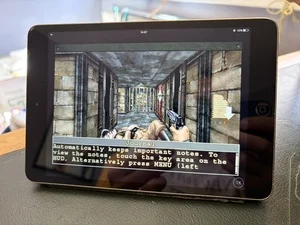
The Digital Graveyard: Why Apple’s 32-Bit Purge Erased a Generation of Gaming History
- 0
- 1,200 word
In the rapidly accelerating lifecycle of consumer electronics, devices often transition from cutting-edge productivity tools to glorified paperweights with alarming speed. For...
Read out all