
- 0
- 1,266 word
In an era where data generation has reached unprecedented levels, the demand for reliable, high-capacity external storage has never been greater. For creative professionals, data scientists, and enterprise-level power users, the "storage crunch" is a constant companion. Enter the LaCie 8Big Pro5, the latest entrant in a long lineage of professional-grade desktop RAID systems. While it carries the pedigree of the iconic LaCie brand, its recent launch has sparked a spirited debate regarding the evolving economics of mechanical hard drives versus the rapidly advancing world of NVMe SSDs.
Main Facts: What is the 8Big Pro5?
The LaCie 8Big Pro5 is an eight-bay desktop RAID enclosure designed for users who prioritize massive capacity and structural reliability over the raw, blistering speeds of modern flash memory. It is a hulking, professional piece of hardware that occupies a significant footprint on the desk, designed to house up to 256TB of data.
At its core, the 8Big Pro5 is a storage bridge between the legacy of mechanical hard disk drives (HDDs) and modern connectivity standards. However, it is important to clarify that this device is a specialized tool. It is not designed for the average consumer who needs to back up a few family photos; it is built for those who deal in petabytes of raw video footage, massive 3D rendering projects, and archival work that requires longevity and fault tolerance.
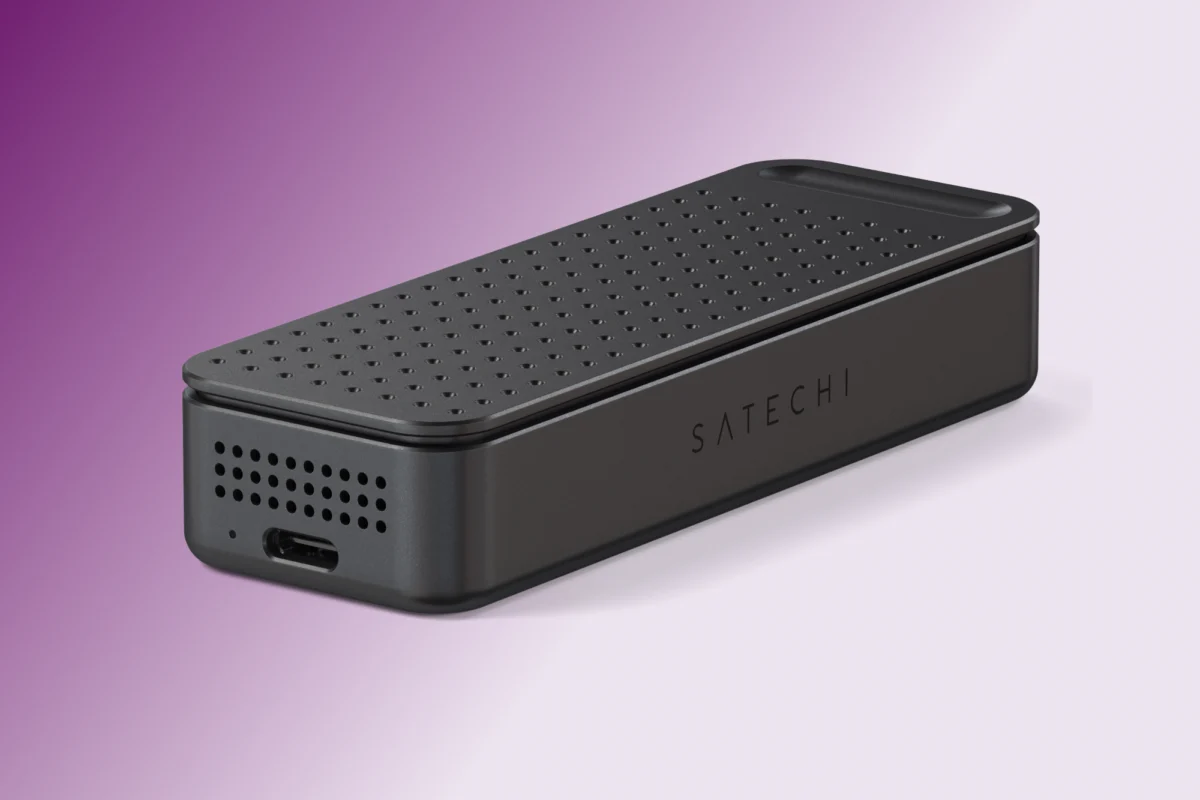
Visually, the device marks a shift in LaCie’s design language. Longtime fans of the brand may recall the classic silver industrial aesthetic and the oversized, glowing blue power buttons that defined the desktop storage landscape of the early 2000s. While the 8Big Pro5 is undeniably elegant and minimalist, it lacks the flamboyant personality of its predecessors. It is a refined, subdued tool for the modern studio, though some enthusiasts may miss the "conversation starter" quality of the older models designed in collaboration with figures like Neil Poulton.
Chronology: The Evolution of Professional Storage
The trajectory of external storage has been defined by a constant battle between density and throughput.
- The HDD Era: For nearly two decades, the 8-bay and 12-bay RAID array was the gold standard for high-capacity workflows. These units relied on mechanical platters spinning at 7,200 RPM, offering a balance of cost-per-gigabyte that SSDs simply could not match.
- The Rise of NVMe: In the last five years, the industry has seen a massive shift toward NVMe SSDs. As prices dropped and controllers became more efficient, SSDs moved from the motherboard to external enclosures.
- The Current Conflict: Today, we are at a crossroads. The 8Big Pro5 enters a market where external Thunderbolt 5 SSDs are reaching speeds of 7GBps, making the 2.8GBps ceiling of the 8Big Pro5 (in RAID 0) look positively sluggish by comparison.
The release of the 8Big Pro5 signifies Seagate’s (the parent company of LaCie) attempt to keep the mechanical drive relevant in a "flash-first" world, leaning heavily on the sheer volume of storage as its primary value proposition.
Supporting Data: The Economics of Capacity
The financial argument for the 8Big Pro5 is a tale of two extremes. When analyzing the pricing structure, it becomes evident that the product targets a very specific threshold of necessity.
The Pricing Breakdown
- 32TB Configuration: $5,979
- 64TB Configuration: $7,249
- 128TB Configuration: $8,969
- 192TB Configuration: $11,269
- 256TB Configuration: Price pending/Not yet available
The 32TB entry-level model is, frankly, a difficult sell. When one considers that a consumer can purchase eight individual 4TB Barracuda drives for roughly $1,200, the markup on the 8Big Pro5 enclosure feels steep. Furthermore, a four-disk, 32TB NVMe SSD array would not only provide significantly higher transfer speeds but could be assembled for several hundred dollars less than the entry-level 8Big Pro5.
However, the "fiscal math" changes as you scale up. As you move into the 64TB, 128TB, and 192TB tiers, the price of high-capacity SSDs—which currently hover around $5,400 for 64TB of flash storage—becomes prohibitively expensive. At these higher capacities, the 8Big Pro5 becomes a logical choice for those who need to store massive, static, or semi-active data sets where the cost-per-terabyte is the single most important metric.
Official Responses and Industry Context
While Seagate has not issued a formal rebuttal to the criticism regarding the speed of mechanical drives, the company’s product strategy reflects a clear understanding of the "pro" user’s workflow. For many film editors and data architects, the priority is not how fast the data moves, but how securely it sits.

Industry analysts point out that LaCie’s strength has never been pure, raw performance for a single file transfer; it has been about "sustained throughput" and "fault tolerance." In a RAID 5 or RAID 6 configuration, which is how most users will actually deploy the 8Big Pro5, the device offers a level of data redundancy that is difficult to replicate with ad-hoc external SSDs.
One point of contention among reviewers is the lack of an "unpopulated" option. Many professional users maintain their own stock of enterprise-grade hard drives. By forcing the purchase of the included drives, LaCie effectively limits the accessibility of the enclosure to those willing to buy into the entire ecosystem, rather than those who simply want a high-quality chassis for their own drives.
Implications: Who is the 8Big Pro5 For?
The release of the 8Big Pro5 forces us to reconsider the definition of "performance" in professional workflows.
1. The Death of the "One-Size-Fits-All" Drive
The era of having one drive that does everything—backups, active editing, and archival—is ending. The 8Big Pro5 serves as a dedicated archive and "cold" or "warm" storage solution. It is not meant to host your active Premiere Pro project files if you are editing 8K RAW video; for that, you need an NVMe array. It is meant to be the vault where those projects go to live once the work is finished.
2. The SSD-RAID Kludge
Some users have attempted to build "ad-hoc" arrays using multiple external 8TB USB SSDs. While this approach is technically faster and cheaper at lower capacities, it is a management nightmare. Software RAID across multiple USB controllers is prone to disconnects, power issues, and OS-level instability. The 8Big Pro5 offers a unified, stable hardware RAID environment that, while slower, is significantly more reliable.
3. The Future of Mechanical Storage
The 8Big Pro5 is likely one of the last of its kind. As drive density continues to improve and the price of high-capacity NAND flash decreases, the window of viability for mechanical RAID arrays is closing. Seagate is betting that there is still a significant demographic of professionals who require the specific, massive, cost-effective storage that only high-density spinning platters can currently provide.
Conclusion: Our Verdict
The LaCie 8Big Pro5 is a beautifully engineered, if somewhat niche, piece of hardware. It is a "classy" storage kit that excels in the realm of high-capacity data management. However, its value is strictly dependent on your storage requirements.
If you are looking for a 32TB solution, look elsewhere; the market offers faster, cheaper, and more agile alternatives in the SSD space. But if your requirements start at 64TB and climb into the hundreds of terabytes, the 8Big Pro5 begins to look like a savvy investment. It is a reminder that in the world of professional computing, "better" is rarely about one single metric. It is about balancing the speed of your workflow with the security of your data and the reality of your budget.
For the studio that needs to archive massive amounts of data reliably, the 8Big Pro5 is a solid, albeit expensive, workhorse. For everyone else, it serves as a testament to how far technology has come—and how much the professional storage landscape continues to evolve.
Author

Related Posts
The Dawn of the Gemini Era: Everything You Need to Know About the New "Googlebook" Ecosystem
- 0
- 1,081 word
In a landmark presentation during The Android Show, Google has officially unveiled a paradigm shift in personal computing: the "Googlebook." Moving beyond...
Read out all
Is a New Nest Hub on the Horizon? "Google Home Display" Surfaces in App Code
- 0
- 1,387 word
The smart home landscape, which once seemed to be moving toward a unified future, has seen a period of stagnation regarding dedicated...
Read out all
Amazon Unifies AI Strategy: Introducing ‘Alexa for Shopping’ to Bridge the Gap Between Smart Homes and E-Commerce
- 0
- 1,180 word
In a significant strategic pivot, Amazon has announced a major consolidation of its artificial intelligence initiatives. The e-commerce titan is effectively dismantling...
Read out all
Mastering WhatsApp Web: The Professional Guide to Desktop Connectivity
- 0
- 1,089 word
For millions of professionals and casual users alike, WhatsApp is no longer just a smartphone companion; it is a vital communication hub....
Read out all
Meta’s "Muse Spark" AI Revolution: Bringing Superintelligence to Your Smart Glasses
- 0
- 1,201 word
In a definitive move to cement its position at the forefront of the consumer artificial intelligence race, Meta has announced the impending...
Read out all
Apple TV+ Greenlights Second Season of Hit Comedy ‘Margo’s Got Money Troubles’ Ahead of Season Finale
- 0
- 1,312 word
In a decisive move that underscores the streaming giant’s commitment to premium, talent-driven content, Apple TV+ has officially announced the renewal of...
Read out all