
- 0
- 1,161 word
In the high-stakes world of extraction shooters, the tension is supposed to be the point. You load into a map with your best gear, your heart rate spikes at the sound of a distant footstep, and every decision is weighed against the potential of losing your hard-earned inventory. However, in Embark Studios’ Arc Raiders, a growing segment of the player base has discovered that the most effective way to play isn’t by bringing the best gear—it’s by bringing nothing at all.
This phenomenon, colloquially dubbed "ratting," has turned the game’s notorious Stella Montis map into a breeding ground for frustration and strategic debate. By utilizing the game’s "free loadout" system, players are bypassing the traditional risk-reward loop of the genre, opting to play as scavengers who prey on the exhausted winners of high-tier engagements.
The Anatomy of a Zero-Risk Run
The strategy is deceptively simple. After suffering a string of losses, a player enters the map with a "free loadout"—a basic, no-cost kit consisting of standard-issue weaponry, limited ammo, and baseline medical supplies. Because there is no personal investment, there is no fear of loss.

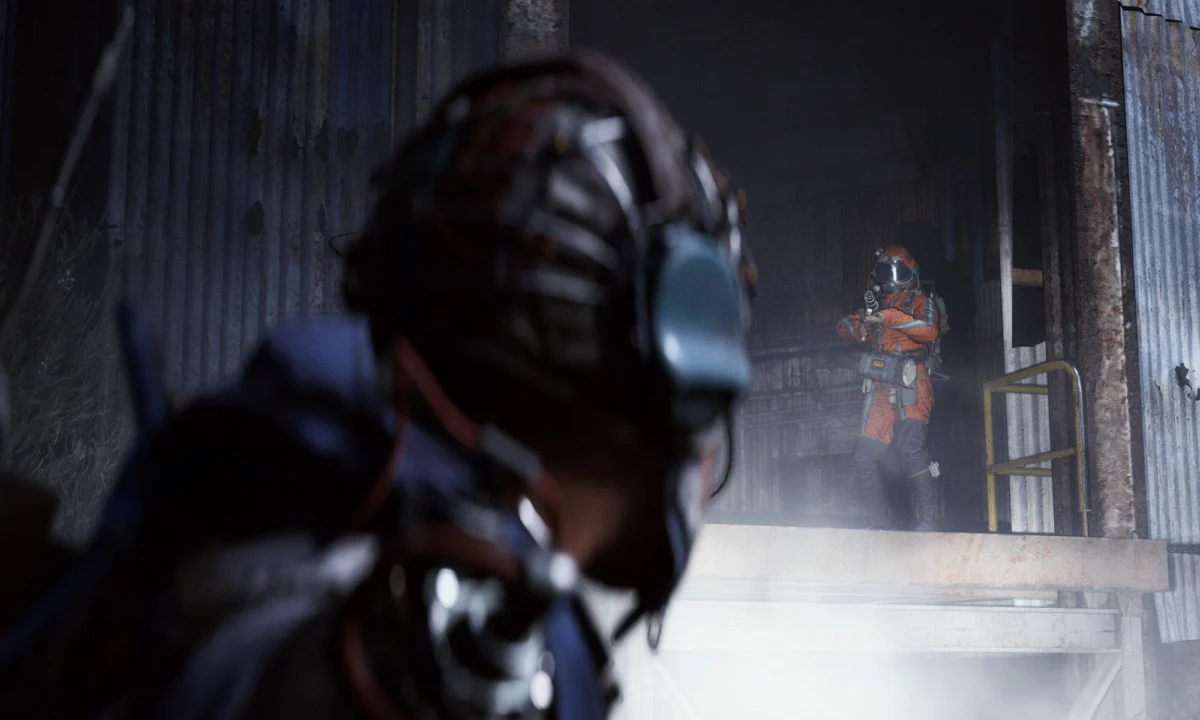
My recent experience on Stella Montis served as a masterclass in this "rat" philosophy. The objective was not to hunt or dominate; it was to observe. Stella Montis, with its labyrinthine, claustrophobic corridors, is designed to funnel players into unavoidable combat. My teammate and I adopted a "fourth-party" strategy: we allowed other, better-equipped squads to expend their resources, burn their healing items, and weaken one another through sustained firefights.
We waited in the shadows. We listened to the cacophony of gunfire, the mechanical whir of Arc enemies, and the inevitable silence that follows a squad wipe. When the smoke cleared and the victors began to loot their fallen foes, we struck. Armed with our "trash" gear, we ambushed the survivors, who were already wounded and low on ammunition. The result? A haul that included four weapon blueprints, most notably the legendary Aphelion. In a single raid, I had acquired top-tier rewards for zero investment. It was effective, it was efficient, and it felt fundamentally antithetical to the spirit of the extraction shooter genre.
Chronology of the "Free Kit" Controversy
The emergence of this meta was not immediate. When Arc Raiders first introduced the free loadout system, it was framed as a "safety net"—a crucial mechanic to prevent player burnout.

- The Introduction: Embark Studios implemented free kits to ensure that players who had lost all their currency and gear were not permanently locked out of the game. It allowed newcomers to learn the ropes without the crushing weight of gear-fright.
- The Discovery: As the community grew more familiar with the map layouts—specifically the high-density loot zones—veteran players realized that the free kit, while statistically inferior, was sufficient to win a gunfight if the element of surprise was maintained.
- The Shift: The "rat" playstyle transitioned from a desperate fallback measure to an intentional strategy. Players began intentionally queuing with free kits to "farm" high-value players, effectively turning the economy of the game on its head.
- The Community Backlash: Following the Flashpoint update, which attempted to balance this by staggering spawn times, the discourse reached a boiling point. The community began to vocalize that the risk-reward ratio was no longer balanced, as the potential gain from "ratting" far outweighed the logistical burden of crafting and equipping high-tier gear.
Supporting Data: The Economics of Risk
The fundamental tension in an extraction shooter is the "Gear Fear" cycle. You bring a $10,000 rifle; you play cautiously because you don’t want to lose that $10,000. When you win, you feel rewarded. When you lose, you feel the sting of the loss.
When a player enters with a free loadout, that cycle is shattered. If they die, they lose nothing. If they win, they gain everything. According to player sentiment analysis within the Arc Raiders community forums, the frequency of "budget raids" has increased by an estimated 40% since the start of the season.
Furthermore, the game’s design choices on Stella Montis exacerbate this. The map’s tight corridors allow for "point-blank" ambushes where the technical specs of a legendary weapon are often mitigated by the speed of a player’s reaction time. If a free-kit player lands the first shot with a base-level weapon, the player with the $50,000 loadout is at a massive disadvantage.

Official Responses and Developer Strategy
Embark Studios has acknowledged the community’s frustration, though they remain in a delicate balancing act. Their primary response has been the implementation of staggered spawning. Players who enter a raid with high-value, custom gear are now prioritized for "fresh" servers, while those opting for free loadouts are frequently dropped into ongoing matches—often late in the session.
Additionally, developers have stripped free-loadout players of "Safe Pockets," preventing them from securing items mid-raid and forcing them to actually reach an extraction point with their ill-gotten gains. Despite these changes, the "rat" meta persists. Embark has hinted in recent developer blogs that they are considering a "dynamic scaling" system, where the quality of loot found in a raid might be tied to the value of the gear brought into the session, though no formal timeline for this implementation has been set.
The Implications: Is the Genre at Risk?
The broader implication for Arc Raiders—and the genre at large—is a potential degradation of the game’s core loop. If the "least interesting" way to play (cowering in a corner, waiting for others to do the work) is also the most profitable, players will inevitably gravitate toward it.

When the safest strategy becomes the most rewarding, the psychological tension that makes extraction shooters compelling begins to evaporate. If you can acquire an Aphelion blueprint by playing like a "sewer creature," the incentive to participate in the game’s deeper crafting, economy, and progression systems diminishes.
For Arc Raiders to maintain its competitive edge, it must find a way to make the "high risk" path feel more rewarding than the "low risk" path. This might involve:
- Tiered Loot Tables: Ensuring that the highest-tier blueprints and gear have a higher drop rate for players who arrive with high-gear-score loadouts.
- Aggressive Matchmaking: Completely segregating "Fresh Start" lobbies from "Scavenger" queues.
- Increased Penalty for Failure: Implementing a "cooldown" or "loyalty" penalty for players who repeatedly queue with free kits and extract with high-value items, forcing a greater reliance on the player’s own inventory.
Ultimately, the goal of Arc Raiders is to be a game where every decision has a cost. As it stands, the "rat" meta suggests that for some, the cost of success is becoming suspiciously low. If Embark Studios does not address this imbalance, they risk turning their tactical masterpiece into a simulator of patience rather than a test of skill. The game is currently at a crossroads; it must decide whether to reward the bold or continue to facilitate the scavengers who wait in the dark.
Author

Related Posts

The New Era of Xbox: Asha Sharma’s Strategic Pivot and the Future of Game Pass
- 0
- 1,236 word
Since stepping into the role of CEO of Xbox Gaming, Asha Sharma has become the face of a radical transformation within the...
Read out all
MercurySteam Initiates Workforce Reductions: A Sobering Moment for the Spanish Games Industry
- 0
- 1,154 word
The global video game industry continues to grapple with a period of intense volatility and structural realignment. This week, the veteran Spanish...
Read out all
Capcom’s Strategic Blueprint: Sustaining Growth Through Legacy and Innovation
- 0
- 1,256 word
In the high-stakes landscape of the modern video game industry, few publishers have managed to maintain a trajectory as consistently impressive as...
Read out all
The Architect of Immersive Worlds: Why Ken Levine’s ‘Judas’ is Rewriting the Rules of Narrative Design
- 0
- 1,305 word
The gaming industry is often defined by cycles of technological leaps—ray tracing, 8K resolutions, and photorealistic asset streaming. However, for Ken Levine,...
Read out all
The GTA 6 Pre-Order Frenzy: Why Retail Data Has Fans Holding Their Breath
- 0
- 1,302 word
It has been less than 48 hours since the feverish Grand Theft Auto community collectively convinced itself that Rockstar Games was on...
Read out all
Review: Asus Prime Z890-P Wi-Fi – A Functional Entry Point into Intel’s New Era
- 0
- 1,210 word
As the landscape of PC building shifts with the arrival of Intel’s latest Core Ultra processor lineup, the motherboard market is undergoing...
Read out all