
- 0
- 1,281 word
By Tanveer Singh
Published May 13, 2026
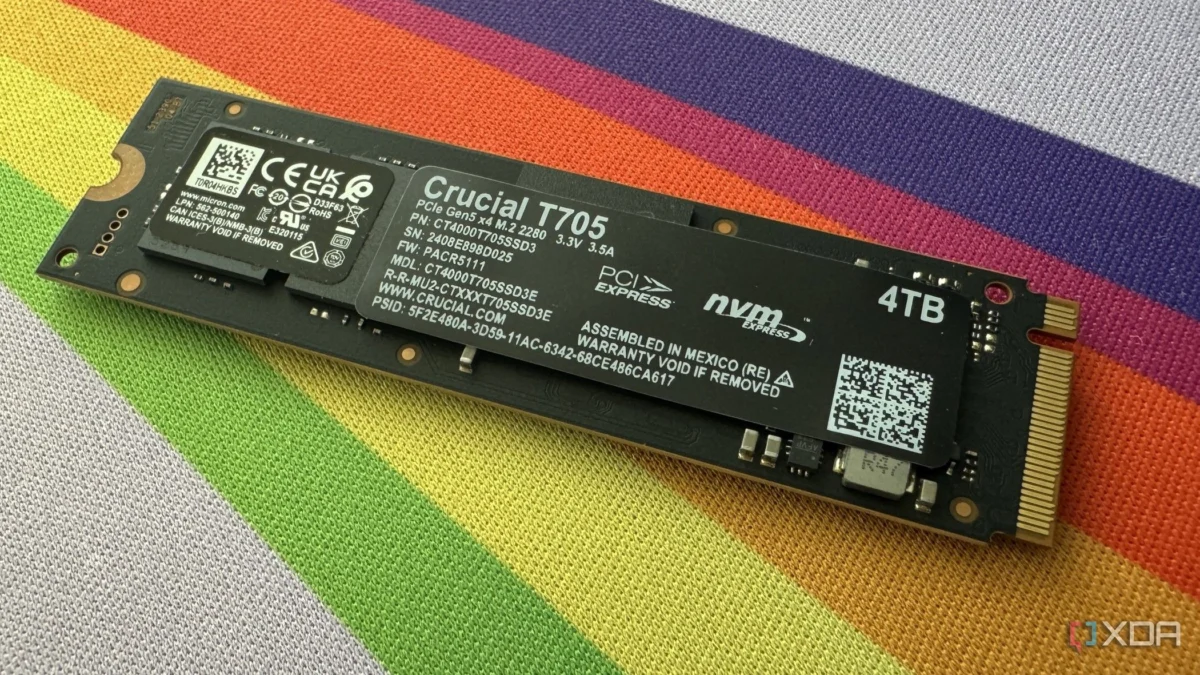
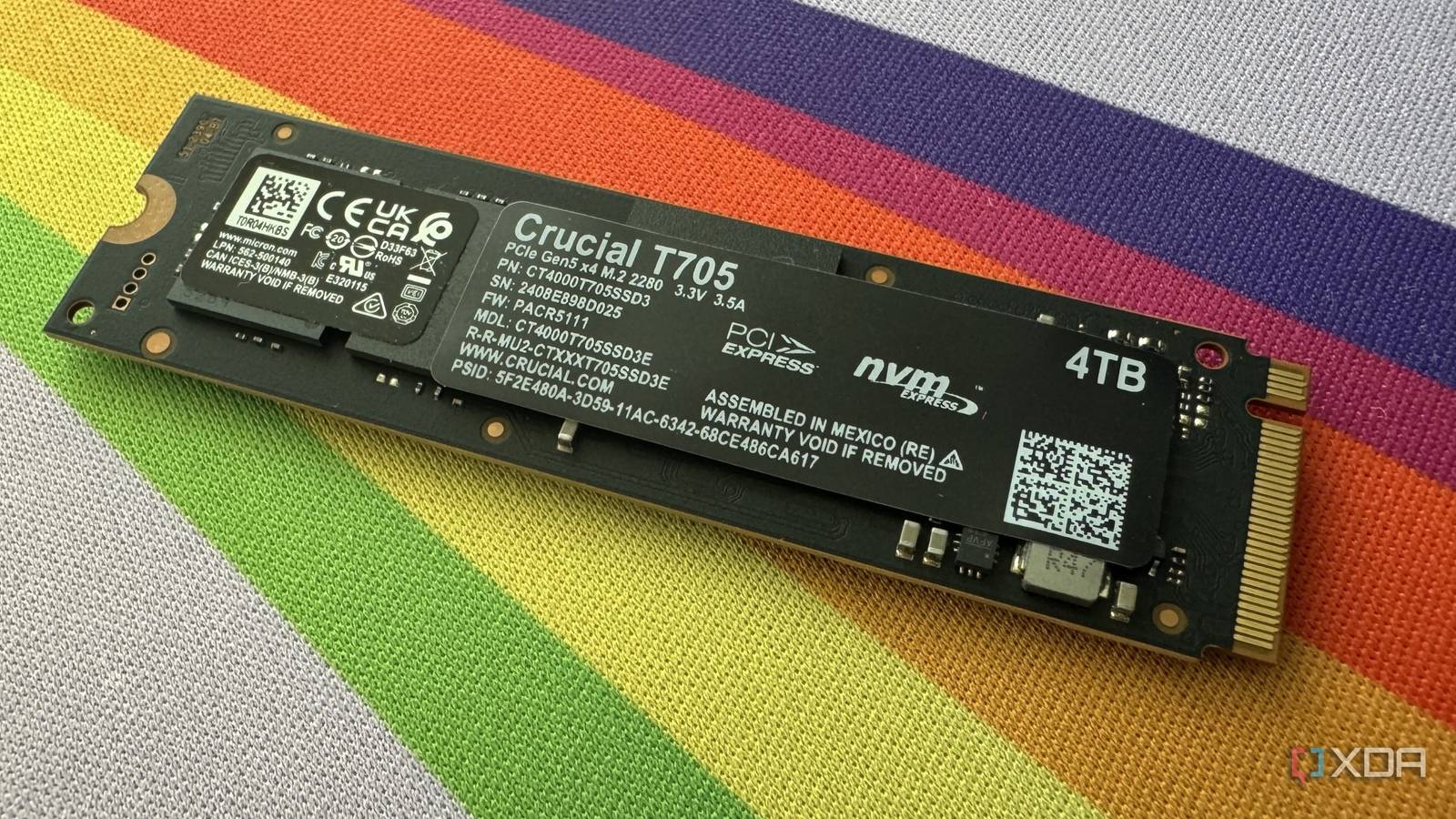
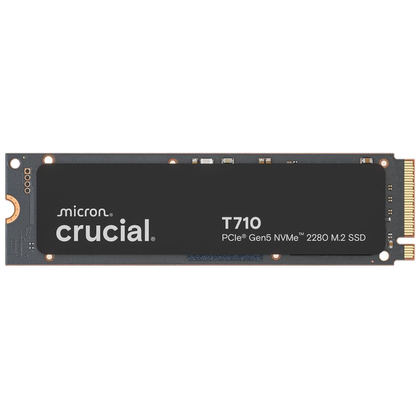
The landscape of PC storage has undergone a seismic shift over the past few years. With the arrival of PCIe 5.0 (Gen5) NVMe SSDs, we have moved into an era where sequential read and write speeds are hitting the theoretical limits of what was once considered "bleeding edge." We are seeing drives capable of pushing 15,000 MB/s—speeds that would have seemed like science fiction a decade ago. However, despite these impressive technical milestones, the adoption rate among the general PC-building community remains tepid.
For the average user, the transition to Gen5 storage is not just a question of performance; it is a question of value. As hardware prices fluctuate and the "DRAM crisis" continues to impact supply chains, consumers are forced to weigh the benefits of these drives against their premium price tags. The reality is that for the vast majority of users—specifically gamers—these drives offer virtually no tangible improvement over their predecessors.
The Evolution of Storage: A Brief Chronology
To understand why Gen5 is currently a niche product, we must look at the progression of storage technology.
- 2019-2020: PCIe 4.0 SSDs hit the market, offering a massive jump over Gen3. These drives became the gold standard for high-end gaming and early content creation.
- 2022-2023: The first wave of PCIe 5.0 controllers began to surface. Manufacturers promised unprecedented speeds, but early iterations were plagued by thermal management issues, often requiring bulky active cooling solutions.
- 2024: Prices for Gen5 drives saw a temporary dip, sparking hope for mass adoption. However, global market volatility in NAND flash memory soon reversed this trend, pushing prices back into the "enthusiast-only" territory.
- 2025-2026: We are now in a phase of market stabilization. While Gen5 drives are readily available, they are marketed primarily to professional workstations, leaving the average gamer wondering if they are missing out on an upgrade.
Gaming Still Doesn’t Care About Cutting-Edge SSDs
The marketing machine surrounding PCIe 5.0 storage often leans heavily on sequential speeds. It is an easy number to put on a box: 15,000 MB/s sounds exponentially better than the 7,000 MB/s offered by top-tier Gen4 drives. However, this is a classic case of marketing misdirection.
The Myth of "Faster Loading"
For a gamer, the most important metric is not sequential throughput, but random read/write performance and latency. Games load assets from various parts of the drive, requiring the controller to perform millions of small, random IOPS (input/output operations per second) rather than moving one massive file.

The leap in random IOPS from Gen4 to Gen5 has been marginal compared to the leap in sequential speed. Consequently, if you were to swap a high-end Gen4 SSD for a Gen5 drive, you would see identical load times in virtually every modern title. Your frame rates will not increase, your textures will not load faster, and your boot times will remain indistinguishable.
The DirectStorage Disappointment
When Microsoft introduced DirectStorage, the industry was abuzz with the idea that storage bandwidth would finally become a bottleneck for gaming. The technology was designed to allow the GPU to pull data directly from the SSD, bypassing the CPU and significantly reducing loading times.
Years later, the adoption of DirectStorage remains abysmally low. While a handful of titles have implemented it, it is far from a standard requirement. We are still years away from a world where a Gen5 SSD is a requirement for a modern gaming experience. Until then, a Gen5 drive is simply an expensive bystander in a gaming PC, idling while the system performs exactly as it did on older hardware.
Your Workstation Will Happily Utilize PCIe 5.0 Speeds
While the gaming narrative is clear—Gen5 is overkill—the story changes entirely when we move to the professional sector. For those whose time is measured in billable hours, the efficiency of PCIe 5.0 is a game-changer.
Horses for Courses: The Productivity Advantage
If your daily workflow involves heavy lifting—such as 8K video editing, 3D rendering in Blender, or local Large Language Model (LLM) training—the difference between Gen4 and Gen5 is stark.
- Video Editing: When scrubbing through a 4K or 8K timeline, the drive’s ability to pull large chunks of raw footage instantly is paramount. A Gen5 drive eliminates the stuttering that often occurs when a system struggles to keep up with the data rate of high-bitrate video.
- 3D Rendering: Asset streaming and caching are bandwidth-heavy tasks. In large-scale scenes, the ability to load high-resolution textures into memory quickly can reduce render wait times by significant margins.
- Local LLMs: As professionals increasingly turn to local AI training to maintain data privacy, they are dealing with massive model files. The ability to load and manipulate these datasets at 15,000 MB/s allows for rapid iterations that simply aren’t possible on slower storage.
For these users, the price premium is not a "tax" on vanity; it is an investment in productivity. The time saved during file exports and asset loading often pays for the drive’s cost within a few weeks of professional use.
Large File Transfers: Where Gen5 Shines
Beyond specific creative software, the sheer speed of Gen5 drives provides a tangible benefit in data management. Professionals who regularly move hundreds of gigabytes of raw footage from field drives to server storage will find that the time spent "waiting for the progress bar" is slashed.
However, there is a catch: thermal management. PCIe 5.0 drives are notoriously hot. To maintain these high-speed transfers, these drives require robust cooling. If your motherboard does not have an integrated heatsink with a dedicated fan, or if you are not using an aftermarket SSD cooler, you are likely to encounter thermal throttling. It is common to see a Gen5 drive slow down mid-transfer as it hits its thermal limit, negating the very speed advantage you paid for.
Implications for the Future of PC Building
As we look toward the remainder of 2026, the industry is at a crossroads. The divide between "Gaming Storage" and "Professional Storage" has never been wider.
- The "Good Enough" Plateau: For 95% of the market, Gen4 SSDs have reached a "good enough" plateau. They are reliable, affordable, and fast enough for any task the average user throws at them.
- The Cooling Requirement: We are reaching a point where SSD cooling is as important as CPU cooling. As Gen5, and eventually Gen6, drives push for more performance, the physical constraints of M.2 slots will require better case airflow and more sophisticated heatsink designs.
- Market Correction: Consumers are becoming more tech-literate. The realization that Gen5 is not a "gaming necessity" is cooling demand, which may eventually force manufacturers to lower prices. When these drives reach price parity with Gen4, we will finally see mass adoption.
Final Verdict: Do You Need It?
If you are a gamer, the answer is a resounding "no." You are better off spending the extra budget on a better GPU, more RAM, or a high-quality monitor. A Gen4 SSD is the current sweet spot for gaming performance and reliability.
However, if your PC is your primary tool for professional creation, the Gen5 upgrade is a logical step. The ability to handle massive file transfers and sustain heavy workloads is a functional upgrade that justifies the high entry price.
Before you commit to that expensive PCIe 5.0 drive, look at your usage patterns. If you spend your time in Premiere Pro or Maya, buy it and enjoy the speed. If you spend your time in Cyberpunk 2077 or Call of Duty, keep your wallet closed and stick with a reputable Gen4 drive. In the world of technology, sometimes the fastest drive is simply the one that does the job you actually need, rather than the one that claims the fastest number on the box.
Author

Related Posts

Smart Living on a Budget: The Ultimate Guide to Affordable Amazon Alexa Devices in 2026
- 0
- 1,130 word
The landscape of domestic technology has undergone a seismic shift over the last decade. What was once considered a luxury for the...
Read out all
Meta Connect 2026: Preparing for a New Frontier in AI and Spatial Computing
- 0
- 1,186 word
The technology sector is bracing for a pivotal moment as Meta officially sets the stage for its marquee annual event. Meta has...
Read out all
The Evolution of the Drive-Thru: Why McDonald’s is Hitting the Reset Button on AI Order-Taking
- 0
- 1,133 word
In a significant pivot for the fast-food industry’s digital transformation, McDonald’s has announced the conclusion of its long-running test of Automated Order...
Read out all
An Era Ends: Reflecting on Eight Years of ‘The Internet of Things Podcast’
- 0
- 1,243 word
After an influential eight-year run that helped define the discourse surrounding the connected world, The Internet of Things Podcast has officially broadcast...
Read out all
Silent Speakers and Crystal-Clear Displays: The Definitive Guide to Eliminating A/V Noise
- 0
- 1,179 word
There is nothing more frustrating for an enthusiast than the "unboxing high"—that moment of anticipation when you plug in your new high-end...
Read out all
Eufy Redefines Automated Home Care: Unveiling the Flagship Omni S2 Robot Vacuum and Mop
- 0
- 1,128 word
In an era where smart home automation is rapidly evolving from a luxury into a household necessity, Eufy has firmly positioned itself...
Read out all