
- 0
- 1,258 word
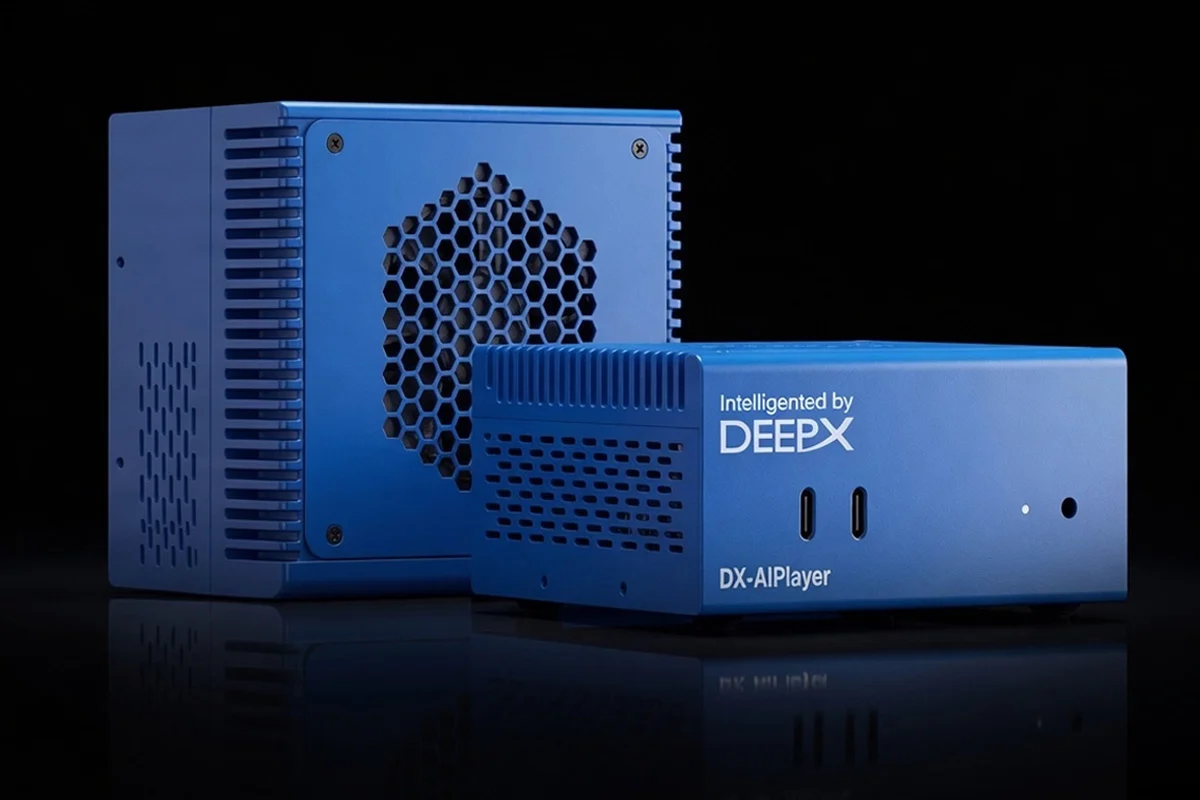
In the rapidly evolving landscape of edge artificial intelligence, the demand for hardware that balances power efficiency with high-throughput inference has never been greater. DEEPX, a rising name in the semiconductor and AI hardware sector, has officially entered the fray with its latest innovation: the DX-AIPlayer. This ultra-compact mini PC represents a strategic intersection of consumer-grade processing power and specialized AI acceleration, tailored specifically for the rigorous demands of robotics, smart city infrastructure, and industrial automation.
By pairing the reliable Intel "Alder Lake-N" N97 System-on-Chip (SoC) with its proprietary DX-M1 M.2 AI accelerator, DEEPX is positioning the DX-AIPlayer as a definitive solution for developers who require real-time vision AI capabilities without the thermal or power-consumption penalties associated with traditional GPU-based systems.
Main Facts: The Architecture of the DX-AIPlayer
The DX-AIPlayer is not merely another entry in the crowded market of Intel N97-based mini PCs. While devices like the Jetway B420UADN1, Avalue EPC-ASL, and AAEON UP 710S have established a baseline for compact, low-power computing, the DX-AIPlayer differentiates itself through a heterogeneous architecture.
The Hardware Foundation
At its core, the system utilizes the Intel N97 SoC—a quad-core processor known for its efficiency in edge deployments. However, the true "brain" of the device is the DX-M1 AI accelerator module. Integrated via an M.2 2280 M-Key (PCIe Gen 3 x4) slot, the DX-M1 acts as a dedicated neural processing engine.

Key specifications include:
- AI Performance: Up to 25 TOPS (Trillions of Operations Per Second) of INT8 performance.
- Power Efficiency: The module operates within a highly optimized 1 to 5 Watt power envelope, making it ideal for battery-operated robotics or thermally constrained industrial enclosures.
- Dedicated Memory: The DX-M1 includes 4GB of dedicated LPDDR5 memory. This is a critical design choice, as it ensures that memory-intensive AI models do not compete with the host system’s primary RAM, effectively eliminating performance bottlenecks.
Chronology: From Concept to Commercial Availability
The journey of the DX-AIPlayer reflects the industry’s broader pivot toward specialized AI silicon. While general-purpose processors (CPUs) were the standard for edge AI for nearly a decade, the rise of transformer models and high-resolution computer vision necessitated a paradigm shift.
- Development Phase: Throughout 2024 and early 2025, DEEPX focused on refining the DX-M1 module, ensuring compatibility with major deep learning frameworks. The engineering team prioritized a "plug-and-play" experience for industrial integrators, leading to the development of the DX-AllSuite software stack.
- Market Positioning: By mid-2025, the company began seeding development kits to partners in the robotics and smart city sectors. These field tests were essential for validating the thermal performance of the device in 24/7, non-stop operational environments.
- Commercial Launch (2026): In May 2026, the device reached a significant milestone with its official listing on global electronics distributor platforms like DigiKey. The current retail price of $995.01 for the 8GB configuration underscores its position as an industrial-grade tool rather than a consumer toy. The current lead time, with units arriving in mid-July 2026, reflects the high demand for dedicated edge AI hardware.
Supporting Data: Software Ecosystem and Compatibility
Hardware is only as effective as the software stack that drives it. DEEPX has recognized that a fragmented ecosystem is the primary barrier to adoption for industrial AI. Consequently, the company has released the DX-AllSuite, a comprehensive development package designed to streamline the transition from model training to inference.
Software Versatility
The DX-AIPlayer provides a robust environment for developers, supporting:

- Operating Systems: Windows 10/11, Ubuntu (20.04, 22.04, 24.04 LTS), and the Yocto Project (v5.1) for specialized embedded Linux requirements.
- Model Frameworks: The system is framework-agnostic, offering seamless support for PyTorch, TensorFlow, ONNX, and Keras. For vision-specific tasks, the inclusion of native support for Ultralytics YOLO is a major draw for developers working on object detection and tracking.
- Deployment Tools: The DX-RT inference engine allows for C++ and Python APIs, giving developers the flexibility to choose their preferred language. The system also supports Docker containers, facilitating easier deployment and management of complex multi-model pipelines.
Benchmarking and Efficiency
The 25 TOPS performance figure, when contrasted with the 1–5W power consumption, positions the DX-M1 module as one of the most efficient accelerators currently on the market. In real-world vision AI scenarios, this allows for high-frame-rate processing of multiple camera feeds without requiring an external power supply or massive heatsinks.
Official Responses and Strategic Vision
In statements accompanying the launch, DEEPX representatives highlighted that the DX-AIPlayer was born out of the frustration of seeing "AI-ready" hardware that failed to meet the latency requirements of real-world robotics.
"The goal," says a spokesperson from the development team, "was to remove the complexity of edge AI integration. By separating the host processing from the AI inference, we allow the Intel N97 to handle the OS, communication, and peripheral management, while the DX-M1 handles the heavy lifting of neural network inference. This separation of concerns is the secret to sustained, reliable performance."
The company’s focus on the Yocto Project also signals an intent to capture the automotive and industrial OEM markets, where long-term stability and custom Linux distributions are preferred over general-purpose operating systems.

Implications: The Future of Edge AI
The release of the DX-AIPlayer has several profound implications for the industry.
1. The Death of the "Bottleneck"
For years, mini PCs struggled to run high-end AI models because they relied on integrated GPU graphics. This forced developers to choose between under-performing hardware or expensive, power-hungry desktop GPUs. The DX-AIPlayer, with its dedicated 4GB of LPDDR5 memory on the AI module, represents a shift toward a more modular approach to edge computing. We are likely to see more devices adopt this "Co-Processor" architecture in the coming years.
2. Democratization of High-Performance Vision AI
With a price point under $1,000, the DX-AIPlayer makes professional-grade AI capabilities accessible to startups and smaller robotics firms that previously lacked the budget for enterprise-level servers. This will likely accelerate the adoption of smart city solutions, such as traffic management and automated public safety, as the cost of implementation drops.
3. Sustainability in Computing
The "Green AI" movement is gaining momentum, and the DX-AIPlayer’s ultra-low power consumption (1-5W for the NPU) is a significant selling point. In large-scale factory deployments where hundreds of units might be active simultaneously, the cumulative energy savings—and the reduction in heat generation—are substantial.

4. Competitive Pressure on Legacy Manufacturers
Established players in the industrial PC market, such as those mentioned previously, will need to respond to the integration of dedicated NPUs. As AI becomes a "must-have" feature rather than a luxury, the baseline for an industrial computer will likely shift to include hardware-accelerated AI by default.
Conclusion
The DX-AIPlayer N97 is more than just a piece of hardware; it is a signal of where the industry is headed. By synthesizing the reliability of Intel’s Alder Lake-N architecture with the specialized power of the DX-M1 AI accelerator, DEEPX has created a platform that is ready for the rigors of the field.
For developers, system integrators, and industrial engineers, the choice is clear: the era of general-purpose compute is being supplemented by an era of task-specific acceleration. As we look toward the remainder of 2026 and into 2027, the DX-AIPlayer serves as a compelling benchmark for what a truly optimized edge AI device should look like. Whether it is powering the next generation of autonomous delivery robots or enhancing the security of a smart campus, the DX-AIPlayer provides the performance, efficiency, and software support necessary to turn complex AI concepts into reality.
For those interested in exploring this technology, further documentation and technical specifications are available on the DEEPX official product page. As inventory stabilizes, this device is poised to become a staple in the toolkit of the modern embedded systems engineer.
Author

Related Posts
Toshiba Unveils High-Performance Multiplexers to Power Next-Generation PCIe 6.0 and USB4 v2 Architectures
- 0
- 1,135 word
In the rapidly evolving landscape of high-speed data interconnects, the bottleneck often lies not in the processor or the memory, but in...
Read out all
MRAM Reaches a Strategic Tipping Point: New Industry Alliance Formed to Scale Adoption
- 0
- 1,114 word
Magnetoresistive Random Access Memory (MRAM)—a technology once relegated to the fringe of semiconductor research—has officially hit a commercial and technical tipping point....
Read out all
The Smart Shopper’s Pulse: Tracking the Best Daily Deals in an Era of Digital Hype
- 0
- 1,214 word
By Daniel Oropeza | Shopping Editor May 13, 2026 In the modern digital marketplace, the consumer is bombarded with a relentless stream...
Read out all
Bridging the Digital Divide: How Experience AI is Empowering Classrooms in Uzbekistan
- 0
- 1,266 word
In an era defined by the rapid proliferation of artificial intelligence, the global race to ensure digital equity has moved beyond basic...
Read out all
The Mirror in the Machine: Unmasking Algorithmic Bias in the Age of AI
- 0
- 1,266 word
The widespread adoption of artificial intelligence (AI) has been accompanied by a persistent, often unexamined, myth: that algorithms are objective, mathematically neutral...
Read out all
Coding for the Future: Young Innovators Shine at Coolest Projects USA Minnesota
- 0
- 1,396 word
The Science Museum of Minnesota transformed into a vibrant hub of innovation on April 11, as it played host to the second...
Read out all