
- 0
- 1,396 word
The Science Museum of Minnesota transformed into a vibrant hub of innovation on April 11, as it played host to the second annual "Coolest Projects USA Minnesota." The event, a cornerstone for the next generation of tech creators, showcased a remarkable array of talent, ingenuity, and technical prowess. From AI-driven emergency platforms to mechanical assistive devices, the showcase served as a poignant reminder that age is no barrier to solving complex, real-world problems.
With 65 young participants and over 150 visitors in attendance, the atmosphere was electric. The event provided a platform where technical skill met social consciousness, allowing creators to walk visitors through the hurdles of their development processes, the iterative nature of their designs, and the profound lessons learned through failure and eventual triumph.
The Essence of Coolest Projects: A Developmental Milestone
At its core, Coolest Projects is not merely a competition; it is a celebration of the creative journey. The event is designed to give young tech enthusiasts a stage where they can be seen and heard, regardless of their experience level. Whether a participant was showcasing their first-ever line of code or a seasoned returnee presenting a refined iteration of a past project, the focus remained on the act of building and the joy of sharing.
The showcase offered more than just project displays; it included hands-on activities that invited the public to engage with the technology, fostering a community built on the shared belief that young people, when provided with the right tools and encouragement, can drive meaningful change.
A Chronology of Innovation: From Concept to Showcase
The development of these projects often follows a grueling but rewarding timeline. Many participants began their journey months prior to the April 11 exhibition, moving through the stages of ideation, prototyping, debugging, and final presentation.
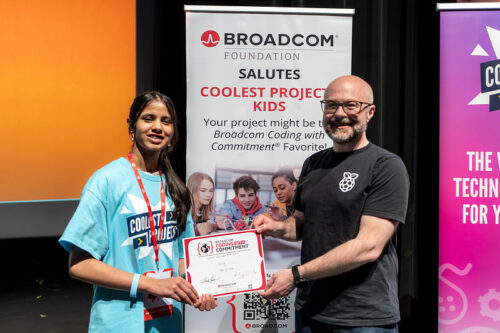
For many of the young creators, the process was defined by "pivoting." For instance, Rikita, the recipient of the prestigious Broadcom Foundation Coding with Commitment® award, initially envisioned a foam-based fruit sorter. When the prototype failed to support the weight of the fruit, she didn’t abandon the project. Instead, she pivoted to 3D printing and integrated advanced electronics—a testament to the resilience required in modern engineering.
Similarly, the team behind "Fashion Show Drama"—Adelle, Nessa, and Matilda—engaged in a multi-week creative cycle. They had to learn, on the fly, the nuances of digital asset management, specifically converting file formats to achieve a seamless costume change for their animated sprites. Their journey highlights the collaborative nature of the event, where mentors and peers provided the necessary guidance to navigate technical bottlenecks.
Spotlight on Social Impact: The Broadcom Foundation Award
A highlight of the day was the recognition of projects that align with the 17 United Nations Sustainable Development Goals. Rikita’s project, "Smart Electronic Fruit Sorter," stood out as a beacon of inclusive design. By creating an affordable assistive technology for the visually impaired, she demonstrated how microcontrollers and sensor technology can be repurposed to address accessibility issues.
The sorter uses gas sensors to detect the ripeness or spoilage of fruit, alerting the user through a combination of light and sound, followed by a servomechanism that sorts the produce. Rikita’s success was not immediate; she spent hours debugging connections and consulting online resources. Her reflections on the process—noting that the award was a "pleasant surprise"—underscore a growing trend: young coders are increasingly looking for ways to use their skills to assist marginalized populations or improve environmental sustainability.
Data and Demographics: The Reach of the Event
While 65 participants might seem like a focused group, the breadth of their work was expansive. The projects spanned multiple categories, including:
- Artificial Intelligence: Platforms designed for emergency response and plant care.
- Gaming: Interactive experiences built in Scratch, focusing on exploration and logic.
- Social Assistive Tech: Hardware-software hybrids aimed at aiding the visually impaired.
The event’s success in attracting 150 visitors highlights the growing interest in STEM education within the Minnesota region. The involvement of organizations like The Bakken Museum and support from corporate partners like Best Buy Co., Inc. and the Broadcom Foundation provides a robust ecosystem for these children. The data indicates that when physical spaces—like the Science Museum—are activated for digital creation, the participation rates among diverse age groups increase significantly.
Profiles in Creativity: Project Highlights
The breadth of the projects presented illustrates the diverse interests of the youth demographic.
ZaLayaa’s "FIND ME ASAP, AI"
ZaLayaa’s platform is perhaps the most ambitious project of the year. Built in a rapid 15-day development sprint, "FIND ME ASAP" is an emergency resource platform designed for the critical moments following a child going missing. Recognizing that standard guides are often static, ZaLayaa engineered a real-time, tailored support system. Her project is notable for its inclusivity, specifically accounting for children with invisible disabilities and complex medical needs. Her takeaway from the experience—that code must be functional under high-stress, real-world conditions—is a level of maturity rarely seen in youth development.
The Gamers: Lawrence and Karin
On the gaming front, Lawrence and Karin demonstrated the power of logic and iteration. Lawrence’s "Find the Chomiks" emphasized the challenges of managing complex game settings and "state-switching," while Karin’s "Princess Maze" highlighted the importance of collision detection. Both projects, while seemingly simple in nature, involved rigorous debugging processes that taught the students about control flow and persistent variables.
Caroline’s "Terrapod"
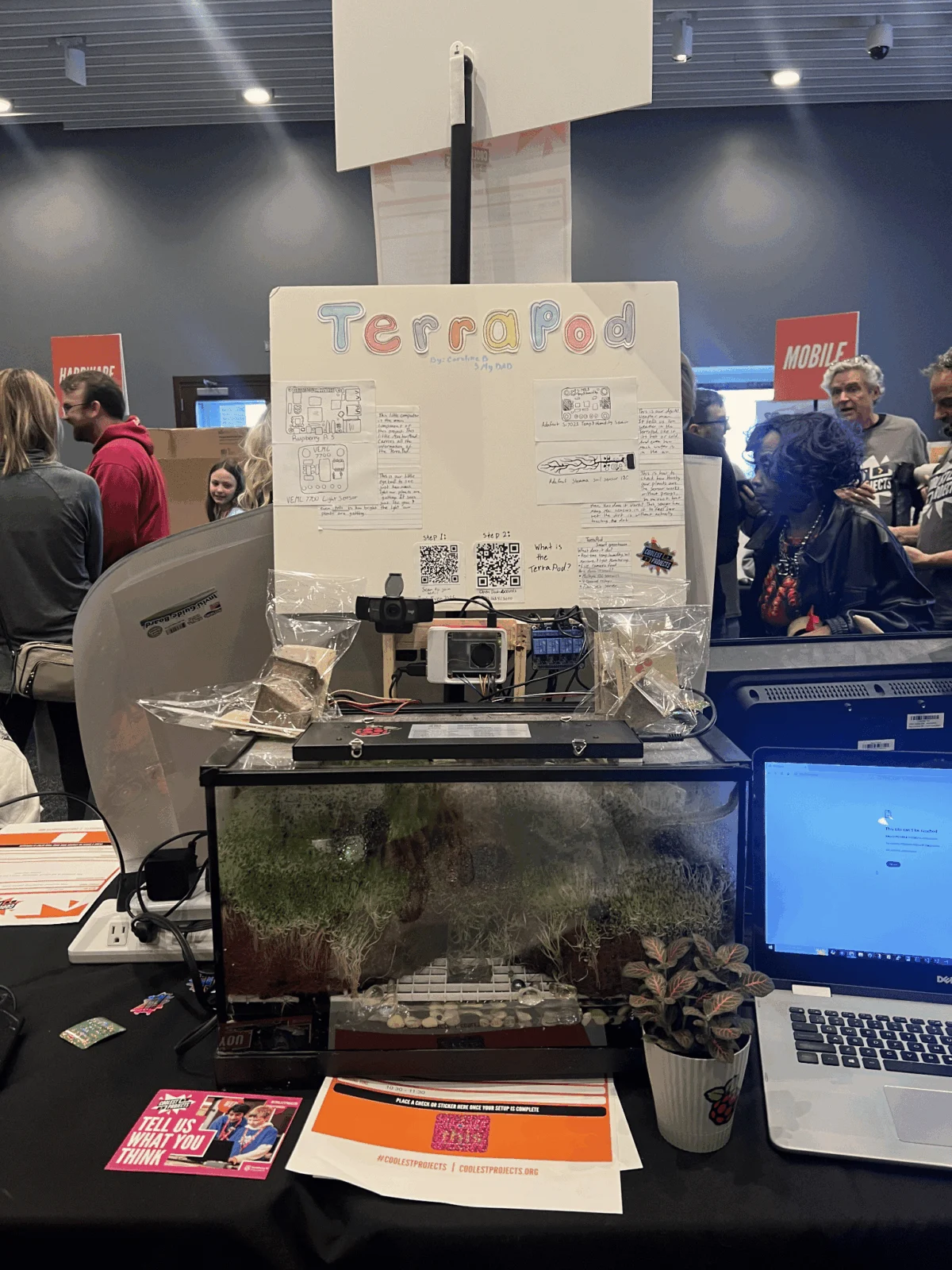
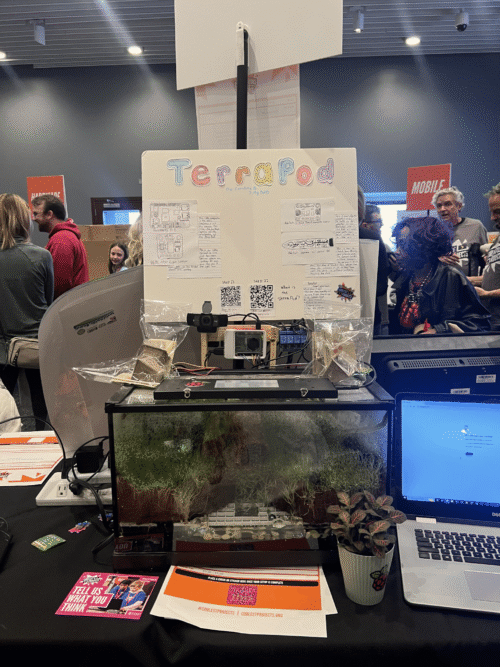
Caroline’s "Terrapod" project showcased the intersection of environmental biology and hardware engineering. By creating an automated plant care system, she addressed the issue of accessibility for those who are physically unable to tend to their plants. Her focus on "wire management" and organizational efficiency served as a great example of the importance of hardware aesthetics and maintenance—a skill often overlooked by early-career coders.
Official Responses and Institutional Support
The success of Coolest Projects USA is heavily contingent on the support of its partners. Representatives from the Broadcom Foundation emphasized that these awards are not just about the technical complexity of the code, but about the "commitment" to a social cause.
"The goal is to provide a platform where young creators can see the tangible results of their labor," said a program spokesperson. By providing mentorship, technical resources, and a venue for exhibition, these partners ensure that the "innovation pipeline" remains active. The feedback from participants, who cited their favorite parts of the day as "seeing all the different projects" and "being in a room where it was all kids creating," suggests that the community-building aspect of the event is just as valuable as the technical instruction.
Implications for Future STEM Education
The 2026 event at the Science Museum of Minnesota offers several key takeaways for educators and policymakers:
- The Shift Toward Purpose-Driven Coding: Students are increasingly motivated by projects that have a clear social benefit. The success of "FIND ME ASAP" and the "Smart Electronic Fruit Sorter" proves that technology education should be framed through the lens of humanitarian problem-solving.
- The Necessity of Peer Mentorship: The "Fashion Show Drama" team’s success in working as a group—with distinct roles for the designer, the coder, and the visionary—suggests that collaborative project-based learning is more effective than individual competition.
- Low-Floor, High-Ceiling Tools: Tools like Scratch, 3D printing, and simple microcontrollers allow students to enter the field with low barriers to entry while providing enough complexity for high-level, sophisticated project development.
Conclusion: The Journey Continues
Coolest Projects USA Minnesota has firmly established itself as a beacon for youth innovation. As the event looks toward the remainder of 2026, the organizers are already encouraging more young people to get involved. Whether through online submissions or future physical showcases, the path for these creators is clear.
The event is more than a day of presentation; it is an incubator for the next generation of technologists, thinkers, and problem solvers. By fostering an environment where young people are encouraged to build, break, fix, and share, the Coolest Projects movement is helping to define what the future of our technological landscape will look like—one line of code, one 3D-printed part, and one innovative idea at a time.
For those inspired by the work of Rikita, ZaLayaa, and their peers, the opportunity to contribute to the global community of young creators remains open. The tools are available, the community is waiting, and the next big solution to a real-world problem might just be a few keystrokes away.
Author

Related Posts
Toshiba Unveils High-Performance Multiplexers to Power Next-Generation PCIe 6.0 and USB4 v2 Architectures
- 0
- 1,135 word
In the rapidly evolving landscape of high-speed data interconnects, the bottleneck often lies not in the processor or the memory, but in...
Read out all
MRAM Reaches a Strategic Tipping Point: New Industry Alliance Formed to Scale Adoption
- 0
- 1,114 word
Magnetoresistive Random Access Memory (MRAM)—a technology once relegated to the fringe of semiconductor research—has officially hit a commercial and technical tipping point....
Read out all
DEEPX Unveils the DX-AIPlayer: Bridging the Gap Between Edge Computing and High-Performance AI
- 0
- 1,258 word
In the rapidly evolving landscape of edge artificial intelligence, the demand for hardware that balances power efficiency with high-throughput inference has never...
Read out all
The Smart Shopper’s Pulse: Tracking the Best Daily Deals in an Era of Digital Hype
- 0
- 1,214 word
By Daniel Oropeza | Shopping Editor May 13, 2026 In the modern digital marketplace, the consumer is bombarded with a relentless stream...
Read out all
Bridging the Digital Divide: How Experience AI is Empowering Classrooms in Uzbekistan
- 0
- 1,266 word
In an era defined by the rapid proliferation of artificial intelligence, the global race to ensure digital equity has moved beyond basic...
Read out all
The Mirror in the Machine: Unmasking Algorithmic Bias in the Age of AI
- 0
- 1,266 word
The widespread adoption of artificial intelligence (AI) has been accompanied by a persistent, often unexamined, myth: that algorithms are objective, mathematically neutral...
Read out all