- 0
- 1,147 word
The late 1990s represented a fever dream of technological experimentation. As the world sprinted toward the new millennium, the computing industry was obsessed with one singular problem: portability. While today’s users carry terabytes in their pockets via NVMe storage, the era of 1999 was defined by the struggle to balance capacity, size, and cost. It was into this chaotic, competitive landscape that Iomega—a company riding high on the success of its ubiquitous Zip drive—launched the "Clik!" drive.
Marketed as the ultimate portable storage solution for cameras, PDAs, and laptops, the Clik! drive was an engineering marvel that arrived at the wrong time, with the wrong name, and in the face of a superior technology that was already winning the war. To understand why the Clik! ended up as a forgotten footnote in tech history, one must look at the convergence of mechanical hubris, branding disasters, and the relentless march of solid-state innovation.
The Context: Iomega’s Golden Age and the "Zip" Shadow
By 1999, Iomega was a titan of the storage sector. The Zip drive, introduced in 1994, had become the de facto standard for professional data transfer. Offering 100MB of storage—a massive leap from the 1.44MB floppy disk—the Zip drive was the bridge between desktop computing and the need for portable backups.
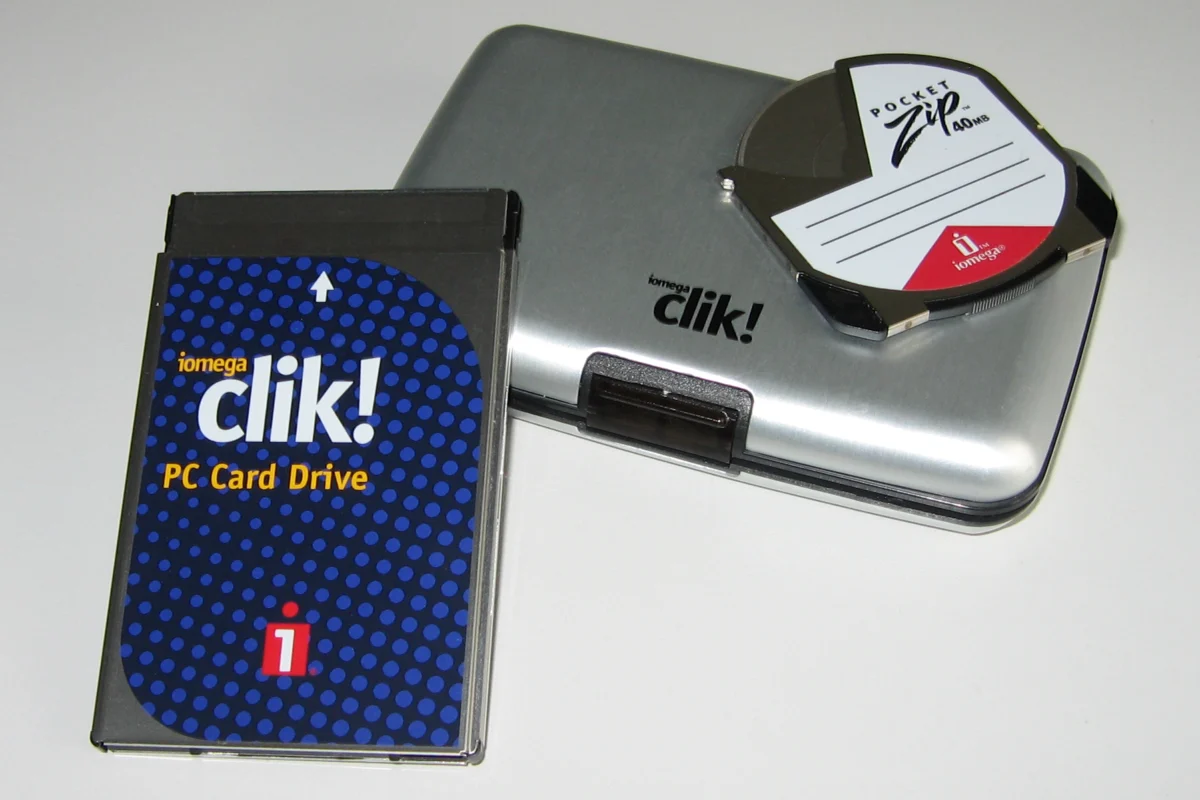
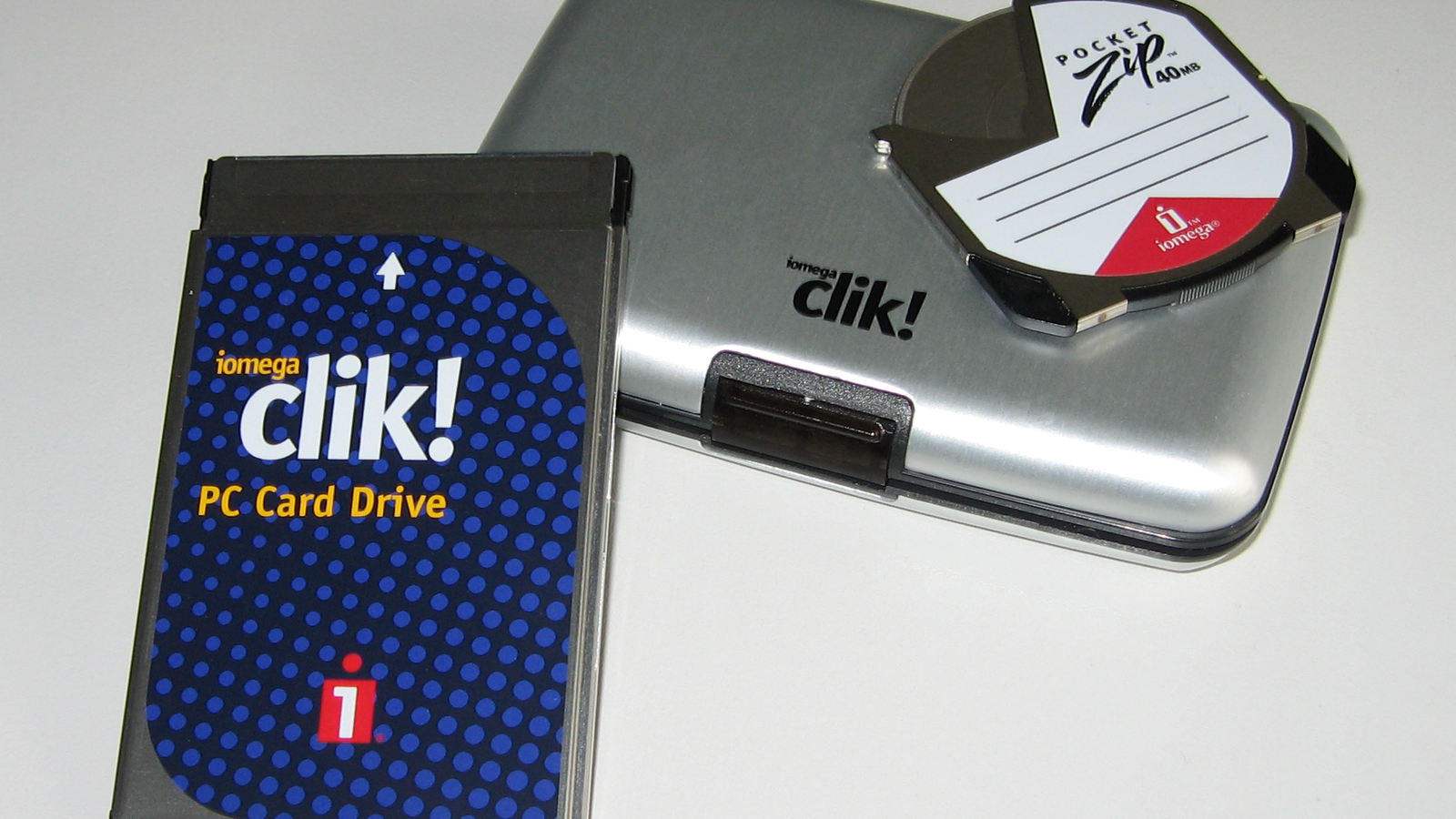
However, the Zip drive had a physical limitation: its size. It was too bulky for the burgeoning market of digital cameras and handheld devices. Iomega executives saw an opportunity to monopolize the next phase of the digital revolution. They developed the Clik! drive, a 40MB removable disk system that was remarkably thin, designed to fit into a PCMCIA (PC Card) slot. It promised to be the "floppy disk of the digital camera age."
A Chronology of a Failed Launch
The trajectory of the Clik! drive was short and painful.
- 1998: Iomega begins aggressive marketing for the Clik! format, pitching it to manufacturers of portable electronics.
- 1999: The Clik! drive officially hits the market. It is priced competitively against flash memory, which at the time was prohibitively expensive.
- 1999-2000: The "Click of Death" PR nightmare reaches a fever pitch. Iomega faces intense consumer backlash over its Zip drives, inadvertently tarnishing the Clik! brand by association.
- 2000: In a desperate bid to distance the product from the negative branding, Iomega rebrands the device to "PocketZip."
- 2001-2002: Adoption remains stagnant. Manufacturers show little interest in integrating the proprietary hardware.
- 2003: Iomega officially discontinues the line, signaling the end of the format’s relevance in an increasingly solid-state world.
The Branding Catastrophe: The "Click of Death"
In the annals of corporate marketing, few blunders are as spectacular as the naming of the Iomega Clik!. The term "Click of Death" refers to a specific, mechanical failure mode where the read/write head of a drive repeatedly strikes the platter surface, creating a rhythmic clicking sound. It was the death knell for countless Zip disks and, eventually, traditional IDE hard drives.
When Iomega released the Clik!, they seemingly ignored the fact that their own reputation was being cannibalized by the "click" sound. By naming the product "Clik!", they invited customers to associate their brand-new, premium storage device with the exact sound of a failing, broken hard drive. It was a psychological barrier that no marketing budget could overcome. Even after the rebrand to "PocketZip," the damage was done. The name was so toxic that it served as a punchline for tech reviewers of the era, effectively sealing the product’s fate before it could reach the mass market.
Supporting Data: The Flash Memory Trajectory
The primary justification for the Clik!’s existence was cost. In 1999, a 40MB CompactFlash card could cost between $120 and $160. A single 40MB Clik! disk, by comparison, cost roughly $10. On paper, this was a massive price-to-performance advantage.
However, Iomega made a fundamental error in their assessment of the industry: they viewed the storage landscape as a static battlefield, failing to account for the speed of Moore’s Law. While mechanical drives had to contend with the physical limitations of spinning platters, motors, and fragile read/write heads, flash memory was purely electronic.
The price of NAND flash began a precipitous decline almost the moment the Clik! reached retail shelves. Within two years, the cost-per-megabyte of flash memory plummeted, rendering the Clik!’s cost advantage entirely irrelevant. Furthermore, the Clik! required mechanical drive mechanisms, which were susceptible to physical shock—a death sentence for a product marketed toward "active" users like photographers.

The Industry Response: Why Nobody Bought In
For a proprietary storage format to succeed, it requires "ecosystem buy-in." Iomega needed digital camera manufacturers like Canon, Nikon, and Olympus to include Clik! drive slots in their hardware. They achieved very limited success, most notably with the Agfa ePhoto CL30 and their own branded MP3 player, the HipZip.
The industry, however, was wary. Manufacturers were tired of proprietary formats that limited their consumers’ options. They saw the writing on the wall: the future was standardized, solid-state, and increasingly compact. By hitching their wagons to a moving-part mechanical system, Iomega was asking manufacturers to invest in a "dead-end" technology. The industry chose to wait for flash prices to drop rather than adopt a bulky, fragile, and noisy mechanical alternative.
Implications: A Lesson in Technological Hubris
The failure of the Clik! drive offers several profound lessons for the tech industry:
- The Peril of Market Inertia: Iomega was so focused on the success of the Zip drive that they failed to realize the world was ready for a different, better solution. They were trying to force a 1980s mechanical architecture into a 21st-century digital form factor.
- Brand Equity is Fragile: A company’s reputation is its most valuable asset. By failing to address the "Click of Death" effectively, Iomega allowed their brand to become synonymous with failure. A rebrand (PocketZip) cannot save a product if the underlying association is negative.
- The "Solution" vs. The "Problem": The Clik! was a solution to a problem that was already being solved by better, faster, and more reliable technology. Innovation requires identifying a genuine pain point, not just finding a way to repackage an existing technology.
Conclusion: A Footnote in History
Today, the Iomega Clik! drive is largely a curiosity for collectors and tech historians. It serves as a stark reminder of the "wild west" of the late 90s, where companies bet heavily on mechanical ingenuity while the digital revolution was already shifting toward the invisible, silent, and near-instant performance of solid-state storage.
Iomega eventually faded into obscurity, being acquired by EMC in 2008. The Clik! remains a classic example of "good enough" technology failing to survive in an era of rapid disruption. It is a cautionary tale for any firm that believes they can dictate the direction of the market rather than observing where the market is already heading. While the Clik! didn’t last, it certainly made a noise—though perhaps not the one Iomega intended.
Author

Related Posts
The Dawn of the Gemini Era: Everything You Need to Know About the New "Googlebook" Ecosystem
- 0
- 1,081 word
In a landmark presentation during The Android Show, Google has officially unveiled a paradigm shift in personal computing: the "Googlebook." Moving beyond...
Read out all
The High-Stakes Storage Dilemma: A Deep Dive into the LaCie 8Big Pro5
- 0
- 1,266 word
In an era where data generation has reached unprecedented levels, the demand for reliable, high-capacity external storage has never been greater. For...
Read out all
Is a New Nest Hub on the Horizon? "Google Home Display" Surfaces in App Code
- 0
- 1,387 word
The smart home landscape, which once seemed to be moving toward a unified future, has seen a period of stagnation regarding dedicated...
Read out all
Amazon Unifies AI Strategy: Introducing ‘Alexa for Shopping’ to Bridge the Gap Between Smart Homes and E-Commerce
- 0
- 1,180 word
In a significant strategic pivot, Amazon has announced a major consolidation of its artificial intelligence initiatives. The e-commerce titan is effectively dismantling...
Read out all
Mastering WhatsApp Web: The Professional Guide to Desktop Connectivity
- 0
- 1,089 word
For millions of professionals and casual users alike, WhatsApp is no longer just a smartphone companion; it is a vital communication hub....
Read out all
Meta’s "Muse Spark" AI Revolution: Bringing Superintelligence to Your Smart Glasses
- 0
- 1,201 word
In a definitive move to cement its position at the forefront of the consumer artificial intelligence race, Meta has announced the impending...
Read out all