
- 0
- 1,227 word
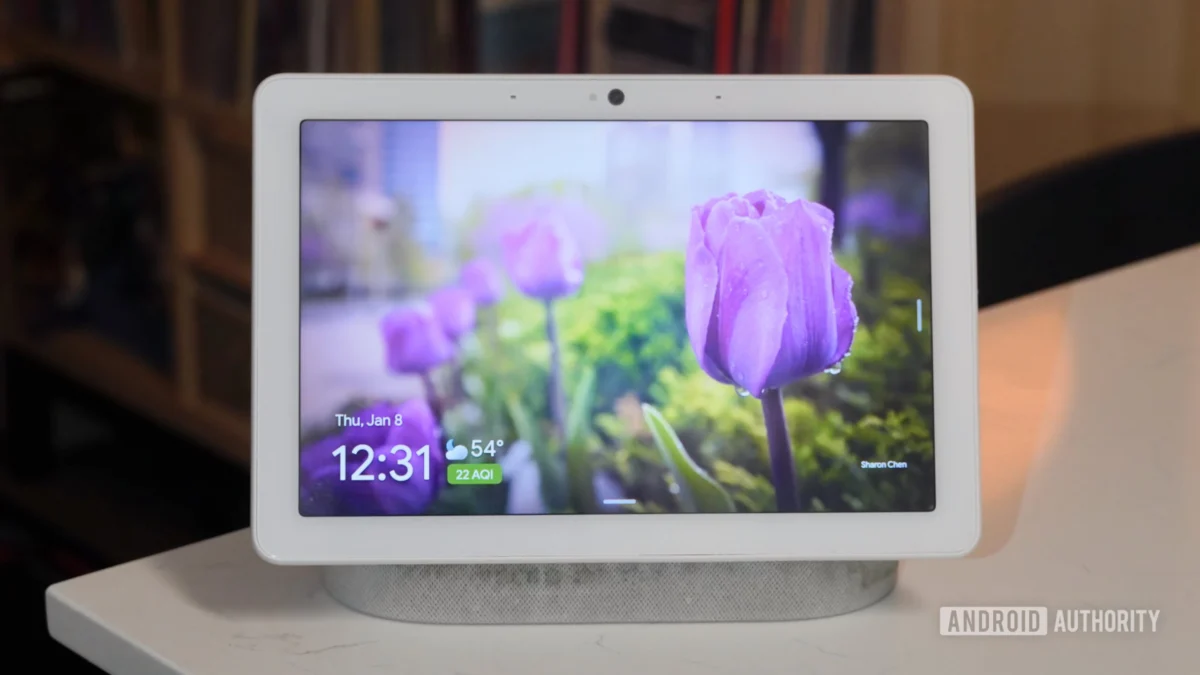
After years of radio silence in the smart display market, Google appears to be preparing to breathe new life into its home ecosystem. Fresh code discovered within the Google Home app for iOS suggests that the tech giant is pivoting away from its long-standing "Nest" branding, potentially heralding the arrival of a new device under the moniker: the "Google Home Display."
For loyal users who have watched the smart home category evolve—and perhaps stagnate—this discovery serves as the most significant indicator yet that Google is not abandoning its dedicated smart display roots.
The Discovery: A Shift in Naming Conventions
The news comes courtesy of noted app researcher and sleuth @aaronp613, who frequently uncovers unannounced features hidden within the APK and IPA files of popular applications. In a recent teardown of the Google Home iOS app, references were explicitly found to a product labeled as the "Google Home Display."
While the code provides little in the way of technical specifications, the implications are substantial. For years, Google has relied on the "Nest" brand—acquired in 2014—to signify its premium smart home hardware, ranging from thermostats and cameras to the Nest Hub line. However, the recent shift toward the "Google Home" naming convention for its upcoming smart speakers suggests a broader, company-wide strategy to consolidate its hardware identity under the primary Google brand.
A Chronology of Google’s Smart Display Evolution
To understand why this potential rebrand is significant, we must look at the trajectory of Google’s home hardware.
- 2018: The Rise of the Nest Hub. Google introduced the original Home Hub (later rebranded as the Nest Hub), a device that finally brought the Google Assistant to a screen-based interface. It was a smash hit, offering a clean, user-friendly way to manage smart home devices and view media.
- 2019: The Nest Hub Max. Aiming for the premium market, Google launched the Nest Hub Max, featuring a larger screen, a built-in camera, and superior speakers. This remains a staple in many households today.
- 2021: The Nest Hub (2nd Gen). The last dedicated update to the line, this device introduced Soli radar technology for sleep tracking and gesture controls. Since its release, the product line has remained static, leading to widespread speculation about the product’s future.
- 2023–2024: The Pixel Tablet Transition. With the launch of the Pixel Tablet, which functions as a smart display when placed on its magnetic charging dock, many analysts suggested that Google was quietly merging its tablet and smart display categories.
- 2025–2026: The "Google Home" Pivot. As the industry moved toward deeper AI integration, code leaks and executive statements have begun to suggest that Google is ready to refresh its standalone hardware lineup, stripping away the "Nest" label in favor of a more unified "Google Home" identity.
Supporting Data: Why the Rebrand Matters
The transition from "Nest" to "Google Home" is more than just a marketing exercise. In the current landscape of AI-first devices, branding represents the "intelligence" layer of the product.
1. The Consolidation of the Ecosystem
By unifying products under the "Google Home" banner, Google is attempting to create a cohesive user experience. If a user owns a "Google Home Speaker" and a "Google Home Display," the ecosystem feels singular. The Nest brand, while iconic, has become increasingly compartmentalized, often associated more with security and climate control than with the core AI-driven assistant experience that Google is now prioritizing.
2. The AI Imperative
The "Google Home" brand is now being intrinsically linked to Gemini, Google’s proprietary large language model. As Google shifts its focus toward an agentic AI experience—where the device doesn’t just respond to commands but anticipates needs—the hardware needs a fresh start. A new "Google Home Display" would likely be marketed as a Gemini-first device, capable of far more complex tasks than the aging Nest Hub hardware could ever handle.
Official Responses and Strategic Direction
The uncertainty regarding the future of the Nest Hub line was, until recently, a point of concern for investors and enthusiasts alike. For nearly three years, Google provided little clarity on whether a "Nest Hub 3" was in the pipeline.
However, late last year, the company offered a glimmer of hope. Anish Kattukaran, Google’s Chief Product Officer for Google Home, went on the record to confirm that the company remains "deeply committed" to the smart display category. While he refrained from announcing a specific product, he hinted that the company would have more to share "soon."
Crucially, Kattukaran’s comments were tied to the integration of Gemini into the home. He noted that the next generation of home devices would be defined by their ability to "understand context and engage in fluid, multi-modal conversations." This indicates that any forthcoming hardware will likely move beyond the traditional "touch-and-tap" interface of the current Nest Hubs, moving instead toward a conversational interface powered by the same models currently seen in the Pixel smartphone lineup.
Implications for the Market and Consumers
If a new "Google Home Display" launches, it will face a vastly different market than the original 2018 iteration.
The Competition
The landscape is now crowded. Amazon’s Echo Show series has undergone numerous iterations, and the tablet market—led by Apple and Samsung—is increasingly encroaching on the "kitchen display" use case. For Google to succeed, the new hardware must offer more than just a screen; it must function as a robust home hub that can manage the fragmented smart home protocols (like Matter) while providing a high-fidelity AI experience.
The Death of "Nest" Hardware?
The most immediate implication is the potential sunsetting of the Nest name for consumer electronics. If the new display launches as a "Google Home" product, it signals that the Nest brand may eventually be relegated strictly to home security—cameras, doorbells, and thermostats. This separation would clarify the product hierarchy for consumers, distinguishing between "smart home utilities" (Nest) and "smart home interfaces" (Google Home).
Software Longevity
For current Nest Hub owners, this news is both exciting and potentially anxiety-inducing. The release of a new device almost always signals the beginning of the end for software support for older generations. If a new device arrives, it will likely be built on a new OS foundation—possibly a version of Android that is more tightly integrated with Gemini—which may leave 2021-era hardware in the dust.
Conclusion: A Promising Development
While references in application code do not constitute a formal product announcement, the evidence is compelling. After years of speculation and the ambiguous "Pixel Tablet experiment," Google seems to be returning to its roots: providing a dedicated, always-on interface for the home.
The shift to "Google Home Display" branding is a tactical maneuver, one that aligns with Google’s broader strategy to position its home hardware as the physical embodiment of the Gemini AI. Whether this device will be a high-end console with a rotating screen, a minimalist wall-mounted panel, or an evolution of the traditional hub remains to be seen. However, one thing is clear: Google has realized that a tablet on a dock is not a total replacement for a dedicated, AI-powered smart display.
For now, we wait. But for those who have been holding onto their aging second-generation Nest Hubs, hoping for a worthy successor, the horizon is finally beginning to clear. The "Google Home" era is upon us, and it promises to be far more intelligent than the home assistants of the past.
Author

Related Posts
The Dawn of the Gemini Era: Everything You Need to Know About the New "Googlebook" Ecosystem
- 0
- 1,081 word
In a landmark presentation during The Android Show, Google has officially unveiled a paradigm shift in personal computing: the "Googlebook." Moving beyond...
Read out all
The High-Stakes Storage Dilemma: A Deep Dive into the LaCie 8Big Pro5
- 0
- 1,266 word
In an era where data generation has reached unprecedented levels, the demand for reliable, high-capacity external storage has never been greater. For...
Read out all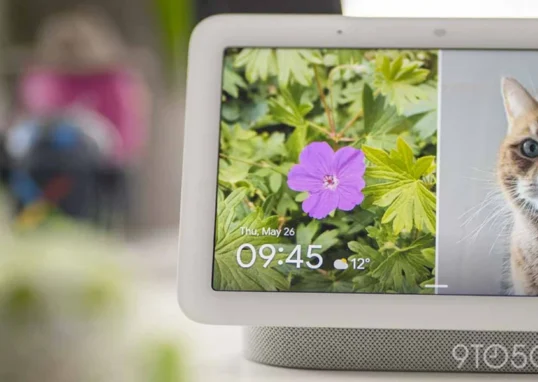
Is a New Nest Hub on the Horizon? "Google Home Display" Surfaces in App Code
- 0
- 1,387 word
The smart home landscape, which once seemed to be moving toward a unified future, has seen a period of stagnation regarding dedicated...
Read out all
Amazon Unifies AI Strategy: Introducing ‘Alexa for Shopping’ to Bridge the Gap Between Smart Homes and E-Commerce
- 0
- 1,180 word
In a significant strategic pivot, Amazon has announced a major consolidation of its artificial intelligence initiatives. The e-commerce titan is effectively dismantling...
Read out all
Mastering WhatsApp Web: The Professional Guide to Desktop Connectivity
- 0
- 1,089 word
For millions of professionals and casual users alike, WhatsApp is no longer just a smartphone companion; it is a vital communication hub....
Read out all
Meta’s "Muse Spark" AI Revolution: Bringing Superintelligence to Your Smart Glasses
- 0
- 1,201 word
In a definitive move to cement its position at the forefront of the consumer artificial intelligence race, Meta has announced the impending...
Read out all