
- 0
- 1,130 word
The landscape of domestic technology has undergone a seismic shift over the last decade. What was once considered a luxury for the tech-obsessed is now a standard feature of the modern home. As we move further into 2026, the smart assistant ecosystem has matured into a competitive battlefield dominated by three primary titans: Apple’s Siri, Google’s Gemini, and Amazon’s Alexa. While each offers unique strengths, Amazon holds a distinct, structural advantage. Because Amazon operates the world’s largest e-commerce infrastructure, its hardware is uniquely positioned to integrate into almost any household, regardless of the user’s technical proficiency.
Whether you are looking to automate your lighting, secure your perimeter, or simply streamline your daily schedule, the barrier to entry has never been lower. This guide explores five of the most accessible, high-utility Alexa-enabled devices currently available, helping you navigate the market to find the best value for your specific needs.
Main Facts: The Ecosystem Advantage
The primary appeal of the Amazon Echo ecosystem lies in its "hub-and-spoke" model. Unlike fragmented smart home setups that require complex bridges and third-party software, Amazon’s native devices are designed for immediate interoperability.
When you purchase an Alexa-enabled device, you aren’t just buying a speaker or a display; you are acquiring a node in a massive, cloud-based network. This network currently supports thousands of third-party smart home products, ranging from smart locks and thermostats to kitchen appliances and robotic vacuums. As of 2026, the integration of generative AI—branded as Alexa+—has further bridged the gap between human intent and machine execution, allowing for more conversational and context-aware interactions.
A Chronological Evolution of the Echo Line
To understand why today’s budget devices are so capable, one must look at the rapid iteration cycle of the hardware.
- 2014–2017: The Formative Years. Amazon introduced the original Echo, a tall cylinder that served as a proof of concept. During this era, functionality was limited to basic timers, weather reports, and music streaming.
- 2018–2021: Diversification. Amazon recognized that a one-size-fits-all approach was insufficient. This period saw the introduction of the Echo Show (displays), the Echo Auto (mobility), and smaller, budget-friendly iterations like the Echo Dot.
- 2022–2024: The AI Integration. With the rise of Large Language Models (LLMs), the focus shifted from hardware specs to software intelligence. Devices were redesigned to process more requests on-device, reducing latency and increasing privacy.
- 2025–2026: The AI-First Era. We are currently in a phase where hardware is optimized specifically for advanced AI interaction. The "Echo Hub" and updated "Echo Show" series represent the pinnacle of this integration, serving as the central nervous system for the modern home.
Supporting Data: Value Breakdown
When evaluating these devices, the metric of "cost-per-utility" is essential. The following devices represent the current benchmarks for affordability in the 2026 market:
1. The Echo Show 5 ($89.99): The Visual Gateway
The Echo Show 5 remains the gold standard for those who want visual feedback. With a 5.5-inch display, it serves as a hybrid device—a digital picture frame, a security monitor, and a media controller. Its ability to pull feeds from Ring doorbell cameras makes it an essential security component for a sub-$100 investment.
2. The Echo Pop ($39.99): The Audio Workhorse
For those who do not require a screen, the Echo Pop is the definitive entry-level speaker. It offers a compact footprint and surprisingly robust audio performance. Its design philosophy is rooted in sustainability, utilizing recycled fabrics and aluminum, making it a favorite for environmentally conscious consumers.
3. The Echo Auto ($54.99): The Mobile Companion
The Echo Auto addresses the "disconnected" time during commutes. With a five-microphone array, it effectively filters out road noise, allowing users to control their home smart devices (locks, thermostats, lights) before they even pull into the driveway.
4. The Echo Spot ($79.99): The Intelligent Alarm
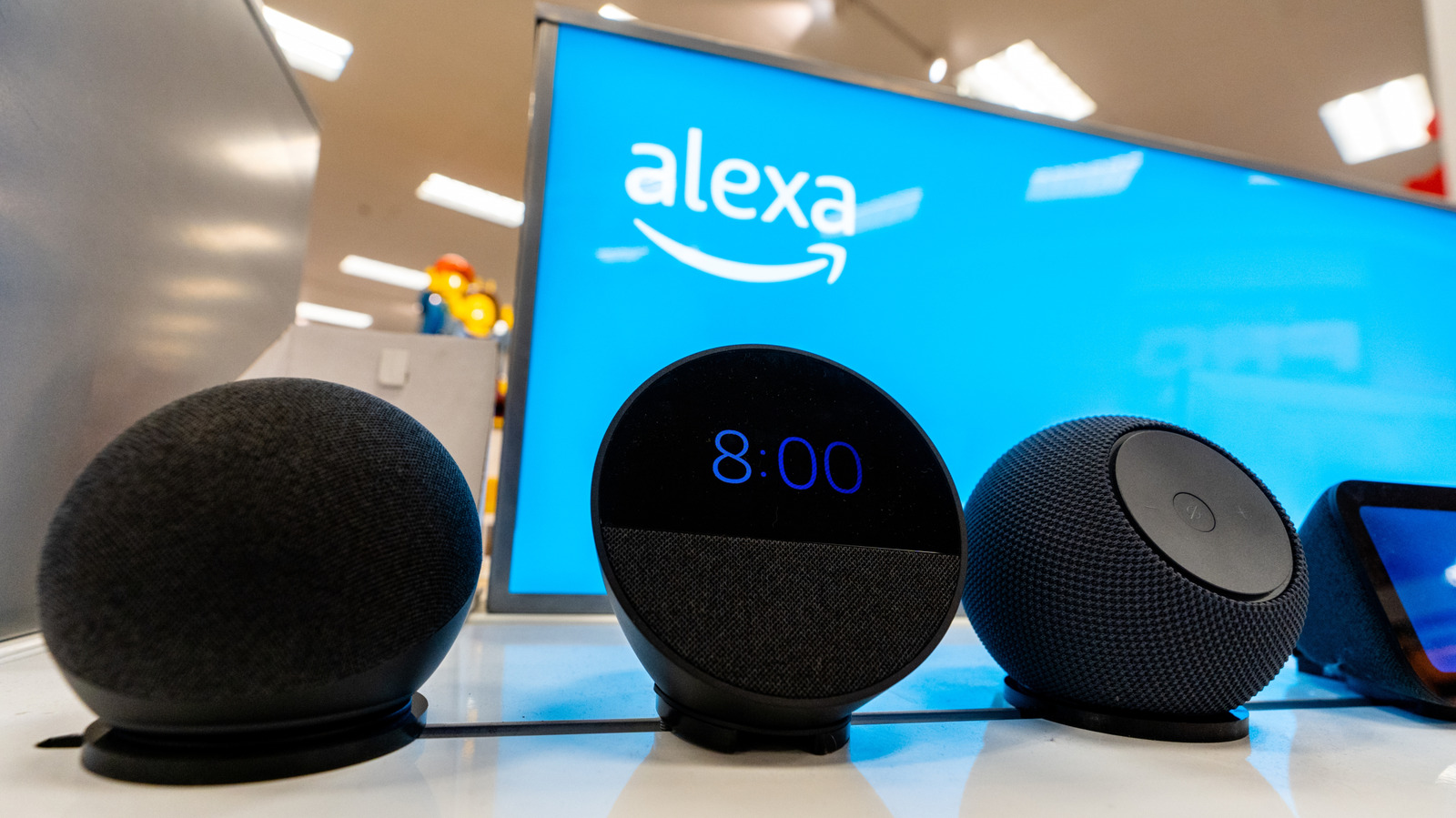
The re-imagined Echo Spot is a masterclass in functional design. By combining a digital clock face with a speaker, it solves the problem of "dumb" alarm clocks. It allows for personalized wake-up routines, such as gradually increasing lighting or soft audio cues, which are proven to improve sleep hygiene.
5. The Echo Hub 8 ($179.99): The Central Command
While the most expensive on this list, the Echo Hub 8 is arguably the most economical in terms of total system management. It acts as the "brain" for the entire household, allowing for a unified dashboard to control thousands of connected devices.
Official Responses and Strategic Vision
Amazon’s corporate strategy has remained consistent: Accessibility through ubiquity. In recent investor briefings, Amazon representatives emphasized that their goal is not merely to sell hardware, but to embed Alexa into the fabric of domestic life.
By keeping the price point of these entry-level devices low, Amazon lowers the friction for consumers to adopt their broader services—such as Amazon Music, Prime Video, and Amazon Smart Security. Furthermore, the company has made significant strides in "Privacy by Design," responding to past criticisms by incorporating physical camera shutters and dedicated "microphone off" buttons across the entire lineup.
Implications for the Future of the Smart Home
The implications of this low-cost hardware strategy are twofold.
First, the democratization of security. High-end security systems once cost thousands of dollars to install and monitor. Today, for under $300, a homeowner can assemble an Echo Hub, a few Echo Show devices, and a set of compatible cameras to create a robust, self-monitored security grid. This has shifted the market power away from traditional security firms and into the hands of the end-user.
Second, the rise of the "Ambient Home." We are approaching a state where the home responds to the occupant without explicit commands. Through sensors in the Echo devices, the home can detect when a room is empty and adjust the temperature or lighting, contributing to energy efficiency. This is not just a convenience; it is a significant contribution to the global effort to reduce residential energy consumption.
The Verdict for 2026
If you are looking to begin your journey into smart home technology, the sheer variety of options can be daunting. However, the strategy remains clear: start small. Purchase an Echo Pop for your bedroom or an Echo Show 5 for your kitchen. Observe how these devices change your daily workflow. Once you identify the "pain points" in your home—whether it’s forgetting to turn off the lights or wanting to see who is at the door—you can expand your system incrementally.
In 2026, the smart home is no longer a futuristic dream. It is an affordable, accessible, and highly practical reality. By leveraging the low-cost hardware options provided by Amazon, you can transform your living space into a responsive, efficient, and intelligent environment that serves you, rather than the other way around. As these devices continue to integrate more deeply with AI, the value of this entry-level hardware will only continue to climb, making now the ideal time to invest in your domestic future.
Author

Related Posts
The PCIe 5.0 Dilemma: Why Next-Gen Storage is a Productivity Powerhouse, Not a Gaming Necessity
- 0
- 1,281 word
By Tanveer Singh Published May 13, 2026 The landscape of PC storage has undergone a seismic shift over the past few years....
Read out all
Meta Connect 2026: Preparing for a New Frontier in AI and Spatial Computing
- 0
- 1,186 word
The technology sector is bracing for a pivotal moment as Meta officially sets the stage for its marquee annual event. Meta has...
Read out all
The Evolution of the Drive-Thru: Why McDonald’s is Hitting the Reset Button on AI Order-Taking
- 0
- 1,133 word
In a significant pivot for the fast-food industry’s digital transformation, McDonald’s has announced the conclusion of its long-running test of Automated Order...
Read out all
An Era Ends: Reflecting on Eight Years of ‘The Internet of Things Podcast’
- 0
- 1,243 word
After an influential eight-year run that helped define the discourse surrounding the connected world, The Internet of Things Podcast has officially broadcast...
Read out all
Silent Speakers and Crystal-Clear Displays: The Definitive Guide to Eliminating A/V Noise
- 0
- 1,179 word
There is nothing more frustrating for an enthusiast than the "unboxing high"—that moment of anticipation when you plug in your new high-end...
Read out all
Eufy Redefines Automated Home Care: Unveiling the Flagship Omni S2 Robot Vacuum and Mop
- 0
- 1,128 word
In an era where smart home automation is rapidly evolving from a luxury into a household necessity, Eufy has firmly positioned itself...
Read out all