
- 0
- 1,133 word
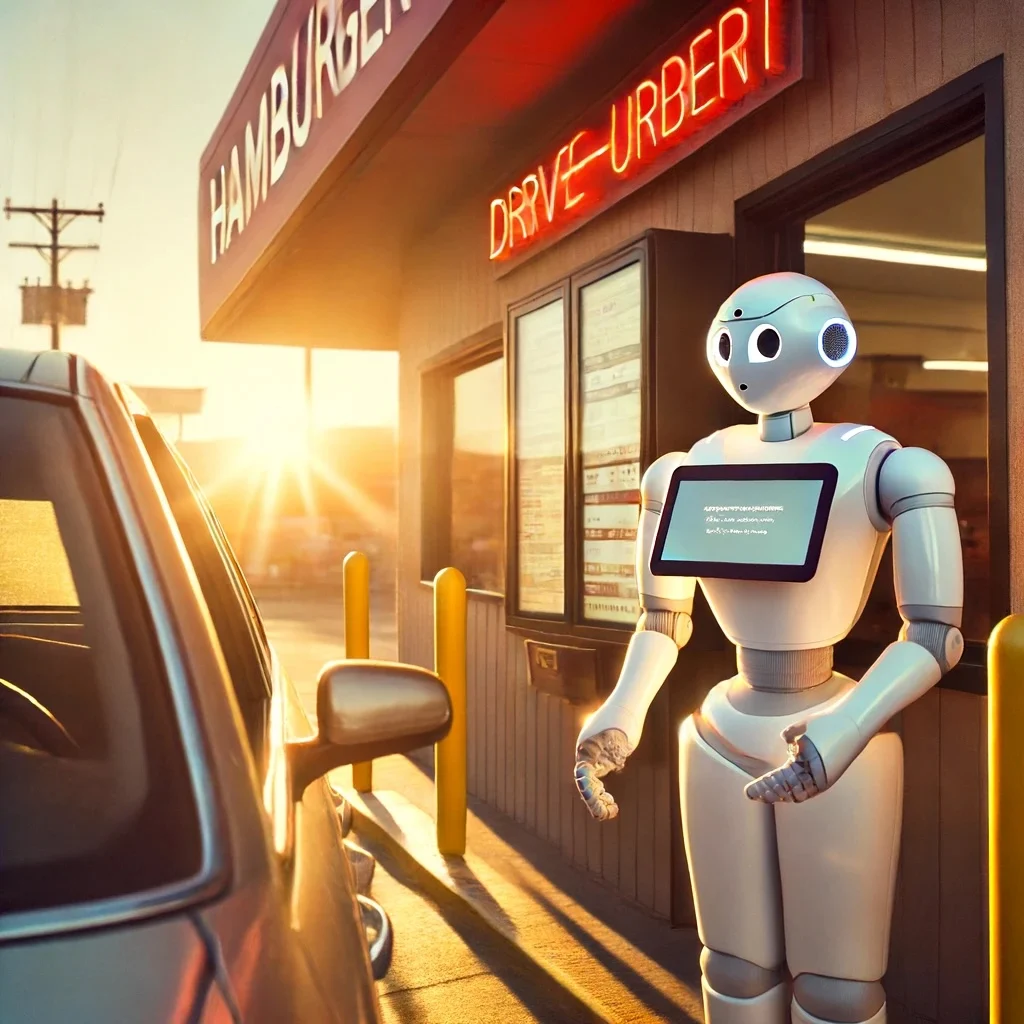
In a significant pivot for the fast-food industry’s digital transformation, McDonald’s has announced the conclusion of its long-running test of Automated Order Taking (AOT) technology in partnership with IBM. The decision, communicated to franchisees in a memo late last week, mandates that the AI-powered voice systems currently operational in over 100 U.S. locations will be deactivated no later than July 26, 2024.
While this development has sparked industry-wide speculation that the fast-food giant is abandoning its quest for automation, the reality is far more nuanced. Rather than a total retreat, the move signals a shift from legacy Natural Language Understanding (NLU) models toward the more robust, flexible capabilities of modern Generative AI.
A Chronology of the Conversational AI Journey
McDonald’s foray into voice automation has been anything but linear. The company’s journey began in earnest in 2019, when it acquired Apprente, a Silicon Valley-based startup specializing in voice-activated technology for complex environments. At the time, the acquisition was hailed as a watershed moment for the Quick Service Restaurant (QSR) sector, signaling that the "human-in-the-loop" model of order-taking was ripe for disruption.
The Timeline of Transition:
- 2017: Apprente is founded, focusing on sophisticated voice-recognition software designed for the noisy, high-pressure environments of restaurants.
- September 2019: McDonald’s acquires Apprente, integrating the team into the newly formed "McD Labs," a dedicated innovation hub.
- 2021: McDonald’s pivots its strategy, selling the core technology and assets to IBM. The partnership was intended to scale the technology across the franchise network, with IBM providing the enterprise infrastructure to support the rollout.
- 2023: Recognizing the limitations of existing NLU, McDonald’s enters a massive strategic partnership with Google Cloud, aimed at integrating generative AI to improve the customer experience across its global estate.
- June 2024: The IBM partnership is officially terminated. The AOT systems are scheduled to go dark by July 26, effectively ending this specific chapter of the automation experiment.
The Technological Hurdle: NLU vs. Generative AI
The primary friction point for the IBM-powered AOT system appears to have been its struggle with the nuances of human speech. Legacy NLU (Natural Language Understanding) systems operate on rigid, predefined models. When faced with the infinite variables of human communication—varying accents, regional dialects, background noise from idling engines, and non-linear ordering patterns—the legacy AI often faltered.
These errors, while seemingly minor, created significant operational friction. If an AI misheard a request for a "Large Coke" as a "Small Cake," the resulting friction at the window necessitated human intervention, thereby defeating the primary goal of the technology: to streamline service and reduce labor hours.
The shift toward Generative AI, as evidenced by the Google Cloud partnership, represents a fundamental technological upgrade. Unlike NLU, which relies on strict categorization, Generative AI models are built on Large Language Models (LLMs) that "understand" intent and context. These systems are significantly better at navigating the "messiness" of human conversation, offering a much higher degree of accuracy in diverse, real-world settings.
The Economics of Automation: Addressing the Labor Shortage
The strategic drive behind this technology has evolved significantly since 2019. Initially, the focus was primarily on operational efficiency—shaving seconds off the average drive-thru time and increasing the "throughput" of customers.
However, the post-pandemic labor market has fundamentally altered the motivation for automation. Today, the primary driver is the acute difficulty QSR operators face in staffing their locations. In many regions, the demand for service far outstrips the available labor pool. For a franchisee, an AI assistant is no longer just a "nice-to-have" efficiency tool; it is a critical infrastructure component required to maintain business continuity when human staff are unavailable.
Industry experts note that the focus has shifted from "replacing" staff to "augmenting" them. By handling the rote, repetitive task of order entry, AI allows human employees to focus on food preparation and customer service, effectively creating a hybrid environment that is more resilient to labor shortages.
Official Responses and Strategic Intent
In its memo to franchisees, McDonald’s leadership was careful to frame the end of the IBM partnership as a strategic pivot rather than a failure. The statement noted: "While there have been successes to date, we feel there is an opportunity to explore voice ordering solutions more broadly. After thoughtful review, McDonald’s has decided to end our current partnership with IBM on AOT."
This language is deliberate. It suggests that while the current iteration of the technology (the IBM-provided AOT) has reached its ceiling, the company remains deeply committed to the concept. By ending this specific partnership, McDonald’s is likely clearing the decks to integrate the next generation of its AI stack, potentially leveraging the massive data and generative capabilities provided by its Google Cloud alliance.
Implications for the QSR Industry
The termination of the IBM-McDonald’s test case serves as a reality check for the broader QSR industry. It highlights the "valley of death" between laboratory-tested AI and real-world deployment.
1. The Death of Rigid NLU
The failure of the current system to consistently handle accents and complex environmental noise signals the end of the road for simple, rules-based NLU in high-volume, noisy environments. Future solutions must be built on architectures capable of real-time linguistic inference.
2. The Rise of the "Platform" Approach
The industry is moving away from bespoke, single-vendor solutions. McDonald’s partnership with Google indicates a move toward large-scale enterprise platforms that can handle not just voice, but inventory management, supply chain forecasting, and personalized marketing—all powered by the same underlying data architecture.
3. The Challenges of Environmental Complexity
Despite the promise of Generative AI, the "environmental" challenge remains. Microphones, noise-cancellation algorithms, and edge-computing latency are just as important as the intelligence of the AI itself. Even the smartest chatbot will fail if it cannot isolate a customer’s voice from the roar of a diesel truck in the next lane.
Conclusion: A Temporary Pause, Not a Retreat
Is this the end of AI-enabled order-taking at McDonald’s? Almost certainly not. If anything, the speed and scale at which the company is iterating suggests that it views AI as the central pillar of its long-term competitive strategy.
The decision to pull the plug on the IBM system is a classic example of "failing fast." By identifying that the current technology was not meeting the high standards of a global brand, McDonald’s has chosen to reset rather than double down on a suboptimal solution.
As the industry watches, the next phase of this experiment will likely involve a more sophisticated, generative-led rollout. The goal remains the same: to create a seamless, voice-enabled experience that can withstand the chaos of the drive-thru. While the "automated order taker" of yesterday is heading for retirement, the "intelligent assistant" of tomorrow is currently being trained in the cloud. The drive-thru, it seems, is not losing its voice—it is simply waiting for a better one.
Author

Related Posts
Smart Living on a Budget: The Ultimate Guide to Affordable Amazon Alexa Devices in 2026
- 0
- 1,130 word
The landscape of domestic technology has undergone a seismic shift over the last decade. What was once considered a luxury for the...
Read out all
The PCIe 5.0 Dilemma: Why Next-Gen Storage is a Productivity Powerhouse, Not a Gaming Necessity
- 0
- 1,281 word
By Tanveer Singh Published May 13, 2026 The landscape of PC storage has undergone a seismic shift over the past few years....
Read out all
Meta Connect 2026: Preparing for a New Frontier in AI and Spatial Computing
- 0
- 1,186 word
The technology sector is bracing for a pivotal moment as Meta officially sets the stage for its marquee annual event. Meta has...
Read out all
An Era Ends: Reflecting on Eight Years of ‘The Internet of Things Podcast’
- 0
- 1,243 word
After an influential eight-year run that helped define the discourse surrounding the connected world, The Internet of Things Podcast has officially broadcast...
Read out all
Silent Speakers and Crystal-Clear Displays: The Definitive Guide to Eliminating A/V Noise
- 0
- 1,179 word
There is nothing more frustrating for an enthusiast than the "unboxing high"—that moment of anticipation when you plug in your new high-end...
Read out all
Eufy Redefines Automated Home Care: Unveiling the Flagship Omni S2 Robot Vacuum and Mop
- 0
- 1,128 word
In an era where smart home automation is rapidly evolving from a luxury into a household necessity, Eufy has firmly positioned itself...
Read out all